Snow Water Supply Forecasting Reauthorization Act of 2025
Summary
What This Bill Does
H.R.3857, the Snow Water Supply Forecasting Reauthorization Act of 2025, would update the existing Interior Department program under 43 USC 1477. The House-passed text authorizes $3 million for each fiscal year from 2027 through 2031, totaling $15 million. Existing law authorizes $15 million in the aggregate for 2022-2026. This renews the same nominal five-year total for a later period while specifying annual amounts; it is not a $15 million annual appropriation. The proposal remains pending and was placed on the Senate calendar on September 17, 2026.
The Interior Secretary, acting through the Bureau of Reclamation for federal water forecasts and allocations, would emphasize integrated, accurate, timely and spatially complete snowpack measurements and models. Specified technologies include airborne laser altimetry, imaging spectroscopy, and physics-based snowpack and hydrologic modeling. The existing greatest-extent-practicable qualification remains. The Secretary could use other technologies suited to operational water-management needs. NOAA and the Natural Resources Conservation Service would be expressly named in the existing federal coordination requirement.
Who Benefits and How
Water districts and irrigation districts could use better-integrated snow and water-supply forecasts to inform storage, irrigation and allocation decisions. State water agencies could benefit from information relevant to river basins and interstate water management. Federal water contractors are the expressly identified users of the forecast and allocation framework. Benefits depend on implementation and forecasting performance; the bill does not award additional water rights or guarantee greater precipitation or deliveries.
Snowpack measurement providers and hydrologic-modeling companies could have continued program opportunities if Congress appropriates money and the Department makes awards. Universities and other program partners could participate in capacity-building and technical work through existing authorities. No provider receives a named award, and the bill preserves rather than newly creates existing cooperative-agreement, cost-sharing and matching-fund authorities.
Who Bears the Burden and How
Interior Department and Bureau of Reclamation staff would carry out the updated integration, coordination, partner-capacity and reporting work. NOAA and Natural Resources Conservation Service staff are expressly included as coordination partners, but coordination with relevant federal agencies is already required by current law. Program partners could incur participation or cost-sharing expenses under particular agreements; the bill imposes no universal new fee or matching percentage on them.
The bill removes the already-dated October 1, 2021 emerging-technologies report and statutory language making implementation contingent on that report. It replaces the older emphasis on basins without activities as of December 2020 and technology demonstrations with responsiveness to weather and watershed conditions, real-time forecast integration, useful basin-level data and partner capacity. It resets the implementation-report deadline to four years after this reauthorization is enacted and calls for applications, outcomes and data resources, while dropping the separate sub-basin listing language. This is not an annual report.
No actual appropriation is made, and obligations to comply with federal and State environmental laws remain. Funding also declined during consideration: the introduced amendment would retain the $15 million figure while making it annual for 2027-2031, the reported bill specifies $6.5 million annually, and the House-passed text reduces that to $3 million annually. These are changes between proposed authorizations, not cuts to money already appropriated.
Key Provisions
- Authorizes $3 million annually for fiscal years 2027-2031, subject to future appropriations.
- Requires emphasis on integrated snowpack measurements and models, including laser altimetry, imaging spectroscopy and physics-based modeling.
- Expands the program focus to real-time forecasts, changing watershed conditions, interstate management information and partner capacity.
- Requires an updated implementation report within four years of enactment and removes the outdated 2021 report prerequisite.
- Preserves existing cooperative agreements, information sharing, matching-fund authority and environmental-law obligations.
Evidence Chain:
This summary is generated from the full bill text using AI analysis. Expand "Detailed Analysis" below for identified beneficiaries/burden bearers with clause-level evidence links.
At a Glance
What This Bill Does
Reauthorize the Interior Department snow-water forecasting program at $3 million annually for 2027-2031 and emphasize integrated snowpack measurement and modeling for water management.
Key Policy Areas
Water Resource Management, Hydrologic Forecasting
Primary Purpose
Reauthorize the Interior Department snow-water forecasting program at $3 million annually for 2027-2031 and emphasize integrated snowpack measurement and modeling for water management.
Policy Domains
Snow Water Supply Forecasting Reauthorization Act of 2025
Identified Gains
- Water districts
- Irrigation districts
- State water agencies
- Snowpack measurement companies
- Hydrologic-modeling companies
- University researchers
Identified Costs
- Department of the Interior staff
- Bureau of Reclamation staff
- Participating water district staff
Sponsors


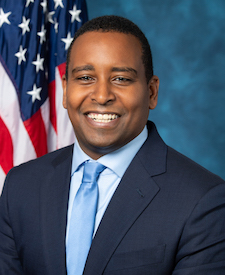
Legislative Progress
Passed HousePlaced on Senate Legislative Calendar under General Orders. Calendar No. …
Committee on Energy and Natural Resources. Reported by Senator Lee …
Committee on Energy and Natural Resources. Ordered to be reported …
Committee on Energy and Natural Resources Subcommittee on Water and …
Received in the Senate and Read twice and referred to …
Received; read twice and referred to the Committee on Energy …
Motion to reconsider laid on the table Agreed to without …
On motion to suspend the rules and pass the bill, …
Passed/agreed to in House: On motion to suspend the rules …
Considered as unfinished business. (consideration: CR H5136)
Stakeholder Effects
cui bono?How this legislation distributes effects. Mention counts reflect frequency, not effect magnitude.
Providers of nonairborne imaging spectroscopy, Snowpack measurement technology providers
Snowpack measurement technology providers faces effects in multiple directions
Bureau of Reclamation, Irrigation districts using snowpack forecasts, Water districts using snowpack forecasts
Positive-direction: Irrigation districts using snowpack forecasts, Water districts using snowpack forecasts
Negative-direction: Bureau of Reclamation
Developers of noncommercial integrated snowpack measurement technologies
Bill Structure & Actor Mappings
Who is "The Secretary" in each section?
- "noaa"
- → National Oceanic and Atmospheric Administration
- "nrcs"
- → Natural Resources Conservation Service
- "secretary"
- → Secretary of the Interior
- "commissioner"
- → Commissioner of the Bureau of Reclamation
Note: IH to RH corrects the amendment citation, removes commercially available and the airborne limitation on imaging spectroscopy, expressly names NOAA/NRCS, and changes the proposed annual authorization from $15 million to $6.5 million. RH to EH changes only $6.5 million to $3 million. EH and RFS operative text agrees.
Key Definitions
Terms defined in this bill
The existing Snow Water Supply Forecasting Program in 43 USC 1477, not a newly established grant program.
We use a combination of our own taxonomy and classification in addition to large language models to assess meaning and potential beneficiaries. High confidence means strong textual evidence. Always verify with the original bill text.
Learn more about our methodology