SKIM Act
Summary
What This Bill Does
The SKIM Act responds to payment-card skimming and access-device fraud. Within 30 days after enactment, the United States Sentencing Commission must revise guideline section 2B1.1(b)(11) so the baseline enhancement for access-device-related conduct is four offense levels and, if the resulting offense level is below 14, it is raised to level 14. The Commission must also revise application notes so that in cases involving 10 or more counterfeit or unauthorized access devices, loss includes any unauthorized charges made with any such device in any amount. Within 90 days, the Attorney General, coordinating with Homeland Security, must report to House and Senate judiciary and homeland security committees on coordinated federal, state, and local efforts to prevent, investigate, prosecute, and sentence access-device fraud. The report must assess cooperative operations, technologies and techniques used by perpetrators, state and local assistance requests to DOJ or DHS and how many received help, states and counties where fraud remains unaddressed or especially concerning, legislative recommendations for intergovernmental cooperation, and best practices for state and local law enforcement and business owners.
Who Benefits and How
Payment-card fraud victims benefit if higher guideline penalties deter skimming and counterfeit access-device schemes. Retailers benefit from best practices for business owners to combat access-device fraud. State law enforcement agencies benefit from a federal report on assistance requests, cooperation gaps, and best practices. Federal prosecutors benefit from stronger sentencing enhancements and clearer loss calculations in access-device cases.
Who Bears the Burden and How
Access-device fraud defendants face higher guideline ranges and loss calculations in cases involving 10 or more devices. United States Sentencing Commission staff must amend the guidelines within 30 days. DOJ criminal division staff must coordinate a 90-day report with DHS. DHS investigative staff must assess technologies, techniques, assistance requests, hotspots, and cooperation recommendations.
Key Provisions
- Requires Sentencing Commission guideline revisions within 30 days.
- Increases the access-device fraud enhancement to four levels with a minimum offense level of 14.
- Requires loss calculations to include unauthorized charges for cases involving at least 10 counterfeit or unauthorized devices.
- Requires DOJ and DHS to report within 90 days on coordinated access-device fraud enforcement.
- Requires the report to cover technologies, assistance requests, hotspots, legislative recommendations, and best practices.
Evidence Chain:
This summary is generated from the full bill text using AI analysis. Expand "Detailed Analysis" below for identified beneficiaries/burden bearers with clause-level evidence links.
At a Glance
What This Bill Does
Directs the Sentencing Commission within 30 days to increase access-device fraud guideline penalties to a four-level increase with a minimum offense level of 14 and to count unauthorized charges for cases involving at least 10 counterfeit or unauthorized access devices, and requires DOJ and DHS within 90 days to report on federal, state, and local efforts, technologies, assistance requests, hotspots, legislative recommendations, and best practices for combating access-device fraud.
Key Policy Areas
Criminal Justice, Financial Fraud, Sentencing
Primary Purpose
Directs the Sentencing Commission within 30 days to increase access-device fraud guideline penalties to a four-level increase with a minimum offense level of 14 and to count unauthorized charges for cases involving at least 10 counterfeit or unauthorized access devices, and requires DOJ and DHS within 90 days to report on federal, state, and local efforts, technologies, assistance requests, hotspots, legislative recommendations, and best practices for combating access-device fraud.
Policy Domains
Resolution provisions
Identified Gains
- Payment-card fraud victims
- Retailers
- State law enforcement agencies
- Federal prosecutors
Identified Costs
- Access-device fraud defendants
- United States Sentencing Commission staff
- DOJ criminal division staff
- DHS investigative staff
Sponsors



Legislative Progress
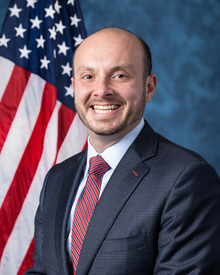
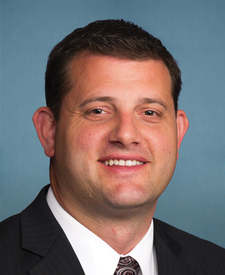
In CommitteeMr. Fong (for himself, Mr. Valadao, Mrs. Kim, and Mr. …
Referred to the House Committee on the Judiciary.
Introduced in House
Stakeholder Effects
cui bono?How this legislation distributes effects. Mention counts reflect frequency, not effect magnitude.
Access-device fraud defendants, State law enforcement agencies
DHS investigative staff, DOJ criminal division staff
Bill Structure & Actor Mappings
Who is "The Secretary" in each section?
We use a combination of our own taxonomy and classification in addition to large language models to assess meaning and potential beneficiaries. High confidence means strong textual evidence. Always verify with the original bill text.
Learn more about our methodology