LNG Public Interest Determination Act of 2025
Summary
What This Bill Does
The LNG Public Interest Determination Act rewrites the Natural Gas Act export approval standard. No person may export natural gas without a DOE order after hearing and a public-interest finding. DOE must decide within one year after the later of receiving FERC's final environmental impact statement or completing required assessments. DOE may find an export consistent with the public interest only if assessments show it is not likely to significantly contribute to climate change, materially increase energy prices or volatility for any segment of U.S. consumers, or create disproportionate cumulative human or environmental burdens for rural, low-income, minority, or other vulnerable communities. The climate assessment must use latest science and 20-year methane global warming potential, estimate full lifecycle emissions from extraction through consumption, compare emissions with deep decarbonization pathways and U.S. international commitments, assess effects on renewable energy, electrification, efficiency, and U.S. clean-energy exports, estimate social costs of emissions, and identify climate-related economic losses such as sea-level rise, storms, eroding coasts, and wildfires. The economic assessment must estimate impacts on low-income consumers, working families, small businesses, manufacturers, state and local governments, and fertilizer producers and users. The environmental-justice assessment must address cumulative burdens, fisheries, racial and socioeconomic disparities, and civil-rights compliance. DOE must provide meaningful public participation and address disability, language, and resource barriers. Export approvals become major federal actions under NEPA. The bill also removes the free-trade-agreement export treatment in section 3(c), terminates DOE categorical exclusion B5.7 for natural gas exports by marine vessel, fixes a coordination reference to FERC, and requires DOE rulemaking within one year.
Who Benefits and How
Environmental justice communities benefit from required cumulative-impact, civil-rights, and participation analysis before LNG export approval. Low-income energy consumers benefit if DOE must reject exports likely to materially increase energy prices or volatility. Climate policy advocates benefit from lifecycle methane, social-cost, and clean-energy-transition assessments. Domestic manufacturers and fertilizer users benefit if DOE weighs export effects on U.S. energy prices.
Who Bears the Burden and How
LNG export developers face expanded DOE review, NEPA treatment, public participation, and possible denial based on climate or price impacts. DOE fossil energy staff must complete climate, economic, and environmental-justice assessments and issue rules within one year. FERC staff face continued coordination because DOE timing depends on final environmental impact statements. Foreign LNG buyers may face slower or less certain U.S. export approvals.
Key Provisions
- Requires DOE orders for natural-gas exports after hearing and public-interest review.
- Requires public-interest findings within one year after FERC EIS and DOE assessments are complete.
- Limits approval to exports unlikely to significantly worsen climate change, energy prices, or environmental-justice burdens.
- Requires lifecycle methane, clean-energy, social-cost, consumer-price, and environmental-justice assessments.
- Requires meaningful public participation with disability, language, and resource-barrier accommodations.
- Treats LNG export approvals as major federal actions under NEPA.
- Terminates DOE's categorical exclusion for natural-gas exports by marine vessel.
- Requires DOE rulemaking within one year.
Evidence Chain:
This summary is generated from the full bill text using AI analysis. Expand "Detailed Analysis" below for identified beneficiaries/burden bearers with clause-level evidence links.
At a Glance
What This Bill Does
Requires DOE authorization for all natural-gas exports, removes the free-trade-agreement export presumption, conditions public-interest approval on climate, consumer-price, and environmental-justice assessments, requires meaningful public participation, treats LNG export approvals as major federal actions under NEPA, terminates DOE's categorical exclusion for natural-gas exports by marine vessel, and requires implementing rules within one year.
Key Policy Areas
Energy, LNG Exports, Climate
Primary Purpose
Requires DOE authorization for all natural-gas exports, removes the free-trade-agreement export presumption, conditions public-interest approval on climate, consumer-price, and environmental-justice assessments, requires meaningful public participation, treats LNG export approvals as major federal actions under NEPA, terminates DOE's categorical exclusion for natural-gas exports by marine vessel, and requires implementing rules within one year.
Policy Domains
Resolution provisions
Identified Gains
- Environmental justice communities
- Low-income energy consumers
- Climate policy advocates
- Domestic manufacturers
- Fertilizer users
Identified Costs
- LNG export developers
- DOE fossil energy staff
- FERC staff
- Foreign LNG buyers
Sponsors



Legislative Progress
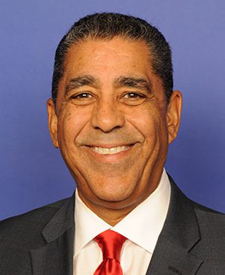
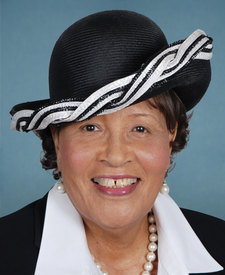
In CommitteeMr. Casten (for himself, Ms. Barragán, Ms. Castor of Florida, …
Referred to the House Committee on Energy and Commerce.
Introduced in House
Stakeholder Effects
cui bono?How this legislation distributes effects. Mention counts reflect frequency, not effect magnitude.
Foreign LNG buyers, LNG export developers, Low-income energy consumers
Positive-direction: Low-income energy consumers
Negative-direction: Foreign LNG buyers, LNG export developers
Bill Structure & Actor Mappings
Who is "The Secretary" in each section?
We use a combination of our own taxonomy and classification in addition to large language models to assess meaning and potential beneficiaries. High confidence means strong textual evidence. Always verify with the original bill text.
Learn more about our methodology