STOCK Act 2.0
Summary
What This Bill Does
The STOCK Act 2.0 is a broad conflict-of-interest and disclosure bill. It first requires covered officials, spouses, dependent children, and covered businesses to report applications for or receipt of federal covered payments such as loans, contracts, grants, and other Treasury-defined payments. Reports are due within 30 days after notice and no later than 45 days after the payment is made or promised, and late reporting carries a $5,000 fine. It applies STOCK Act, financial-disclosure, and securities-enforcement provisions to Federal Reserve bank presidents, vice presidents, and directors, with the Federal Reserve and CFPB Inspector General serving as supervising ethics office. It replaces one transaction-report noncompliance penalty with a $1,000 fine per missed transaction report and requires ethics offices, including the Administrative Office of the United States Courts, to update guidance within one year. The central new subchapter bans covered individuals, including Members of Congress, the President, Vice President, special government employees, Supreme Court justices, Federal Reserve governors, Federal Reserve bank leaders, spouses, and dependent children, from holding, purchasing, selling, or transacting in securities, futures, commodities, cryptocurrency, synthetic derivatives, or net short positions, subject to exceptions for diversified registered investment funds, certain spousal primary-employment compensation, and Treasury securities. Covered individuals also may not serve as officers or board members of for-profit entities. Covered financial interests must be divested within 120 days after becoming covered or enactment; inherited interests must be sold within 120 days; extensions can be granted but total extension time may not exceed 150 days and each extension may not exceed 45 days. Covered individuals must certify compliance, ethics offices must publish extension requests and decisions within 30 days, violations carry fines of at least 10 percent of the violating interest or short position, and the rules apply to beneficially owned trust interests even inside qualified blind trusts. Finally, House, Senate, and OGE databases must provide public online access to financial disclosures, transaction reports, extensions, amendments, and blind-trust notices in searchable, sortable, downloadable, API-accessible, Section 508-compliant, WCAG-compliant formats.
Who Benefits and How
Government ethics watchdogs benefit from broader reporting of federal payments and public financial-disclosure databases. Voters benefit from searchable and downloadable information about congressional, executive, judicial, and Federal Reserve financial interests. Supervising ethics offices benefit from clearer divestiture, certification, publication, and penalty rules. Market-integrity advocates benefit from bans on covered officials holding covered financial interests or net short positions.
Who Bears the Burden and How
Members of Congress and covered family members must report federal payments, divest covered financial interests, certify compliance, and avoid for-profit board seats. Senior executive officials must divest covered securities, futures, commodities, cryptocurrency, derivatives, and short positions. Supreme Court justices and covered judicial officials must comply with the same financial-interest restrictions. Federal Reserve bank leaders become subject to STOCK Act and financial-disclosure enforcement. House, Senate, OGE, Federal Reserve, CFPB, and judicial ethics offices must build systems, update guidance, publish extension decisions, and enforce fines.
Key Provisions
- Requires covered officials and family members to report federal payment applications and receipts.
- Extends STOCK Act and financial-disclosure rules to Federal Reserve bank presidents, vice presidents, and directors.
- Sets $1,000 fines for missed transaction reports and $5,000 fines for missed federal-payment reports.
- Prohibits covered officials from holding, trading, or shorting covered financial interests.
- Requires divestiture within 120 days, compliance certifications, and publication of extension requests and decisions.
- Requires fines of at least 10 percent of violating financial interests or short positions.
- Applies the restrictions to beneficially owned trust interests.
- Requires searchable, sortable, downloadable, API-accessible public financial-disclosure databases.
Evidence Chain:
This summary is generated from the full bill text using AI analysis. Expand "Detailed Analysis" below for identified beneficiaries/burden bearers with clause-level evidence links.
At a Glance
What This Bill Does
Requires covered officials and family members to report applications for or receipt of federal payments, extends STOCK Act and financial-disclosure rules to Federal Reserve bank leaders, sets $1,000 transaction-report fines, bans covered officials from holding or trading securities, futures, commodities, cryptocurrency, derivatives, short positions, and for-profit board seats, requires divestiture and compliance certifications, publishes extension decisions, imposes fines of at least 10 percent of violating interests, applies the ban to beneficially owned trusts, and requires searchable, sortable, downloadable, API-accessible online financial-disclosure databases.
Key Policy Areas
Government Ethics, Financial Disclosure, Congress
Primary Purpose
Requires covered officials and family members to report applications for or receipt of federal payments, extends STOCK Act and financial-disclosure rules to Federal Reserve bank leaders, sets $1,000 transaction-report fines, bans covered officials from holding or trading securities, futures, commodities, cryptocurrency, derivatives, short positions, and for-profit board seats, requires divestiture and compliance certifications, publishes extension decisions, imposes fines of at least 10 percent of violating interests, applies the ban to beneficially owned trusts, and requires searchable, sortable, downloadable, API-accessible online financial-disclosure databases.
Policy Domains
Resolution provisions
Identified Gains
- Government ethics watchdogs
- Voters
- Supervising ethics offices
- Market-integrity advocates
Identified Costs
- Members of Congress
- Senior executive officials
- Supreme Court justices
- Federal Reserve bank leaders
- Ethics office staff
Sponsors




Legislative Progress
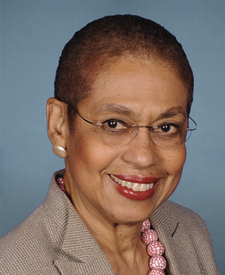
In CommitteeMr. Min (for himself, Ms. Norton, Ms. Ansari, Mr. Levin, …
Referred to the Committee on Oversight and Government Reform, and …
Introduced in House
Stakeholder Effects
cui bono?How this legislation distributes effects. Mention counts reflect frequency, not effect magnitude.
Ethics office staff, Government ethics watchdogs, Senior executive officials
Bill Structure & Actor Mappings
Who is "The Secretary" in each section?
We use a combination of our own taxonomy and classification in addition to large language models to assess meaning and potential beneficiaries. High confidence means strong textual evidence. Always verify with the original bill text.
Learn more about our methodology