Public Land Search and Rescue Act
Summary
What This Bill Does
The Public Land Search and Rescue Act creates a grant program for remote search and rescue on federal lands. Within one year, the Secretary of the Interior must establish grants to allocate resources for remote search and rescue activities conducted on federal land under Interior or Agriculture jurisdiction. Eligible recipients are states, political subdivisions, or their designees that are authorized by state or federal law to conduct remote search and rescue and that Interior determines have the capability to carry out the activities. Applicants must submit information in the form and timing the Secretary requires. Interior must prioritize areas with a high ratio of visitors to residents, which targets gateway communities and rural counties whose rescue burden comes from public-land visitation rather than local population size. The federal share is capped at 75 percent. Eligible purposes include purchasing equipment and gear, maintaining and repairing remote rescue equipment, and reimbursing eligible recipients for remote search and rescue activities on covered federal lands.
Who Benefits and How
County search and rescue teams benefit from grant funding for equipment, repairs, and reimbursement on federal lands. Gateway communities benefit because high visitor-to-resident areas receive application priority. Public land visitors benefit if better-funded rescue teams respond faster in remote areas. State emergency agencies benefit from a federal grant pathway for remote public-land rescue capacity.
Who Bears the Burden and How
Interior grant staff must establish the program, evaluate applicants, and administer cost-share rules. Agriculture land managers must coordinate with rescue activities on National Forest System lands. Local governments must provide or secure the nonfederal share for grant-funded purposes. Federal taxpayers fund up to 75 percent of eligible search and rescue costs.
Key Provisions
- Requires Interior to establish a remote search and rescue grant program within one year.
- Funds search and rescue activities on Interior and Agriculture federal lands.
- Prioritizes eligible recipients serving high visitor-to-resident areas.
- Limits the federal share to 75 percent of eligible costs.
- Provides grants for equipment, maintenance, repair, and reimbursement of rescue activities.
Evidence Chain:
This summary is generated from the full bill text using AI analysis. Expand "Detailed Analysis" below for identified beneficiaries/burden bearers with clause-level evidence links.
At a Glance
What This Bill Does
Requires Interior to create, within one year, a grant program for states, political subdivisions, or designees that conduct remote search and rescue on Interior or Agriculture federal lands, prioritizing high visitor-to-resident areas, limiting the federal share to 75 percent, and funding equipment purchases, maintenance, repair, and reimbursement for qualifying rescue activities.
Key Policy Areas
Public Lands, Emergency Response, Search and Rescue
Primary Purpose
Requires Interior to create, within one year, a grant program for states, political subdivisions, or designees that conduct remote search and rescue on Interior or Agriculture federal lands, prioritizing high visitor-to-resident areas, limiting the federal share to 75 percent, and funding equipment purchases, maintenance, repair, and reimbursement for qualifying rescue activities.
Policy Domains
Resolution provisions
Identified Gains
- County search and rescue teams
- Gateway communities
- Public land visitors
- State emergency agencies
Identified Costs
- Interior grant staff
- Agriculture land managers
- Local governments
- Federal taxpayers
Sponsors


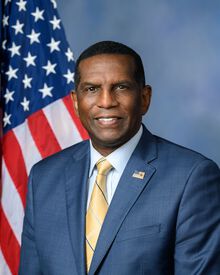


Legislative Progress
In CommitteeMs. Maloy (for herself, Mr. Kennedy of Utah, Mr. Moore …
Referred to the Committee on Natural Resources, and in addition …
Introduced in House
Stakeholder Effects
cui bono?How this legislation distributes effects. Mention counts reflect frequency, not effect magnitude.
Local governments, State emergency agencies
Positive-direction: State emergency agencies
Negative-direction: Local governments
Bill Structure & Actor Mappings
Who is "The Secretary" in each section?
We use a combination of our own taxonomy and classification in addition to large language models to assess meaning and potential beneficiaries. High confidence means strong textual evidence. Always verify with the original bill text.
Learn more about our methodology