Regulation Reduction Act of 2025
Summary
What This Bill Does
The Regulation Reduction Act of 2025 creates a statutory one-in, three-out rulemaking constraint. An agency may not issue a rule that imposes costs or responsibilities on nongovernmental persons or state or local governments unless it has repealed at least three related rules that are costly, ineffective, duplicative, or outdated. For major rules, the agency must repeal at least three such rules and the cost of the new major rule must be less than or equal to the cost of the repealed rules. OIRA must certify the cost offset for major rules. Repealed rules must be published in the Federal Register. The bill excludes internal agency policy or procurement rules and rules revised to be less burdensome. Within 90 days, each agency head must report to Congress and OMB after reviewing agency rules and identifying whether each rule is costly, ineffective, duplicative, or outdated. The mechanism is designed to slow net regulatory growth and force agencies to inventory existing regulatory burdens before adding new ones.
Who Benefits and How
Regulated businesses benefit if agencies must remove three burdensome rules before imposing a new costly rule. Small businesses benefit if OIRA-certified offsets reduce net compliance costs from major rules. State governments benefit when new federal rules affecting them require repeal of older costly or duplicative rules. Local governments benefit from the same rulemaking offset requirement for federal rules that impose local responsibilities.
Who Bears the Burden and How
Federal agencies must review rule inventories, prepare 90-day reports, repeal rules, and publish repeals before issuing new rules. OIRA staff must certify cost offsets for major rules. Regulatory beneficiaries may lose protections if agencies repeal rules to satisfy the three-rule requirement. Congressional committees must receive and evaluate agency reports on costly, ineffective, duplicative, or outdated rules.
Key Provisions
- Requires agencies to repeal at least three related rules before issuing a new costly rule.
- Requires major rules to have repeal savings at least equal to new rule costs.
- Requires OIRA certification of major-rule cost offsets.
- Requires repealed rules to be published in the Federal Register.
- Requires agency reports within 90 days identifying costly, ineffective, duplicative, or outdated rules.
- Excludes internal policy, procurement, and burden-reducing revisions.
Evidence Chain:
This summary is generated from the full bill text using AI analysis. Expand "Detailed Analysis" below for identified beneficiaries/burden bearers with clause-level evidence links.
At a Glance
What This Bill Does
Bars agencies from issuing a new costly rule unless they repeal at least three related costly, ineffective, duplicative, or outdated rules, requires major rules to have offsetting repeal savings certified by OIRA, requires repeals to be published in the Federal Register, and directs each agency to report within 90 days on rules that are costly, ineffective, duplicative, or outdated.
Key Policy Areas
Regulation, Small Business, OMB
Primary Purpose
Bars agencies from issuing a new costly rule unless they repeal at least three related costly, ineffective, duplicative, or outdated rules, requires major rules to have offsetting repeal savings certified by OIRA, requires repeals to be published in the Federal Register, and directs each agency to report within 90 days on rules that are costly, ineffective, duplicative, or outdated.
Policy Domains
Resolution provisions
Identified Gains
- Regulated businesses
- Small businesses
- State governments
- Local governments
Identified Costs
- Federal agencies
- OIRA staff
- Regulatory beneficiaries
- Congressional committees
Sponsors




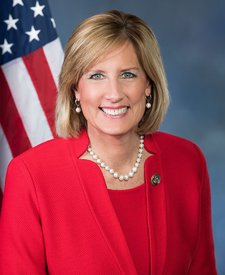
Legislative Progress
In CommitteeMrs. Bice (for herself, Mr. Amodei of Nevada, Mr. Feenstra, …
Referred to the Committee on Oversight and Government Reform, and …
Introduced in House
Stakeholder Effects
cui bono?How this legislation distributes effects. Mention counts reflect frequency, not effect magnitude.
Local governments, State governments
Bill Structure & Actor Mappings
Who is "The Secretary" in each section?
We use a combination of our own taxonomy and classification in addition to large language models to assess meaning and potential beneficiaries. High confidence means strong textual evidence. Always verify with the original bill text.
Learn more about our methodology