To amend the Employee Retirement Income Security Act of 1974 to establish parity in the treatment of behavioral health and physical health conditions under disability benefit plans.
Analysis under review: This bill has generated analysis that may be too generic or incomplete. Clause-level evidence remains available below.
Summary
What This Bill Does
The Mental Health Parity in Disability Benefits Act requires that employer-sponsored disability benefit plans treat mental health and substance use disorders the same as physical health conditions. It prohibits plans from placing more restrictive limitations on disability benefits for behavioral health conditions compared to physical conditions.
Who Benefits and How
Workers with mental health conditions or substance use disorders benefit significantly by gaining equal access to long-term disability benefits that were previously limited or denied. Mental health treatment providers may see increased demand as workers can maintain benefits while receiving treatment. Employee welfare benefit advocacy groups achieve a long-sought policy goal.
Who Bears the Burden and How
Insurance companies offering disability benefits must restructure their plans and face potentially higher claims costs. Employers sponsoring disability benefit plans may see increased premium costs. Plan administrators face new compliance requirements and potential civil penalties for violations of up to $100 per day per participant.
Key Provisions
- Disability benefit plans cannot place more restrictive limitations on mental health/substance use disorder claims than physical health claims
- Physical conditions caused by mental health disorders must be considered part of the disability
- States enforce requirements for insurance issuers; Secretary of Labor enforces for non-compliant states
- $10 million annual appropriation authorized for implementation over 5 years
Evidence Chain:
This summary is generated from the full bill text using AI analysis. Expand "Detailed Analysis" below for identified beneficiaries/burden bearers.
At a Glance
What This Bill Does
Establishes parity requirements for disability benefits so that mental health and substance use disorders cannot be treated less favorably than physical health conditions
Key Policy Areas
Labor, Healthcare, Insurance, Mental Health
Primary Purpose
Establishes parity requirements for disability benefits so that mental health and substance use disorders cannot be treated less favorably than physical health conditions
Policy Domains
Title I - ERISA Amendments
Identified Gains
Contextual inference, no direct clause citation- Workers with mental health conditions
- Workers with substance use disorders
- Mental health treatment providers
Contextual inference, no direct clause citation
Identified Costs
Contextual inference, no direct clause citation- Disability insurance carriers
- Employers offering disability benefits
- Plan administrators
Contextual inference, no direct clause citation
Title II - Governmental Plans and Issuers
Identified Gains
Contextual inference, no direct clause citation- Government employees with mental health conditions
- Workers covered by non-ERISA plans
Contextual inference, no direct clause citation
Identified Costs
Contextual inference, no direct clause citation- Insurance issuers
- State governments
- Governmental plan sponsors
Contextual inference, no direct clause citation
Title III - General Provisions
Identified Gains
Contextual inference, no direct clause citation- Department of Labor
Contextual inference, no direct clause citation
Identified Costs
Contextual inference, no direct clause citation- Federal taxpayers
Contextual inference, no direct clause citation
Sponsors
Legislative Progress
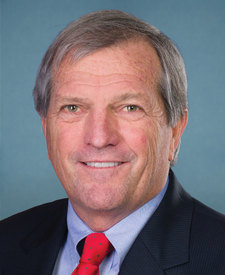
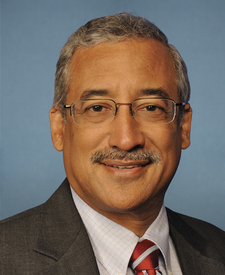
IntroducedMr. DeSaulnier (for himself and Mr. Scott of Virginia) introduced …
Stakeholder Effects
cui bono?How this legislation distributes effects. Mention counts reflect frequency, not effect magnitude.
Government employees with mental health conditions, Workers with mental health conditions, Workers with substance use disorders
Disability insurance carriers, Insurance issuers offering disability coverage, Insurance issuers violating parity requirements
Governmental employee benefit plan sponsors, State insurance regulators, States with existing mental health parity laws
Employers offering disability benefit plans, Non-compliant plan sponsors and administrators
Bill Structure & Actor Mappings
Who is "The Secretary" in each section?
- "the_secretary"
- → Secretary of Labor
- "the_secretary"
- → Secretary of Labor
- "the_secretary"
- → Secretary of Labor
Key Definitions
Terms defined in this bill
A governmental plan as defined in ERISA section 3(32), excluding plans established by the federal government
Payment provided to a participant or beneficiary as a result of the loss of earning capacity resulting from injury or sickness
An employee welfare benefit plan that provides a disability benefit to participants or beneficiaries directly or through insurance or otherwise
Any condition (other than substance use disorder) that falls under diagnostic categories in WHO's ICD or APA's DSM for mental, behavioral, and neurodevelopmental disorders
Any disorder listed as mental or behavioral disorder due to psychoactive substance use in WHO's ICD or as Substance-Related and Addictive Disorder in APA's DSM
We use a combination of our own taxonomy and classification in addition to large language models to assess meaning and potential beneficiaries. High confidence means strong textual evidence. Always verify with the original bill text.
Learn more about our methodology