FISH Act of 2025
Summary
What This Bill Does
The FISH Act defines IUU fishing, forced labor, seafood, beneficial owners, NOAA, and regional fisheries management organizations. It requires NOAA, coordinating with State, CBP, and Labor, to develop and publish an IUU vessel list covering foreign vessels, fleets, and beneficial owners with clear and convincing evidence of IUU fishing or related support. Treasury may block property and transactions for foreign persons, vessels, officials, entities, or material supporters tied to IUU fishing, endangered-species fish trade, or IUU vessel-list conduct. The Coast Guard must increase observation and potential boarding of suspected IUU vessels on the high seas and report to Congress on bilateral agreements, observed incidents, vessel status, and enforcement follow-up. The bill adds strategies for regional fisheries management organizations, data sharing, forced-labor seafood import detection, capacity building in foreign fisheries sectors, and technology studies, plus a State Department study on Russian and Chinese fishing industry collaboration and seafood reprocessing in China.
Who Benefits and How
U.S. commercial fishing company officers benefit from stronger enforcement against IUU competitors and forced-labor seafood. NOAA enforcement Office staff benefit from clearer IUU vessel-list authority and data-sharing recommendations. Coast Guard boarding officers benefit from reporting and bilateral-agreement planning for high-seas inspections. CBP Forced Labor Division staff benefit from a required strategy using Federal data to identify seafood harvested with forced labor. Seafood consumers benefit if import controls reduce illegally harvested or forced-labor seafood in U.S. commerce. Fisheries monitoring technology companies benefit from studies on drones, remote observing, risk tools, data-sharing software, containerization, and satellite Wi-Fi.
Who Bears the Burden and How
Foreign IUU vessel company officers face blacklisting, sanctions, boarding, and import scrutiny. Beneficial owners of IUU vessels face property-blocking and transaction prohibitions. U.S. seafood importer compliance officers must handle more data checks, CBP targeting, and forced-labor review. NOAA, Coast Guard, CBP, State, Treasury, Labor, USAID, and Interagency Working Group staff must coordinate reports, sanctions, strategies, and studies. Foreign fishing company owners tied to Russia, China, or forced labor face greater U.S. market scrutiny.
Key Provisions
- Defines IUU fishing, forced labor, seafood, beneficial owners, NOAA, and regional fisheries management organizations.
- Requires a public IUU vessel list covering foreign vessels, fleets, and beneficial owners.
- Authorizes Treasury sanctions against foreign persons, vessels, entities, officials, and material supporters tied to IUU fishing.
- Directs Coast Guard high-seas observation, boarding emphasis, and reports on bilateral agreements and enforcement follow-up.
- Requires strategies for data sharing, RFMO enforcement, forced-labor seafood import detection, and foreign fisheries capacity building.
- Requires technology and supply-chain studies, including Russian-Chinese seafood market analysis.
Evidence Chain:
This summary is generated from the full bill text using AI analysis. Expand "Detailed Analysis" below for identified beneficiaries/burden bearers with clause-level evidence links.
At a Glance
What This Bill Does
Strengthens U.S. action against illegal, unreported, and unregulated fishing by expanding IUU vessel blacklisting, authorizing sanctions, increasing Coast Guard high-seas enforcement reporting, targeting forced-labor seafood imports, improving fisheries data sharing, supporting foreign fisheries capacity building, and requiring studies on new technology and Russian-Chinese seafood supply chains.
Key Policy Areas
Fisheries, Trade Enforcement, Forced Labor
Primary Purpose
Strengthens U.S. action against illegal, unreported, and unregulated fishing by expanding IUU vessel blacklisting, authorizing sanctions, increasing Coast Guard high-seas enforcement reporting, targeting forced-labor seafood imports, improving fisheries data sharing, supporting foreign fisheries capacity building, and requiring studies on new technology and Russian-Chinese seafood supply chains.
Policy Domains
House resolution provisions
Identified Gains
- U.S. commercial fishing company officers
- NOAA enforcement Office staff
- Coast Guard boarding officers
- CBP Forced Labor Division staff
- Seafood consumers
- Fisheries monitoring technology companies
Identified Costs
- Foreign IUU vessel company officers
- Beneficial owners of IUU vessels
- U.S. seafood importer compliance officers
- Interagency Working Group staff
- Foreign fishing company owners
Sponsors




Legislative Progress
ReportedOrdered to be Reported in the Nature of a Substitute …
Committee Consideration and Mark-up Session Held
Subcommittee on Water, Wildlife and Fisheries Discharged
Subcommittee Hearings Held
Referred to the Subcommittee on Water, Wildlife and Fisheries.
Referred to the Subcommittee on Coast Guard and Maritime Transportation.
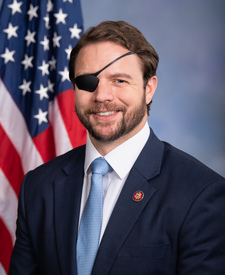
Mr. Crenshaw (for himself, Mr. Magaziner, and Mr. Begich) introduced …
Referred to the Committee on Natural Resources, and in addition …
Introduced in House
Stakeholder Effects
cui bono?How this legislation distributes effects. Mention counts reflect frequency, not effect magnitude.
Beneficial owners of IUU vessels, Foreign IUU vessel operators, U.S. commercial fishing operators
Positive-direction: U.S. commercial fishing operators
Negative-direction: Beneficial owners of IUU vessels, Foreign IUU vessel operators
CBP Forced Labor Division staff, Coast Guard boarding teams, NOAA enforcement offices
Bill Structure & Actor Mappings
Who is "The Secretary" in each section?
- "cbp"
- → Customs and Border Protection
- "noaa"
- → National Oceanic and Atmospheric Administration
- "coast_guard"
- → Coast Guard
We use a combination of our own taxonomy and classification in addition to large language models to assess meaning and potential beneficiaries. High confidence means strong textual evidence. Always verify with the original bill text.
Learn more about our methodology