Continued Rapid Ohia Death Response Act of 2025
Summary
What This Bill Does
The Continued Rapid Ohia Death Response Act of 2025 addresses the fungal disease caused by Ceratocystis fimbriata that affects ohia trees, Metrosideros polymorpha, in Hawaii. It requires the Secretary of the Interior to partner and collaborate with the Secretary of Agriculture and the State of Hawaii to address Rapid Ohia Death.
The bill then directs sustained federal work. Interior, acting through the U.S. Geological Survey, and Agriculture, acting through the Forest Service Institute of Pacific Islands Forestry, must continue research on Rapid Ohia Death vectors and transmission. Interior, acting through the U.S. Fish and Wildlife Service, must continue partnering with Agriculture, Hawaii, and local stakeholders to manage ungulates in Rapid Ohia Death control areas on federal land, state land, and private land with landowner consent. Agriculture, through the Forest Service, must continue financial assistance to prevent spread of the disease and restore Hawaii's native forests, and must continue staffing and infrastructure funding for the Institute of Pacific Islands Forestry.
Who Benefits and How
Hawaii native forests, ohia trees, Native Hawaiian cultural practitioners, Hawaii conservation groups, State of Hawaii natural resource agencies, local forest managers, private landowners consenting to disease-control work, researchers at the Institute of Pacific Islands Forestry, and communities dependent on healthy watersheds benefit because the bill keeps research, disease prevention, ungulate management, restoration funding, staffing, and infrastructure support in place.
Who Bears the Burden and How
The Department of the Interior, U.S. Geological Survey, U.S. Fish and Wildlife Service, Department of Agriculture, Forest Service, Institute of Pacific Islands Forestry, State of Hawaii agencies, local stakeholders, ungulate management contractors, and private landowners in control areas must coordinate research, land access, animal management, financial assistance, restoration work, staffing, and infrastructure commitments.
Key Provisions
- Defines Rapid Ohia Death as the Ceratocystis fimbriata disease affecting Metrosideros polymorpha.
- Requires Interior to partner with Agriculture and Hawaii to address Rapid Ohia Death.
- Requires USGS and the Forest Service Institute of Pacific Islands Forestry to continue vector and transmission research.
- Requires Fish and Wildlife Service partnerships for ungulate management in control areas.
- Provides for work on federal, state, and consenting private land.
- Requires Forest Service financial assistance, staffing, and infrastructure funding for prevention, restoration, and research.
Evidence Chain:
This summary is generated from the full bill text using AI analysis. Expand "Detailed Analysis" below for identified beneficiaries/burden bearers with clause-level evidence links.
At a Glance
What This Bill Does
Requires Interior to partner with Agriculture and Hawaii on Rapid Ohia Death, keeps USGS and Forest Service research on vectors and transmission going, continues Fish and Wildlife Service ungulate-management partnerships in control areas, and continues Forest Service financial, staffing, and infrastructure support for prevention and native forest restoration.
Key Policy Areas
Conservation, Forestry, Hawaii, Agriculture
Primary Purpose
Requires Interior to partner with Agriculture and Hawaii on Rapid Ohia Death, keeps USGS and Forest Service research on vectors and transmission going, continues Fish and Wildlife Service ungulate-management partnerships in control areas, and continues Forest Service financial, staffing, and infrastructure support for prevention and native forest restoration.
Policy Domains
Substantive provisions
Identified Gains
- Hawaii native forests
- Ohia trees
- Native Hawaiian cultural practitioners
- Hawaii conservation groups
- State of Hawaii natural resource agencies
- Local forest managers
- Private landowners consenting to disease-control work
- Institute of Pacific Islands Forestry researchers
- Communities dependent on healthy watersheds
Identified Costs
- Department of the Interior
- United States Geological Survey
- United States Fish and Wildlife Service
- Department of Agriculture
- Forest Service
- Institute of Pacific Islands Forestry
- State of Hawaii agencies
- Local stakeholders
- Ungulate management contractors
- Private landowners in control areas
Sponsors
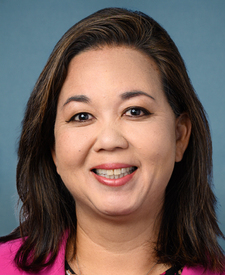
Jill N. Tokuda
D-HI | Primary Sponsor
Legislative Progress
Passed HouseReceived; read twice and referred to the Committee on Agriculture, …
Passed House (inferred from eh version)
Received in the Senate and Read twice and referred to …
Motion to reconsider laid on the table Agreed to without …
On motion to suspend the rules and pass the bill …
Passed/agreed to in House: On motion to suspend the rules …
Considered as unfinished business. (consideration: CR H346)
At the conclusion of debate, the Yeas and Nays were …
DEBATE - The House proceeded with forty minutes of debate …
Considered under suspension of the rules. (consideration: CR H248-250)
Stakeholder Effects
cui bono?How this legislation distributes effects. Mention counts reflect frequency, not effect magnitude.
Department of Agriculture, Department of the Interior, Forest Service
Hawaii conservation groups, Hawaii native forests, Ohia trees
State of Hawaii natural resource agencies
Private landowners consenting to disease-control work
Bill Structure & Actor Mappings
Who is "The Secretary" in each section?
- "rod"
- → Rapid Ohia Death
- "usgs"
- → United States Geological Survey
We use a combination of our own taxonomy and classification in addition to large language models to assess meaning and potential beneficiaries. High confidence means strong textual evidence. Always verify with the original bill text.
Learn more about our methodology