To amend the Outer Continental Shelf Lands Act to support the responsible development of offshore renewable energy projects, establish the Offshore Power Administration, and for other purposes.
Analysis under review: This bill has generated analysis that may be too generic or incomplete. Clause-level evidence remains available below.
Summary
What This Bill Does
This bill creates a comprehensive federal program to accelerate offshore wind energy development in the United States. It sets national goals of permitting 30 gigawatts of offshore wind by 2030 and 50 gigawatts by 2035. The bill establishes a new Offshore Power Administration to build and manage transmission infrastructure, creates a compensation fund for fishing and maritime industries affected by offshore wind projects, and provides grants for shipyard expansion to build vessels needed for the wind industry.
Who Benefits and How
Offshore wind developers benefit from streamlined permitting, clear national goals, and federally-supported transmission infrastructure. Domestic shipyards and vessel manufacturers receive grants for expansion and modernization. Fishing and maritime industries gain access to a compensation fund for economic impacts and mitigation grants. States and tribes benefit from clearer pathways to meet renewable energy goals.
Who Bears the Burden and How
Federal agencies (Interior, Energy, Commerce) face significant new administrative responsibilities and must hire staff for environmental reviews. Offshore wind developers pay royalties and fees that fund the compensation system. Traditional ocean users must adapt to shared use of offshore areas. Taxpayers fund the appropriations for permitting staff, studies, and shipyard grants.
Key Provisions
- Sets national offshore wind permitting goals: 30 GW by 2030, 50 GW by 2035
- Appropriates $95 million for environmental/cultural review staff at Interior and Commerce
- Creates Offshore Renewable Energy Compensation Fund for fishing/maritime claims and mitigation
- Establishes Offshore Power Administration to develop shared transmission infrastructure
- Provides grants for shipyard refurbishment with prevailing wage requirements
Evidence Chain:
This summary is generated from the full bill text using AI analysis. Expand "Detailed Analysis" below for identified beneficiaries/burden bearers.
At a Glance
What This Bill Does
Establishes comprehensive federal support for offshore wind energy development including permitting goals (30 GW by 2030, 50 GW by 2035), creates compensation fund for affected industries, establishes Offshore Power Administration for transmission infrastructure, and funds shipyard expansion
Key Policy Areas
Energy, Environment, Maritime, Manufacturing
Primary Purpose
Establishes comprehensive federal support for offshore wind energy development including permitting goals (30 GW by 2030, 50 GW by 2035), creates compensation fund for affected industries, establishes Offshore Power Administration for transmission infrastructure, and funds shipyard expansion
Policy Domains
Offshore Renewable Energy Development
Identified Gains
Contextual inference, no direct clause citation- Offshore wind developers
- Domestic shipyards and vessel manufacturers
- Clean energy industry
- Coastal states with renewable energy goals
- Workers in offshore wind supply chain
Contextual inference, no direct clause citation
Identified Costs
Contextual inference, no direct clause citation- Federal agencies (administrative costs)
- Traditional fishing industry (adapting to shared ocean use)
- Taxpayers (appropriations)
- Offshore wind developers (royalties for compensation fund)
Contextual inference, no direct clause citation
Sponsors
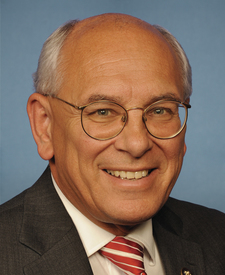
Legislative Progress
IntroducedMr. Tonko introduced the following bill; which was referred to …
Stakeholder Effects
cui bono?How this legislation distributes effects. Mention counts reflect frequency, not effect magnitude.
Offshore wind developers, Regional transmission organizations
Offshore wind developers faces effects in multiple directions
Bureau of Ocean Energy Management, Department of Commerce/NOAA, Department of Energy
Department of the Interior faces effects in multiple directions
Positive-direction: Department of Commerce/NOAA
Negative-direction: Bureau of Ocean Energy Management, Department of Energy
Coastal communities affected by offshore wind, States with offshore wind potential, States with renewable energy goals
Commercial fishing industry, Fishing industry claiming damages
Electric grid component manufacturers, Shipyard workers
Positive-direction: Shipyard workers
Negative-direction: Electric grid component manufacturers
Bill Structure & Actor Mappings
Who is "The Secretary" in each section?
- "the_secretary"
- → Secretary of the Interior (in OCSLA context)
- "secretary_of_energy"
- → Secretary of Energy
- "secretary_of_commerce"
- → Secretary of Commerce
- "secretary_of_interior"
- → Secretary of the Interior
Key Definitions
Terms defined in this bill
A project to carry out activities related to wind, solar, wave, or tidal energy on the outer Continental Shelf
Fishing industry participants, coastal communities, and maritime users eligible for compensation fund payments
Offshore transmission lines and facilities connecting offshore wind projects to onshore grid
We use a combination of our own taxonomy and classification in addition to large language models to assess meaning and potential beneficiaries. High confidence means strong textual evidence. Always verify with the original bill text.
Learn more about our methodology