Complete Streets Act of 2025
Summary
What This Bill Does
The Complete Streets Act creates a national framework for streets that safely accommodate walking, cycling, transit, mobility devices, automobiles, and freight for users of all ages and abilities. By the second full fiscal year after enactment, each state must establish a competitive process for eligible entities to seek technical assistance and grants; by the third full fiscal year, states must begin awarding design and construction grants. DOT must issue benchmarks and guidance within one year, including design procedures, expected operational and safety performance, road classification options, user needs, barriers, costs, and lessons from the FHWA National Complete Streets Assessment. Eligible entities, including local governments, MPOs, transit agencies, Tribal governments, nonprofits, and public land agencies, must adopt a complete streets policy approved by the state or delegated MPO. Policies must apply across planning, design, maintenance, operations, reconstruction, and new construction; address underserved neighborhoods; coordinate jurisdictions; use modern design and disability access standards; establish measurable outcomes; and allow limited exemptions. States and MPOs must evaluate and certify policies, states must report implementation, and DOT must report to Congress by the fourth fiscal year. To receive construction grants, eligible entities must develop approved prioritization plans listing projects, cost estimates, timelines, safety, mobility, transit, micromobility, freight, air quality, and access to jobs and services for low-income people, communities of color, and transit-dependent people. States may provide up to $100,000 annually for planning studies and may award project grants up to the lesser of $20 million or 20 percent of state program funds, prioritizing intersections and corridors where nonmotorized users are most vulnerable. DOT and DOJ must update accessibility standards to adopt public-right-of-way pedestrian facility guidelines and include vision, hearing, cognitive ability, and language access. States must obligate 5 percent of highway apportionments, or territorial section 165 apportionments, for the program. The bill also amends FAST Act design standards to require states and MPOs to accommodate motorized and nonmotorized users in all phases of federal surface transportation projects.
Who Benefits and How
Pedestrians benefit from safer sidewalk, crosswalk, lighting, signalization, and right-of-way accessibility requirements. Bicyclists benefit from protected bike lane standards and project priority for vulnerable nonmotorized users. Transit riders benefit because complete streets policies must improve public transit travel, operations, and access. People with disabilities benefit from public-right-of-way accessibility guidelines and vision, hearing, cognitive, and language access provisions. Low-income neighborhoods benefit from prioritization plans that consider access to jobs and services and underserved communities.
Who Bears the Burden and How
State transportation departments must create programs, certify policies, award grants, report to DOT, and obligate 5 percent of apportioned funds. Metropolitan planning organizations may need to review policies and implement complete-streets design standards. DOT staff must issue benchmarks, guidance, certification methods, congressional reports, and design standards. DOJ accessibility staff must update accessibility regulations with public-right-of-way guidelines. Grant recipients must adopt policies, develop prioritization plans, estimate costs, and meet performance standards.
Key Provisions
- Requires state Complete Streets programs, technical assistance, and grants.
- Requires DOT benchmarks, guidance, certification methods, and congressional reports.
- Requires eligible entities to adopt complete streets policies and prioritization plans.
- Authorizes project grants up to $20 million or 20 percent of state program funds.
- Requires DOT and DOJ public-right-of-way accessibility standard updates.
- Requires states to obligate 5 percent of relevant federal highway apportionments to complete streets programs.
- Requires federal surface transportation design standards to accommodate all motorized and nonmotorized users.
Evidence Chain:
This summary is generated from the full bill text using AI analysis. Expand "Detailed Analysis" below for identified beneficiaries/burden bearers with clause-level evidence links.
At a Glance
What This Bill Does
Creates a Complete Streets program requiring states to set competitive technical-assistance and grant processes, DOT benchmarks and guidance, eligible-entity policies and prioritization plans, grants up to $20 million or 20 percent of state program funds for design and construction, project priority for vulnerable nonmotorized users, public-right-of-way accessibility updates by DOT and DOJ, a 5 percent state apportionment set-aside, and federal surface transportation design standards accommodating all users.
Key Policy Areas
Transportation, Road Safety, Accessibility
Primary Purpose
Creates a Complete Streets program requiring states to set competitive technical-assistance and grant processes, DOT benchmarks and guidance, eligible-entity policies and prioritization plans, grants up to $20 million or 20 percent of state program funds for design and construction, project priority for vulnerable nonmotorized users, public-right-of-way accessibility updates by DOT and DOJ, a 5 percent state apportionment set-aside, and federal surface transportation design standards accommodating all users.
Policy Domains
Resolution provisions
Identified Gains
- Pedestrians
- Bicyclists
- Transit riders
- People with disabilities
- Low-income neighborhoods
Identified Costs
- State transportation departments
- Metropolitan planning organizations
- DOT complete streets staff
- DOJ accessibility staff
- Grant recipients
Sponsors
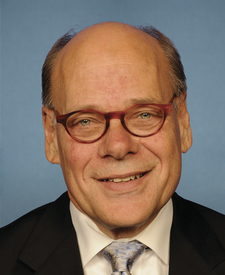
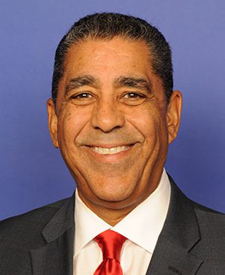
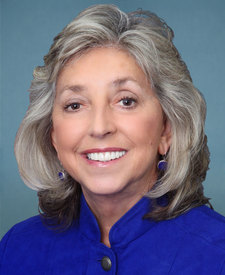
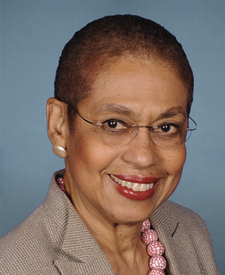

Legislative Progress
In CommitteeReferred to the Subcommittee on Highways and Transit.
Mr. Cohen (for himself, Mr. Auchincloss, Mr. Espaillat, Mrs. Foushee, …
Referred to the House Committee on Transportation and Infrastructure.
Introduced in House
Stakeholder Effects
cui bono?How this legislation distributes effects. Mention counts reflect frequency, not effect magnitude.
Bicyclists, Metropolitan planning organizations, Pedestrians
Positive-direction: Bicyclists, Pedestrians
Negative-direction: Metropolitan planning organizations, State transportation departments
DOJ accessibility staff, DOT complete streets staff
Bill Structure & Actor Mappings
Who is "The Secretary" in each section?
We use a combination of our own taxonomy and classification in addition to large language models to assess meaning and potential beneficiaries. High confidence means strong textual evidence. Always verify with the original bill text.
Learn more about our methodology