NSF and USDA Interagency Research Act
Summary
What This Bill Does
The NSF and USDA Interagency Research Act creates an interagency research framework. The Agriculture Secretary and NSF Director must carry out cross-cutting and collaborative research and development activities that advance both USDA and NSF mission requirements. They coordinate through memoranda of understanding or other interagency agreements, with competitive merit review where appropriate. Activities may include proposals from federal agencies, higher education institutions, nonprofits, and other appropriate entities. Research focus areas include plant, animal, and microbial biology relevant to agricultural challenges; food and nutrition security; rural economic revitalization; cyber-physical systems; smart and connected communities; advanced sensors and soil or plant process models; nano-biosensing and analytical technologies for food safety, water quality, biosecurity, plant and animal diseases, and soil health; monitoring of food- or water-borne pathogens, allergens, and accidental, natural, or intentional bio- or chemical contaminants; AI, machine learning, automation, robotics, digital agriculture, distributed ledger technologies including blockchain, and agricultural information and communication technology; precision agriculture tools; and workforce needs. USDA and NSF may promote collaboration and secure data sharing among agencies, colleges, community colleges, CTE schools, nonprofits, and other entities; support infrastructure including facilities, equipment, and broadband; develop commercial technologies; organize STEM education, cooperative extension, industry partnerships, teacher workshops, K-12 agricultural curricula, and educator resources; award grants for Centers for Agricultural Research, Education, and Workforce Development; and facilitate public-private relationships after MOUs end. They may use reimbursable agreements and collaborate with other agencies. A report to Congress is due within two years.
Who Benefits and How
Agricultural researchers benefit from coordinated USDA and NSF funding priorities across biology, sensors, AI, robotics, food safety, and soil health. Community colleges and CTE schools benefit from eligibility for workforce and center grants. Precision agriculture companies benefit from research, testing, commercialization, and public-private collaboration. Rural communities benefit from research on food security, rural economic revitalization, broadband, and workforce development. K-12 educators benefit from agricultural literacy workshops, curricula, and resources.
Who Bears the Burden and How
USDA research staff must coordinate MOUs, agreements, reimbursable arrangements, and mission priorities with NSF. NSF program officers must align merit-reviewed research with USDA priorities. Grant recipients must compete under merit review and manage data sharing or center requirements. Congressional agriculture and science committees must review the two-year coordination report.
Key Provisions
- Requires USDA and NSF cross-cutting collaborative research and development.
- Requires coordination through MOUs or interagency agreements with competitive merit review where appropriate.
- Authorizes research in agricultural biology, food security, rural revitalization, sensors, AI, robotics, and digital agriculture.
- Supports research infrastructure, secure data sharing, commercialization, STEM education, and workforce development.
- Authorizes grants for Centers for Agricultural Research, Education, and Workforce Development.
- Requires a report to Congress within two years.
Evidence Chain:
This summary is generated from the full bill text using AI analysis. Expand "Detailed Analysis" below for identified beneficiaries/burden bearers with clause-level evidence links.
At a Glance
What This Bill Does
Directs USDA and NSF to coordinate cross-cutting research and development through memoranda of understanding or interagency agreements, using competitive merit review where appropriate, covering agricultural biology, food and nutrition security, rural revitalization, sensors, soil and plant models, food safety, biosecurity, AI, robotics, digital agriculture, workforce, research infrastructure, commercialization, STEM education, Centers for Agricultural Research, Education, and Workforce Development, and a two-year report to Congress.
Key Policy Areas
Agriculture, Science, Research
Primary Purpose
Directs USDA and NSF to coordinate cross-cutting research and development through memoranda of understanding or interagency agreements, using competitive merit review where appropriate, covering agricultural biology, food and nutrition security, rural revitalization, sensors, soil and plant models, food safety, biosecurity, AI, robotics, digital agriculture, workforce, research infrastructure, commercialization, STEM education, Centers for Agricultural Research, Education, and Workforce Development, and a two-year report to Congress.
Policy Domains
Resolution provisions
Identified Gains
- Agricultural researchers
- Community colleges
- Precision agriculture companies
- Rural communities
- K-12 educators
Identified Costs
- USDA research staff
- NSF program officers
- Grant recipients
- Congressional science committees
Sponsors
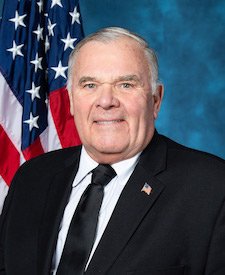


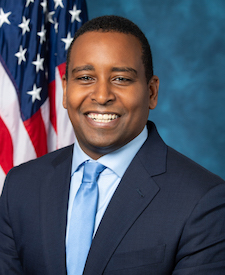
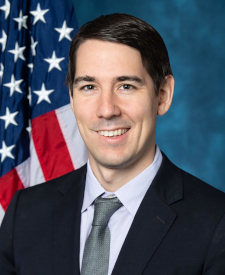
Legislative Progress
In CommitteeMr. Baird (for himself and Ms. Salinas) introduced the following …
Referred to the Committee on Science, Space, and Technology, and …
Introduced in House
Stakeholder Effects
cui bono?How this legislation distributes effects. Mention counts reflect frequency, not effect magnitude.
Bill Structure & Actor Mappings
Who is "The Secretary" in each section?
We use a combination of our own taxonomy and classification in addition to large language models to assess meaning and potential beneficiaries. High confidence means strong textual evidence. Always verify with the original bill text.
Learn more about our methodology