SUSHI Act
Summary
What This Bill Does
The SUSHI Act requires Federal science and enforcement agencies to create a seafood-origin testing methodology. Key agency leadership means the NOAA Administrator and the NIST Under Secretary, in consultation with the Commissioner of U.S. Customs and Border Protection and the Commandant of the Coast Guard. They must jointly develop a standard methodology, based on chemical analysis, for identifying the country of origin of seafood to support enforcement against unlawful, unreported, and unregulated fishing. The methodology must fit law-enforcement needs, minimize processing time, use a field kit that one individual can carry, and, where practicable, test prepared foods such as ceviche, sashimi, sushi, and poke. Pilot studies must cover red snapper as a stationary stock and bigeye, yellowfin, and bluefin tuna as highly migratory stocks. Within two years, the NIST Under Secretary must report to Congress with the methodology, an operationalization plan, and explanations if any chemical-analysis approach is impractical.
Who Benefits and How
Federal seafood enforcement officers benefit from a standard origin-testing method and portable field-kit design. State seafood enforcement agencies benefit if the method can support faster field investigations. Domestic commercial fishermen benefit because stronger origin testing can make it harder for illegal or mislabeled foreign seafood to undercut lawful catch. Seafood consumers benefit from better confidence that origin claims are accurate. Red snapper and tuna enforcement programs benefit because the pilot studies target those species directly.
Who Bears the Burden and How
NOAA, NIST, Customs and Border Protection, and Coast Guard leadership must coordinate methodology development. The NIST Under Secretary must deliver a report within two years and explain any impractical elements. Seafood importers and distributors may face more origin-testing scrutiny. Restaurants and prepared-food sellers could face testing of raw prepared seafood where practicable. Federal laboratories and field officers bear implementation work if the method becomes operational.
Key Provisions
- Defines key agency leadership as NOAA and NIST leadership in consultation with CBP and the Coast Guard.
- Requires a standard chemical-analysis methodology for identifying seafood country of origin.
- Requires the methodology to support Federal and State enforcement against illegal, unreported, and unregulated fishing.
- Directs pilot studies on red snapper and specified tuna species.
- Requires a congressional report within two years with the methodology, operational plan, and impracticability analysis.
Evidence Chain:
This summary is generated from the full bill text using AI analysis. Expand "Detailed Analysis" below for identified beneficiaries/burden bearers with clause-level evidence links.
At a Glance
What This Bill Does
Requires NOAA and NIST leadership, in consultation with Customs and Border Protection and the Coast Guard, to develop a chemical-analysis methodology and portable field-kit approach for identifying seafood country of origin to support enforcement against illegal, unreported, and unregulated fishing.
Key Policy Areas
Seafood, Trade Enforcement, Fisheries, Standards
Primary Purpose
Requires NOAA and NIST leadership, in consultation with Customs and Border Protection and the Coast Guard, to develop a chemical-analysis methodology and portable field-kit approach for identifying seafood country of origin to support enforcement against illegal, unreported, and unregulated fishing.
Policy Domains
House resolution provisions
Identified Gains
- Federal seafood enforcement officers
- State seafood enforcement agencies
- Domestic commercial fishermen
- Seafood consumers
- Red snapper enforcement programs
Identified Costs
- NOAA science offices
- NIST standards offices
- Customs and Border Protection
- Coast Guard
- Seafood importers
Sponsors


Legislative Progress
ReportedOrdered to be Reported in the Nature of a Substitute …
Committee Consideration and Mark-up Session Held
Subcommittee on Water, Wildlife and Fisheries Discharged
Subcommittee Hearings Held
Referred to the Subcommittee on Water, Wildlife and Fisheries.
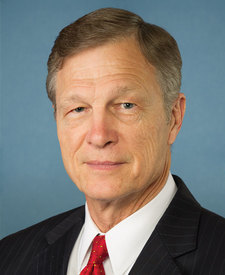
Mr. Babin introduced the following bill; which was referred to …
Referred to the Committee on Natural Resources, and in addition …
Introduced in House
Stakeholder Effects
cui bono?How this legislation distributes effects. Mention counts reflect frequency, not effect magnitude.
Federal seafood enforcement officers, NIST standards offices, NOAA science offices
Positive-direction: Federal seafood enforcement officers, State seafood enforcement agencies
Negative-direction: NIST standards offices, NOAA science offices
Bill Structure & Actor Mappings
Who is "The Secretary" in each section?
- "cbp"
- → U.S. Customs and Border Protection
- "nist"
- → National Institute of Standards and Technology
- "noaa"
- → National Oceanic and Atmospheric Administration
We use a combination of our own taxonomy and classification in addition to large language models to assess meaning and potential beneficiaries. High confidence means strong textual evidence. Always verify with the original bill text.
Learn more about our methodology