Family Vaccine Protection Act
Summary
What This Bill Does
The Family Vaccine Protection Act writes ACIP into the Public Health Service Act. ACIP must advise the CDC Director on vaccines and related agents licensed under section 351 based on a preponderance of the best available peer-reviewed scientific evidence. The CDC Director must adopt ACIP recommendations unless the Director finds they are not supported by that evidence, publish adopted recommendations on HHS's website, inform HHS leadership, and publish the basis for non-adoption with notice to House Energy and Commerce and Senate HELP within 48 hours. ACIP must consider newly licensed vaccines or new indications at the next regular meeting, make recommendations within 90 days after license-holder notice, update Congress, address breakthrough-therapy and public-health-emergency vaccines, and receive explanations within 48 hours if HHS or CDC acts contrary to ACIP. ACIP recommendations are used for ACA preventive-service immunization coverage and the Vaccines for Children Program list, dose schedule, intervals, and contraindications. Evidence review must cover intervention, dosage, schedule, study design, randomized trials or overwhelming observational evidence, target population, standard of care, alternatives, prevention outcomes, and adverse effects. The committee reports to the CDC Director, receives NCIRD support, may use the National Academies, has a Designated Federal Officer, meets at least three times per year and within 90 days after first marketing of a newly licensed vaccine, and is generally open to the public. The Secretary appoints 15 to 19 voting members recommended by GAO, with six nonvoting ex officio members from HRSA, FDA, CMS, NIH, IHS, and the National Vaccine Program Office; terms, quorum, temporary voting by ex officio members, liaisons, and subcommittees are specified. The bill also amends the National Vaccine Injury Compensation Program so removal or modification of a vaccine or injury table entry must be supported by a preponderance of the best available scientific evidence.
Who Benefits and How
Families relying on vaccine recommendations benefit from a statutory evidence standard and public explanations for departures from ACIP. Children in the Vaccines for Children Program benefit because ACIP's list, schedules, intervals, and contraindications remain the basis for pediatric vaccine purchasing. Health plans and insurers benefit from clearer linkage between ACIP recommendations and immunization coverage requirements. Vaccine manufacturers benefit from a 90-day ACIP consideration timeline after licensure or new indication notice. Vaccine-injury claimants benefit from scientific-evidence limits on removing or modifying Vaccine Injury Table coverage.
Who Bears the Burden and How
CDC leadership must publish adoption, non-adoption, and contrary-action explanations and notify Congress within 48 hours when required. ACIP members must follow evidence-review, conflict, quorum, public meeting, and recommendation procedures. HHS appointment staff must use GAO-recommended voting members and manage ex officio participation. FDA, HRSA, CMS, NIH, IHS, and National Vaccine Program Office officials must support ex officio committee roles. HHS vaccine compensation staff must justify Vaccine Injury Table changes with the statutory evidence standard.
Key Provisions
- Codifies ACIP and requires recommendations based on best available peer-reviewed scientific evidence.
- Requires CDC Director adoption or public scientific explanation and congressional notice within 48 hours.
- Requires timely ACIP review of newly licensed vaccines and new indications.
- Uses ACIP recommendations for preventive-service coverage and the Vaccines for Children Program.
- Establishes membership, meeting, quorum, GAO recommendation, ex officio, conflict, and evidence-review rules.
- Requires Vaccine Injury Table removals or modifications to be supported by best available scientific evidence.
Evidence Chain:
This summary is generated from the full bill text using AI analysis. Expand "Detailed Analysis" below for identified beneficiaries/burden bearers with clause-level evidence links.
At a Glance
What This Bill Does
Codifies the Advisory Committee on Immunization Practices, requires vaccine recommendations to be based on a preponderance of the best available peer-reviewed scientific evidence, sets CDC Director adoption and public-explanation rules, ties ACIP recommendations to preventive-service coverage and the Vaccines for Children list, creates meeting, membership, quorum, GAO-recommendation, evidence-review, and conflict rules, and requires Vaccine Injury Table changes to be scientifically supported.
Key Policy Areas
Public Health, Vaccines, Health Insurance
Primary Purpose
Codifies the Advisory Committee on Immunization Practices, requires vaccine recommendations to be based on a preponderance of the best available peer-reviewed scientific evidence, sets CDC Director adoption and public-explanation rules, ties ACIP recommendations to preventive-service coverage and the Vaccines for Children list, creates meeting, membership, quorum, GAO-recommendation, evidence-review, and conflict rules, and requires Vaccine Injury Table changes to be scientifically supported.
Policy Domains
Resolution provisions
Identified Gains
- Families relying on vaccine recommendations
- Children in VFC
- Health plans
- Vaccine manufacturers
- Vaccine-injury claimants
Identified Costs
- CDC leadership
- ACIP members
- HHS appointment staff
- Ex officio health officials
- HHS vaccine compensation staff
Sponsors

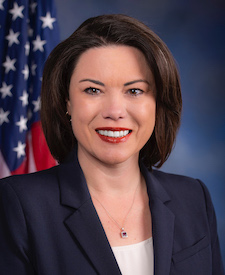

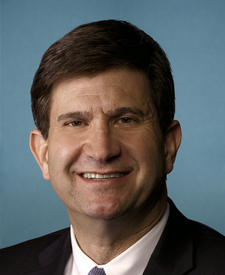

Legislative Progress
In CommitteeMr. Pallone (for himself and Ms. Schrier) introduced the following …
Referred to the House Committee on Energy and Commerce.
Introduced in House
Stakeholder Effects
cui bono?How this legislation distributes effects. Mention counts reflect frequency, not effect magnitude.
ACIP members, Families relying on vaccine recommendations, Vaccine-injury claimants
Positive-direction: Families relying on vaccine recommendations, Vaccine-injury claimants
Negative-direction: ACIP members
Bill Structure & Actor Mappings
Who is "The Secretary" in each section?
We use a combination of our own taxonomy and classification in addition to large language models to assess meaning and potential beneficiaries. High confidence means strong textual evidence. Always verify with the original bill text.
Learn more about our methodology