MEALS Act of 2025
Summary
What This Bill Does
The MEALS Act adds fraud prevention and replacement rules to the Summer EBT program. USDA must issue ongoing guidance to state agencies and covered Indian Tribal organizations describing cost-feasible security measures that detect and prevent theft of Summer EBT benefits through card skimming, card cloning, and similar methods and that align with debit and credit card industry standards. USDA must use notice-and-comment rulemaking to require participating agencies and Tribal organizations to take appropriate security measures, and within one year must issue regulations, including an interim final rule, requiring stolen-benefit replacement procedures. USDA must coordinate with HHS's Office of Family Assistance, the Attorney General, states, Tribal organizations, retailers, vendors, and EBT contractors to determine how benefits are stolen and used, where theft occurs, what equipment enhancements are needed for retailers and vendors, and how standard theft-reporting data should be shared. USDA must report to congressional committees within two years. Participating state and Tribal plans must include timely claims, signed household statements including electronic signatures, validation criteria, documentation, data reports, appeal rights, theft prevention measures, procedures for mixed accounts holding Summer EBT and other benefits such as SNAP, and limits so replacement does not exceed the lesser of stolen benefits or the household's immediately prior Summer EBT allotment. Existing participants must submit initial plans within 60 days. GAO must report within two years on payment-system security risks and USDA, state, Tribal, retailer, and other entity risk management.
Who Benefits and How
Families receiving Summer EBT benefit because stolen benefits can be replaced when card skimming, card cloning, or similar fraud occurs. Children relying on summer food assistance benefit if household food dollars are protected from electronic theft. Covered Indian Tribal organizations benefit from federal guidance and replacement procedures tailored to Summer EBT administration. Retail food stores benefit from coordinated equipment enhancements and clearer security standards.
Who Bears the Burden and How
USDA Food and Nutrition Service staff must issue guidance, rulemakings, reports, plan approvals, and security coordination. State Summer EBT agencies must implement anti-theft measures, replacement claims, appeals, data reporting, and mixed-account procedures. EBT contractors must help identify skimming and cloning methods and support payment-system security improvements. Retailers and vendors may need equipment enhancements and fraud reporting procedures. GAO must conduct a two-year review of Summer EBT payment-system security.
Key Provisions
- Requires USDA guidance and rulemaking on Summer EBT anti-skimming and anti-cloning security measures.
- Requires stolen Summer EBT benefit replacement procedures within one year.
- Requires coordination with HHS, DOJ, states, Tribal organizations, retailers, vendors, and EBT contractors.
- Requires state and Tribal plans for claims, validation, appeals, data reporting, and mixed-benefit accounts.
- Requires USDA and GAO reports to Congress within two years.
Evidence Chain:
This summary is generated from the full bill text using AI analysis. Expand "Detailed Analysis" below for identified beneficiaries/burden bearers with clause-level evidence links.
At a Glance
What This Bill Does
Requires USDA to prevent and replace stolen Summer EBT benefits by issuing security guidance, requiring participating states and covered Indian Tribal organizations to adopt anti-skimming and anti-cloning measures, creating benefit-replacement procedures within one year, coordinating with HHS, DOJ, retailers, vendors, and EBT contractors, reporting to Congress within two years, and requiring GAO to review Summer EBT payment-system security.
Key Policy Areas
Nutrition Assistance, Child Welfare, Fraud Prevention
Primary Purpose
Requires USDA to prevent and replace stolen Summer EBT benefits by issuing security guidance, requiring participating states and covered Indian Tribal organizations to adopt anti-skimming and anti-cloning measures, creating benefit-replacement procedures within one year, coordinating with HHS, DOJ, retailers, vendors, and EBT contractors, reporting to Congress within two years, and requiring GAO to review Summer EBT payment-system security.
Policy Domains
Resolution provisions
Identified Gains
- Families receiving Summer EBT
- Children relying on summer food assistance
- Covered Indian Tribal organizations
- Retail food stores
Identified Costs
- USDA Food and Nutrition Service staff
- State Summer EBT agencies
- EBT contractors
- Retailers
- GAO analysts
Sponsors

Legislative Progress
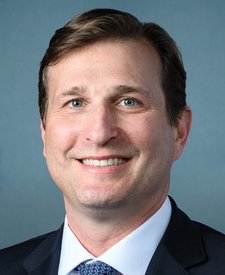
In CommitteeMs. Bonamici (for herself and Mr. Goldman of New York) …
Referred to the House Committee on Education and Workforce.
Introduced in House
Stakeholder Effects
cui bono?How this legislation distributes effects. Mention counts reflect frequency, not effect magnitude.
Families receiving Summer EBT, State Summer EBT agencies
Positive-direction: Families receiving Summer EBT
Negative-direction: State Summer EBT agencies
Covered Indian Tribal organizations, USDA Food and Nutrition Service staff
Positive-direction: Covered Indian Tribal organizations
Negative-direction: USDA Food and Nutrition Service staff
Retail food stores, Retailers
Positive-direction: Retail food stores
Negative-direction: Retailers
Bill Structure & Actor Mappings
Who is "The Secretary" in each section?
We use a combination of our own taxonomy and classification in addition to large language models to assess meaning and potential beneficiaries. High confidence means strong textual evidence. Always verify with the original bill text.
Learn more about our methodology