911 Community Crisis Responders Act of 2025
Summary
What This Bill Does
The 911 Community Crisis Responders Act creates a SAMHSA-administered grant program for states, territories, counties, Tribal governments, and Tribal consortia to build unarmed mobile crisis response programs. The programs divert nonviolent 911 calls to unarmed professional service providers rather than law enforcement. Funded teams must dispatch providers in groups of two or more, offer screening, assessment, de-escalation, trauma-informed and culturally competent services, referrals to community treatment providers, transportation to needed treatment, and coordination with health, housing, and social services. They may not be overseen by state, Tribal, or local law enforcement agencies. Grant funds can hire service providers and public safety telecommunicators, train providers to recognize and respond to mental illness, physical disabilities, developmental or intellectual disabilities, and substance-use disorders, update 911 systems for triage, train telecommunicators, coordinate with 988 call centers, build multilingual and culturally competent capacity, and collect data. Grantees must report twice a year on diverted calls, demographics, effects on emergency room visits, hospitalizations, ambulance use, law enforcement involvement, alternative destinations, response times, scene time, and cost. HHS must report to Congress twice a year, and funded programs must comply with nondiscrimination rules covering race, color, religion, national origin, sex including sexual orientation and gender identity, and disability.
Who Benefits and How
People experiencing mental health crises benefit from a non-police response path focused on screening, de-escalation, referrals, and treatment transportation. People experiencing homelessness benefit because nonviolent 911 calls involving homelessness can be routed to service-provider teams. Local governments benefit from grant funding to update 911 triage systems and coordinate with 988 call centers. Unarmed crisis response teams benefit from hiring, training, multilingual capacity, and culturally competent service funding. Community treatment providers benefit from formal referral and transportation pathways from emergency calls.
Who Bears the Burden and How
SAMHSA grant staff must review applications, oversee grantees, and report to Congress twice a year. 911 telecommunicators must be trained to distinguish calls for crisis teams from calls requiring law enforcement. Grant recipients must collect detailed demographic, response-time, outcome, and cost data twice a year. Law enforcement agencies lose default control over nonviolent crisis calls routed to unarmed programs. Federal taxpayers bear the cost of the new grant program.
Key Provisions
- Creates grants for unarmed mobile crisis response programs for nonviolent 911 calls.
- Requires teams of at least two unarmed professional service providers.
- Funds 911 system updates, telecommunicator training, 988 coordination, multilingual capacity, and culturally competent services.
- Requires grantee reports on diverted calls, demographics, outcomes, response times, alternative destinations, and costs.
- Prohibits discrimination in programs funded under the grant section.
Evidence Chain:
This summary is generated from the full bill text using AI analysis. Expand "Detailed Analysis" below for identified beneficiaries/burden bearers with clause-level evidence links.
At a Glance
What This Bill Does
Creates Public Health Service Act grants for unarmed mobile crisis response programs that divert nonviolent 911 calls involving mental health, homelessness, addiction, social services, truancy, disabilities, or public intoxication to trained service-provider teams instead of law enforcement, with 911 and 988 coordination, biannual grantee reporting, and nondiscrimination protections.
Key Policy Areas
Mental Health, Public Safety, Emergency Response
Primary Purpose
Creates Public Health Service Act grants for unarmed mobile crisis response programs that divert nonviolent 911 calls involving mental health, homelessness, addiction, social services, truancy, disabilities, or public intoxication to trained service-provider teams instead of law enforcement, with 911 and 988 coordination, biannual grantee reporting, and nondiscrimination protections.
Policy Domains
Resolution provisions
Identified Gains
- People experiencing mental health crises
- People experiencing homelessness
- Local governments
- Unarmed crisis response teams
- Community treatment providers
Identified Costs
- SAMHSA grant staff
- 911 telecommunicators
- Grant recipients
- Law enforcement agencies
- Federal taxpayers
Sponsors
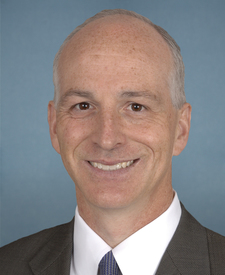


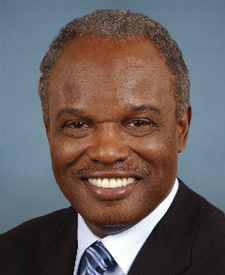
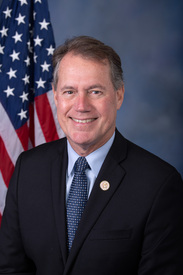
Legislative Progress
In CommitteeMr. Smith of Washington (for himself, Mr. Fitzpatrick, Mr. Khanna, …
Referred to the House Committee on Energy and Commerce.
Introduced in House
Stakeholder Effects
cui bono?How this legislation distributes effects. Mention counts reflect frequency, not effect magnitude.
People experiencing mental health crises, Unarmed crisis response teams
Bill Structure & Actor Mappings
Who is "The Secretary" in each section?
We use a combination of our own taxonomy and classification in addition to large language models to assess meaning and potential beneficiaries. High confidence means strong textual evidence. Always verify with the original bill text.
Learn more about our methodology