Protecting Our Protesters Act of 2025
Summary
What This Bill Does
The Protecting Our Protesters Act amends 18 U.S.C. 242, the criminal statute for willful deprivation of rights under color of law. It clarifies that covered misconduct includes the use of force during a response to a protest. It also strikes the statute's death-penalty language. The bill therefore makes protest-response force a named context for federal civil-rights prosecution while narrowing the available punishment by removing death as a sentencing option.
Who Benefits and How
Protesters benefit because force used during protest response is expressly named in the federal deprivation-of-rights statute. Civil-rights prosecutors benefit from clearer statutory text when evaluating protest-policing cases. Police accountability organizations benefit from a direct federal hook for protest-response force. Defendants in section 242 cases benefit from removal of death as a possible sentence.
Who Bears the Burden and How
Law enforcement officers responding to protests face clearer federal criminal exposure for willful rights violations involving force. Police departments must train officers on protest-response force under the amended civil-rights statute. Federal courts must apply the revised punishment language without the death penalty. Federal civil-rights investigators must assess protest-response force as an explicit statutory context.
Key Provisions
- Amends 18 U.S.C. 242 to include force used during a response to a protest.
- Clarifies that protest-response force can support a deprivation-of-rights prosecution.
- Repeals the death-penalty sentencing option from the statute.
- Protects protest rights through criminal civil-rights enforcement.
Evidence Chain:
This summary is generated from the full bill text using AI analysis. Expand "Detailed Analysis" below for identified beneficiaries/burden bearers.
At a Glance
What This Bill Does
Amends the federal criminal civil-rights statute to clarify that deprivation of rights under color of law includes the use of force during a response to a protest, and removes the death penalty from the statute's punishment language.
Key Policy Areas
Civil Rights, Criminal Justice, Protest Rights
Primary Purpose
Amends the federal criminal civil-rights statute to clarify that deprivation of rights under color of law includes the use of force during a response to a protest, and removes the death penalty from the statute's punishment language.
Policy Domains
Resolution provisions
Identified Gains
Contextual inference, no direct clause citation- Protesters
- Civil-rights prosecutors
- Police accountability organizations
- Section 242 defendants
Contextual inference, no direct clause citation
Identified Costs
Contextual inference, no direct clause citation- Law enforcement officers
- Police departments
- Federal courts
- Federal civil-rights investigators
Contextual inference, no direct clause citation
Sponsors

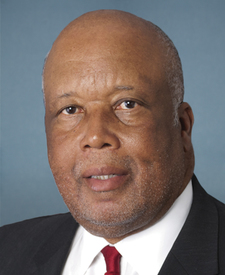
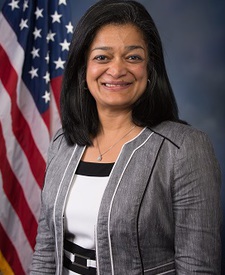
Legislative Progress
In CommitteeMs. Omar (for herself, Mr. Thompson of Mississippi, and Ms. …
Introduced in House
Referred to the House Committee on the Judiciary.
Bill Structure & Actor Mappings
Who is "The Secretary" in each section?
We use a combination of our own taxonomy and classification in addition to large language models to assess meaning and potential beneficiaries. High confidence means strong textual evidence. Always verify with the original bill text.
Learn more about our methodology