SAFE CROSS Act
Summary
What This Bill Does
The SAFE CROSS Act is a rail-crossing technology study bill. Within one year, the Federal Railroad Administration Administrator, acting through the Associate Administrator for Railroad Safety, must study the potential benefits and challenges of implementing and using artificial-intelligence-enabled sensors at rail crossings to reduce pedestrian and traffic accidents. The study must review existing pilot programs and deployments, compare AI-enabled sensors with other safety enhancements such as grade separations, and identify best practices. Within 30 days after completing the study, FRA must publish the results and the Administrator's best practices and recommendations on a publicly accessible Office of Railroad Safety website for federal, state, Tribal, and local rail-crossing safety regulators and private entities legally required to maintain rail-crossing safety technology.
Who Benefits and How
Rail crossing safety regulators benefit from a public FRA study and recommendations on AI-enabled sensor use. Pedestrians near rail crossings benefit if the study accelerates effective accident-reduction technology. Local governments with rail crossings benefit from best practices for comparing sensors, grade separations, and other safety upgrades. AI sensor vendors benefit from federal review of existing pilots and deployments.
Who Bears the Burden and How
FRA railroad safety staff must conduct the study, review pilots, perform cost-benefit analysis, and publish recommendations. Private crossing-maintenance entities may face new best-practice expectations after the study is published. Railroads and local sponsors may need to compare AI sensors against grade separations and other investments. Public agencies must interpret the recommendations before using AI-enabled crossing systems.
Key Provisions
- Requires FRA to study AI-enabled sensors at rail crossings within one year.
- Requires review of existing pilots and deployments.
- Requires cost-benefit comparison with other safety measures such as grade separations.
- Requires public posting of study results, best practices, and recommendations within 30 days after completion.
Evidence Chain:
This summary is generated from the full bill text using AI analysis. Expand "Detailed Analysis" below for identified beneficiaries/burden bearers with clause-level evidence links.
At a Glance
What This Bill Does
Requires the Federal Railroad Administration to study AI-enabled sensors at rail crossings within one year, compare them with other safety measures such as grade separations, identify best practices, and publish study results, best practices, and recommendations for government regulators and private crossing-maintenance entities.
Key Policy Areas
Rail Safety, Artificial Intelligence, Transportation
Primary Purpose
Requires the Federal Railroad Administration to study AI-enabled sensors at rail crossings within one year, compare them with other safety measures such as grade separations, identify best practices, and publish study results, best practices, and recommendations for government regulators and private crossing-maintenance entities.
Policy Domains
Resolution provisions
Identified Gains
- Rail crossing safety regulators
- Pedestrians near rail crossings
- Local governments with rail crossings
- AI sensor vendors
Identified Costs
- FRA railroad safety staff
- Private crossing-maintenance entities
- Railroads
- Public agencies
Sponsors
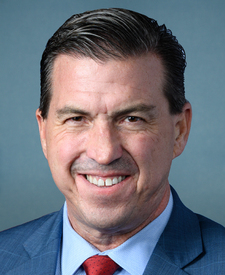
Kevin Mullin
D-CA | Primary Sponsor
Legislative Progress
In CommitteeReferred to the Subcommittee on Railroads, Pipelines, and Hazardous Materials.
Mr. Mullin introduced the following bill; which was referred to …
Referred to the House Committee on Transportation and Infrastructure.
Introduced in House
Stakeholder Effects
cui bono?How this legislation distributes effects. Mention counts reflect frequency, not effect magnitude.
Pedestrians near rail crossings, Private crossing-maintenance entities, Rail crossing safety regulators
Positive-direction: Pedestrians near rail crossings
Negative-direction: Private crossing-maintenance entities, Railroads
Local governments with rail crossings
Bill Structure & Actor Mappings
Who is "The Secretary" in each section?
We use a combination of our own taxonomy and classification in addition to large language models to assess meaning and potential beneficiaries. High confidence means strong textual evidence. Always verify with the original bill text.
Learn more about our methodology