Menstrual Equity For All Act of 2025
Summary
What This Bill Does
The Menstrual Equity For All Act attacks period poverty across schools, colleges, corrections, homelessness services, Medicaid, workplaces, federal buildings, state taxation, Social Services Block Grants, and TANF. Elementary and secondary schools may use federal safe-and-healthy-students funds to provide free menstrual products, with Education and HHS rulemaking on product definitions. The Education Secretary must run a $5 million FIPSE grant program for at least four colleges to provide free products in campus restrooms, wellness centers, and residential buildings, report best practices, conduct outreach, help students enroll in public benefits, and coordinate with community organizations; at least half of grants go to community colleges, with priority for high Pell enrollment, HBCUs, Hispanic-serving institutions, AANAPISIs, and other minority-serving institutions. States receiving Byrne JAG funds must annually certify that incarcerated individuals and detainees have on-demand free products and that visitors are not barred because they use menstrual products, or lose 20 percent of the next fiscal year's allocation, which is reallocated to compliant states. BOP and DHS must provide free products to federal prisoners and immigration detainees, including private detention facilities. Emergency Food and Shelter Program guidelines must allow nonprofits and local governments to provide products to homeless individuals. Medicaid adds menstrual products as medical assistance, with a one-year implementation window and extra time where state legislation is needed. OSHA must require employers with at least 100 employees to provide free products. Federal building authorities must stock free products in public restrooms. The Social Services Block Grant section appropriates $200 million annually for fiscal years 2026 through 2029 for states to distribute through eligible entities, allows up to 9 percent administrative costs, reserves technical assistance and evaluation funds, disregards benefits for other needs-based programs, requires HHS guidance within 180 days, and requires an evaluation and report by 2032. The tax section bans state and local retail taxes on menstrual products 120 days after enactment. The TANF section appropriates $10 million annually starting fiscal year 2026 for grants to states and local administrators serving covered TANF families, and requires biennial HHS reports.
Who Benefits and How
Students who menstruate benefit from free products in K-12 schools and campus locations such as restrooms, wellness centers, and residence halls. Community college students benefit because at least half of higher-education grants must go to community colleges. Incarcerated people and immigration detainees benefit from on-demand free access in state, federal, and DHS custody. Low-income Medicaid beneficiaries benefit if menstrual products become covered medical assistance. Workers at employers with at least 100 employees benefit from an OSHA rule requiring free workplace products. Low-income families benefit from SSBG and TANF funds that provide products without reducing other needs-based benefits.
Who Bears the Burden and How
Education Department staff must administer college grants and product-definition rulemaking. State correctional systems must certify menstrual-product access or risk a 20 percent Byrne JAG reduction. Bureau of Prisons and DHS detention officials must distribute products free of charge. State Medicaid agencies must add menstrual products to Medicaid coverage and amend state plans where needed. Employers with at least 100 employees must provide free products under an OSHA rule. States and local governments lose revenue from sales taxes on menstrual products.
Key Provisions
- Allows K-12 federal funds to provide free menstrual products to students.
- Creates a $5 million higher-education grant program with community-college and minority-serving institution priorities.
- Requires state, federal, and immigration detention facilities to provide menstrual products free of charge.
- Adds menstrual products to Medicaid medical assistance and Emergency Food and Shelter Program uses.
- Requires employers with at least 100 employees and federal public buildings to provide free menstrual products.
- Appropriates $200 million annually for fiscal years 2026 through 2029 through SSBG and $10 million annually through TANF.
- Prohibits state and local retail sales taxes on menstrual products.
Evidence Chain:
This summary is generated from the full bill text using AI analysis. Expand "Detailed Analysis" below for identified beneficiaries/burden bearers with clause-level evidence links.
At a Glance
What This Bill Does
Creates a broad menstrual-equity package covering free products in schools, college grants, prison and immigration detention access, homelessness programs, Medicaid, workplaces with at least 100 employees, federal buildings, Social Services Block Grant funding, state and local sales-tax bans, and $10 million annual TANF menstrual-product grants.
Key Policy Areas
Health Care, Education, Civil Rights, Social Services
Primary Purpose
Creates a broad menstrual-equity package covering free products in schools, college grants, prison and immigration detention access, homelessness programs, Medicaid, workplaces with at least 100 employees, federal buildings, Social Services Block Grant funding, state and local sales-tax bans, and $10 million annual TANF menstrual-product grants.
Policy Domains
Resolution provisions
Identified Gains
- Students who menstruate
- Community college students
- Incarcerated people
- Immigration detainees
- Low-income Medicaid beneficiaries
- Workers at large employers
Identified Costs
- Education Department staff
- State correctional systems
- BOP detention staff
- State Medicaid agencies
- Large employers
- States collecting sales taxes
Sponsors
Legislative Progress
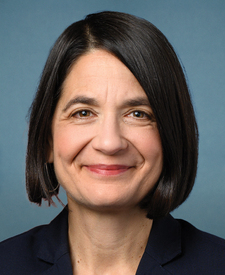
In CommitteeMs. Meng (for herself, Ms. Balint, Ms. Barragán, Mrs. Beatty, …
Referred to the Committee on Education and Workforce, and in …
Introduced in House
Stakeholder Effects
cui bono?How this legislation distributes effects. Mention counts reflect frequency, not effect magnitude.
Community college students, Students who menstruate
Low-income Medicaid beneficiaries, State Medicaid agencies
Positive-direction: Low-income Medicaid beneficiaries
Negative-direction: State Medicaid agencies
Bill Structure & Actor Mappings
Who is "The Secretary" in each section?
We use a combination of our own taxonomy and classification in addition to large language models to assess meaning and potential beneficiaries. High confidence means strong textual evidence. Always verify with the original bill text.
Learn more about our methodology