Digital Asset Market Clarity Act
Summary
What This Bill Does
The Digital Asset Market Clarity Act of 2025 is a large market-structure bill for digital assets. Title I creates core definitions across the Securities Act, Exchange Act, and Commodity Exchange Act for blockchain systems, decentralized governance systems, digital assets, digital commodities, digital commodity issuers, related persons, affiliated persons, mature blockchain systems, digital commodity exchanges, brokers, dealers, custodians, decentralized finance messaging systems, and decentralized finance trading protocols. It requires SEC-CFTC joint rulemakings on key terms, mixed digital asset transactions, and self-custody protections, and applies Bank Secrecy Act treatment to digital commodity brokers and dealers. Title II creates exemptions and disclosure regimes for primary offers and secondary sales of investment contracts involving digital commodities, creates mature-blockchain certification and review procedures, and gives the SEC anti-fraud and disclosure authority over specified digital commodity transactions. Title III narrows securities-law treatment for digital commodities and permitted payment stablecoins, allows alternative trading systems and broker-dealers to conduct digital commodity activities under specified conditions, allows digital asset custody by banking institutions, preempts some state securities treatment, and excludes certain decentralized finance activities from Exchange Act regulation. Title IV gives the CFTC spot-market jurisdiction over digital commodity transactions, creates digital commodity exchange, broker, dealer, and custodian registration regimes, sets customer-protection, governance, fee, conflict, control-person, and recordkeeping rules, and provides provisional registration paths. Title V creates or codifies SEC FinHub and CFTC LabCFTC functions, orders studies on decentralized finance, non-fungible tokens, financial literacy, tokenized securities, blockchain payments, illicit use of digital assets, foreign adversary participation, and foreign centralized intermediaries, and adds conforming amendments for payment stablecoin issuers. Title VI, the Anti-CBDC Surveillance State Act, bars Federal Reserve banks from directly or indirectly offering accounts, financial products, services, or central bank digital currency to individuals, bars the Federal Reserve Board from testing, studying, developing, creating, implementing, or using a CBDC for monetary policy, and states that the Fed lacks CBDC authority unless Congress grants it.
Who Benefits and How
Digital commodity exchanges, digital commodity brokers, digital commodity dealers, digital commodity issuers, mature blockchain networks, decentralized governance systems, self-custody wallet users, individual digital-asset holders, permitted payment stablecoin issuers, commodity-backed stablecoin issuers, bank digital-asset custodians, alternative trading systems, broker-dealers seeking digital commodity permissions, decentralized finance protocol developers, blockchain payment firms, CFTC market-oversight staff, SEC FinHub users, CFTC LabCFTC users, and private stablecoin issuers benefit because the bill creates explicit legal categories, registration paths, exemptions, certification processes, custody rules, self-custody protections, stablecoin trading treatment, and a statutory ban on Federal Reserve CBDCs that could otherwise compete with private digital-asset products.
Who Bears the Burden and How
The Commodity Futures Trading Commission, Securities and Exchange Commission, Treasury Department, Federal Reserve Board, Federal Reserve banks, Government Accountability Office, digital commodity registrants, digital commodity control persons, digital commodity issuers making primary sales, related persons selling digital commodities, affiliated persons holding large allocations, stablecoin issuer executives, registered public accounting firms auditing stablecoin reports, foreign crypto exchanges serving U.S. users, foreign-adversary-owned registrants, DeFi participants outside statutory exclusions, and firms subject to Bank Secrecy Act duties bear burdens because the bill requires rulemakings, registrations, disclosure statements, certifications, customer-asset segregation, conflict rules, fee filings, AML compliance, anti-fraud liability, studies, reports, accounting attestations, enforcement coordination, and CBDC prohibitions.
Key Provisions
- Defines digital commodities, digital commodity issuers, related persons, affiliated persons, mature blockchain systems, digital commodity exchanges, brokers, dealers, custodians, and DeFi systems across securities and commodities law.
- Requires SEC-CFTC joint rulemakings on blockchain terms, unilateral authority, programmatic functioning, digital commodities, DeFi systems, and mixed digital asset transactions.
- Creates Securities Act exemptions and disclosure requirements for primary and secondary digital commodity transactions and mature-blockchain certifications.
- Grants the CFTC spot-market jurisdiction over digital commodities and creates registration regimes for digital commodity exchanges, brokers, dealers, and custodians.
- Protects individual self-custody wallets and lawful peer-to-peer digital-asset transactions while preserving sanctions, illicit-finance, and AML enforcement.
- Provides stablecoin conforming amendments, commodity-backed stablecoin treatment, monthly certification and attestation requirements, and state regulator roles.
- Establishes SEC FinHub and CFTC LabCFTC functions and requires studies on DeFi, NFTs, financial literacy, tokenized markets, blockchain payments, illicit finance, foreign intermediaries, and foreign adversary participation.
- Prohibits Federal Reserve banks and the Federal Reserve Board from issuing, offering, testing, studying, developing, creating, implementing, or using a central bank digital currency unless Congress grants authority.
Evidence Chain:
This summary is generated from the full bill text using AI analysis. Expand "Detailed Analysis" below for identified beneficiaries/burden bearers with clause-level evidence links.
At a Glance
What This Bill Does
Creates a broad U.S. digital-asset market structure regime by defining digital commodities and mature blockchain systems, allocating CFTC and SEC jurisdiction, creating registration, disclosure, custody, anti-fraud, anti-money-laundering, DeFi, stablecoin, self-custody, studies, innovation-office, and anti-CBDC rules across securities, commodities, banking, and Federal Reserve law.
Key Policy Areas
Financial Services, Technology, Digital Assets
Primary Purpose
Creates a broad U.S. digital-asset market structure regime by defining digital commodities and mature blockchain systems, allocating CFTC and SEC jurisdiction, creating registration, disclosure, custody, anti-fraud, anti-money-laundering, DeFi, stablecoin, self-custody, studies, innovation-office, and anti-CBDC rules across securities, commodities, banking, and Federal Reserve law.
Policy Domains
Substantive provisions
Identified Gains
- Digital commodity exchanges
- Digital commodity brokers
- Digital commodity dealers
- Digital commodity issuers
- Mature blockchain networks
- Decentralized governance systems
- Self-custody wallet users
- Individual digital-asset holders
- Permitted payment stablecoin issuers
- Commodity-backed stablecoin issuers
- Bank digital-asset custodians
- Alternative trading systems
- Broker-dealers seeking digital commodity permissions
- Decentralized finance protocol developers
- Blockchain payment firms
Identified Costs
- Commodity Futures Trading Commission
- Securities and Exchange Commission
- Treasury Department
- Federal Reserve Board
- Federal Reserve banks
- Government Accountability Office
- Digital commodity registrants
- Digital commodity control persons
- Digital commodity issuers making primary sales
- Related persons selling digital commodities
- Affiliated persons holding large allocations
- Stablecoin issuer executives
- Registered public accounting firms
- Foreign crypto exchanges serving U.S. users
- Foreign-adversary-owned registrants
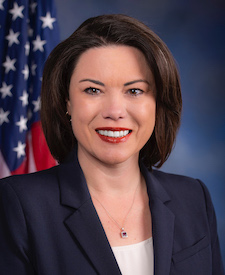
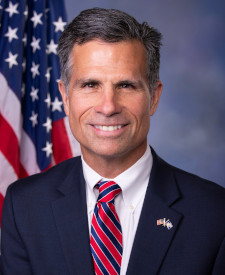
Sponsors



Legislative Progress
Passed HouseCloture motion on the motion to proceed to the measure …
Motion to proceed to consideration of measure made in Senate. …
Placed on Senate Legislative Calendar under General Orders. Calendar No. …
Committee on Banking, Housing, and Urban Affairs. Reported by Senator …
Reported by Mr. Scott of South Carolina, with an amendment
Committee on Banking, Housing, and Urban Affairs. Ordered to be …
Received; read twice and referred to the Committee on Banking, …
Received in the Senate and Read twice and referred to …
Passed House (inferred from eh version)
Motion to reconsider laid on the table Agreed to without …
Stakeholder Effects
cui bono?How this legislation distributes effects. Mention counts reflect frequency, not effect magnitude.
All Title II regulated entities, Associated persons of digital commodity brokers/dealers, Associated persons of digital commodity firms
Digital commodity brokers, Digital commodity exchanges, Digital commodity issuers, Digital commodity traders, Permitted payment stablecoin issuers, Stablecoin issuers face effects in multiple directions
Positive-direction: Blockchain infrastructure developers, Blockchain infrastructure providers, Blockchain node operators, Blockchain node operators and validators, Blockchain payment technology providers, Blockchain service providers, Blockchain technology providers, Blockchain validators and node operators, Commodity pool operators managing digital commodities, Commodity-backed stablecoin issuers (gold-backed), Crypto wallet developers, Cryptocurrency and blockchain companies, Cryptocurrency and digital asset industry participants, Cryptocurrency and digital commodity issuers, Cryptocurrency exchanges, Cryptocurrency exchanges listing secondary markets, Cryptocurrency industry, Cryptocurrency projects and tokens, Cryptocurrency projects seeking mature blockchain status, Cryptocurrency projects seeking regulatory clarity, Cryptocurrency startups, Cryptocurrency wallet developers, DeFi participants, DeFi protocol developers, DeFi protocol developers and operators, Decentralized governance systems, Digital asset issuers seeking exemptive relief, Digital asset market participants, Digital commodity brokers offering margin, Digital commodity customers, Digital commodity exchange customers, Digital commodity holders, Digital commodity holders receiving airdrops or mining rewards, Digital commodity investors, Digital commodity issuers and exchanges, Digital commodity issuers conducting token sales, Digital commodity issuers seeking mature blockchain certification, Digital commodity issuers seeking maturity certification, Digital commodity market participants, Digital commodity market participants seeking exemptions, Digital commodity miners and stakers, Digital commodity spot market operators, Digital commodity token issuers, Dual-registered digital asset entities, Established cryptocurrency projects (pre-2020 blockchains), FCM customers, Fintech and cryptocurrency companies, Fintech companies, Fintech innovators and entrepreneurs, Innovative financial technology companies, Legacy blockchain systems (pre-2020), Liquidity pool operators, Node operators and validators, Payment stablecoin issuers, Private cryptocurrency and stablecoin issuers, Private stablecoin issuers, Qualified digital asset custodians, Retail digital commodity investors, Secondary market traders of digital commodities, Self-custody wallet developers, Self-custody wallet providers, Small and medium digital commodity filers, Small and medium digital commodity firms, Small crypto startups, Small digital commodity token issuers, Small single-state exchanges, Tokenized securities developers, U.S. digital asset companies
Negative-direction: Associated persons of digital commodity brokers/dealers, Blockchain control persons, Blockchain control persons (20%+ voting power), CFTC-registered digital asset custodians, Crypto project founders and insiders, Cryptocurrency and digital asset issuers, Cryptocurrency project insiders and early investors, Cryptocurrency-native financial services, Digital asset custodians, Digital asset exchanges and dealers, Digital asset exchanges and trading platforms, Digital commodity affiliated and related persons, Digital commodity affiliated persons, Digital commodity affiliated persons (insiders, executives), Digital commodity broker employees, Digital commodity brokers and dealers, Digital commodity dealer employees, Digital commodity dealers, Digital commodity development stage participants, Digital commodity exchanges and brokers, Digital commodity exchanges and traders, Digital commodity exchanges offering tradable assets, Digital commodity exchanges owned by foreign adversaries, Digital commodity exchanges, brokers, and dealers, Digital commodity insiders and affiliated persons, Digital commodity insiders with over 20% ownership, Digital commodity issuers during development stage, Digital commodity registrants with foreign adversary ties, Digital commodity related persons (developers, promoters), Digital commodity spot market participants, Early cryptocurrency investors and insiders, Employees of digital commodity brokers and dealers, Foreign cryptocurrency exchanges serving U.S. persons, Foreign-based cryptocurrency exchanges, Fraudulent token issuers, Large digital commodity token issuers, Large digital commodity trading platforms, Meme coin and speculative token issuers, Platforms trading non-digital-commodity digital assets, Provisionally registered digital commodity entities, Registered entities trading digital commodities, SEC-registered digital asset custodians, Tradable asset issuers, Vertically integrated digital asset platforms
CFTC, CFTC Office of the Chairman, CFTC and SEC
CFTC, Commodity Futures Trading Commission, SEC, Securities and Exchange Commission face effects in multiple directions
Positive-direction: CFTC Office of the Chairman
Negative-direction: CFTC and SEC, Department of Treasury, Department of the Treasury, Federal Reserve Board of Governors, Federal Reserve System, Federal Reserve banks, Federal banking regulators, Financial regulators, GAO, Government Accountability Office, SEC Division of Corporation Finance, SEC Office of the Chairman, SEC and CFTC, Treasury Department
Alternative trading systems, Bank holding companies, Banks and credit unions
National securities exchanges, SEC-registered broker-dealers face effects in multiple directions
Positive-direction: Alternative trading systems, Bank holding companies, Banks and depository institutions offering digital asset custody, Banks providing digital asset custody, Broker-dealers handling crypto, Broker-dealers offering digital asset custody, Broker-dealers providing digital asset custody, Broker-dealers using blockchain for records, Brokers and dealers using blockchain, Commodity trading advisors for digital commodities, Credit unions offering digital asset custody, Credit unions providing digital asset custody, Digital commodity investors, FDIC-insured state banks, Insured depository institutions, National banks, Registered entities offering portfolio margining, Registered futures associations, SEC registrants using blockchain recordkeeping, SEC-registered alternative trading systems, Securities exchanges adding crypto trading, Securities market participants, Stablecoin investors, State banks, State-chartered trust companies, State-chartered trust companies providing digital custody, Tokenized securities issuers, Traditional broker-dealers entering crypto markets, Traditional derivatives market participants, Traditional financial market participants
Negative-direction: Broker-dealers handling digital commodities and stablecoins, Broker-dealers holding digital assets, Commodity pool operators, Commodity trading advisors, Cryptocurrency broker-dealers, Cryptocurrency exchanges seeking CFTC registration, Digital asset broker-dealers, Futures commission merchants, Futures commission merchants handling digital assets, Member banks, SEC-registered broker-dealers trading digital commodities
Crypto investors, Cryptocurrency investors, Cryptocurrency retail investors
Blockchain payment providers, Cryptocurrency exchanges, Cryptocurrency exchanges and platforms
Positive-direction: Blockchain payment providers, Cryptocurrency exchanges facilitating secondary trading, Cryptocurrency miners and validators, Cryptocurrency project developers seeking decentralization status, DeFi protocol developers, Digital asset and cybersecurity professionals, Digital asset custodians, Digital asset issuers and developers, Digital commodity issuers, Established decentralized cryptocurrency networks, Financial technology companies, Fintech companies, Self-custody wallet developers
Negative-direction: Cryptocurrency exchanges, Cryptocurrency exchanges and trading platforms, Cryptocurrency exchanges listing non-standard tokens, Cryptocurrency exchanges seeking CFTC registration, Cryptocurrency project founders and early investors, Cryptocurrency project insiders and early investors, Cryptocurrency token issuers conducting offerings, Employees of cryptocurrency broker-dealers, Meme coin and novelty token issuers, Stablecoin issuers using broker-dealer channels, Vertically integrated cryptocurrency exchanges
State financial regulators, State money transmission regulators, State securities regulators
State financial regulators faces effects in multiple directions
On Passage
CLARITY Act
Bill Structure & Actor Mappings
Who is "The Secretary" in each section?
- "sec"
- → Securities and Exchange Commission
- "cftc"
- → Commodity Futures Trading Commission
- "digital_commodity"
- → digital asset treated as a commodity under the bill's Commodity Exchange Act amendments
- "mature_blockchain_system"
- → blockchain system certified under the bill's decentralization and maturity standards
We use a combination of our own taxonomy and classification in addition to large language models to assess meaning and potential beneficiaries. High confidence means strong textual evidence. Always verify with the original bill text.
Learn more about our methodology