To facilitate the development of a whole-of-government strategy for nuclear cooperation and nuclear exports.
Analysis under review: This bill has generated analysis that may be too generic or incomplete. Clause-level evidence remains available below.
Summary
What This Bill Does
This bill creates a coordinated federal strategy to export American nuclear energy technology to developing nations and allied countries. It establishes a White House office to coordinate nuclear exports, launches international financing partnerships, and provides grants to help countries start civil nuclear programs with U.S. technology rather than Russian or Chinese alternatives.
Who Benefits and How
U.S. nuclear energy companies benefit significantly through designated export arrangements, loan guarantees, and equity investments to help them compete internationally. The bill authorizes $1.44 billion for small modular reactor development and allows waivers of competition requirements to help U.S. companies secure international contracts. Allied nations (OECD members and India) gain access to financing partnerships and technical assistance. Developing nations receive up to $5.5 million grants each and senior advisor support to establish nuclear programs.
Who Bears the Burden and How
U.S. taxpayers fund the $1.44 billion authorization and international grant programs. China and Russia face strategic disadvantage as the bill explicitly aims to counter their nuclear energy influence in developing nations. Countries like Iran, North Korea, Cuba, Venezuela, Syria, and Burma are excluded from all program benefits.
Key Provisions
- Creates White House Office of the Assistant to the President for International Nuclear Energy Policy to coordinate exports
- Authorizes grants up to $5.5 million per country (max 5 grants per country) to help embarking nations develop civil nuclear programs
- Appropriates $1.44 billion for fiscal year 2026 to demonstrate competitive small modular reactor technology
- Allows foreign investment in U.S. nuclear utilization facilities (not production facilities) by allied nations
- Establishes biennial international conferences on nuclear safety, security, and sustainability
Evidence Chain:
This summary is generated from the full bill text using AI analysis. Expand "Detailed Analysis" below for identified beneficiaries/burden bearers.
At a Glance
What This Bill Does
Establishes a comprehensive federal strategy to promote U.S. civil nuclear energy exports to developing nations and ally countries, counter Chinese and Russian nuclear influence, and strengthen international nuclear cooperation.
Key Policy Areas
Energy, International Trade, Foreign Policy, National Security
Primary Purpose
Establishes a comprehensive federal strategy to promote U.S. civil nuclear energy exports to developing nations and ally countries, counter Chinese and Russian nuclear influence, and strengthen international nuclear cooperation.
Policy Domains
International Nuclear Energy Act of 2025
Identified Gains
Contextual inference, no direct clause citation- U.S. nuclear energy companies
- Allied nations (OECD members, India)
- Developing nations seeking nuclear programs
- Nuclear technology exporters
Contextual inference, no direct clause citation
Identified Costs
Contextual inference, no direct clause citation- U.S. taxpayers
- Russia and China (strategic competitors)
- Excluded nations (Iran, North Korea, etc.)
Contextual inference, no direct clause citation
Sponsors
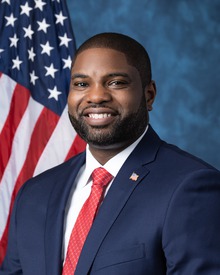
Legislative Progress
IntroducedMr. Donalds introduced the following bill; which was referred to …
Stakeholder Effects
cui bono?How this legislation distributes effects. Mention counts reflect frequency, not effect magnitude.
Allied nation nuclear industries, Allied nations nuclear industries, Indian nuclear industry
Positive-direction: Allied nation nuclear industries, Allied nations nuclear industries, U.S. advanced nuclear reactor companies, U.S. nuclear companies seeking Indian market access, U.S. nuclear energy companies, U.S. nuclear energy companies seeking international partners, U.S. nuclear energy exporters, U.S. nuclear industry, U.S. nuclear service providers, U.S. nuclear supply chain manufacturers, U.S. nuclear technology companies, U.S. nuclear technology exporters, U.S. small modular reactor developers
Negative-direction: Russian and Chinese nuclear exporters, Russian and Chinese nuclear reactor exporters
China, Russia, and other excluded nations, Countries considering Russian or Chinese nuclear partnerships, Developing nations seeking nuclear programs
Positive-direction: Countries considering Russian or Chinese nuclear partnerships, Developing nations seeking nuclear programs, Developing nations starting nuclear programs, Developing nations without nuclear programs, OECD member countries and India
Negative-direction: China, Russia, and other excluded nations
Department of State, Export-Import Bank, Federal agencies involved in nuclear exports
U.S. nuclear consulting and advisory firms
International Atomic Energy Agency
Bill Structure & Actor Mappings
Who is "The Secretary" in each section?
- "the_assistant"
- → Assistant to the President and Director for International Nuclear Energy Policy
- "the_secretary"
- → Secretary of Energy
- "secretary_of_state"
- → Secretary of State
- "secretary_of_commerce"
- → Secretary of Commerce
Key Definitions
Terms defined in this bill
A nuclear fission reactor with significant improvements compared to reactors operating on October 19, 2016, including additional inherent safety features, lower waste yields, improved fuel performance, enhanced reliability, increased proliferation resistance, and operational flexibility; also includes fusion reactors and radioisotope power systems.
Government of any OECD member country, the Republic of India, or any country designated by the Secretary of State.
A country without a civil nuclear program or in the process of developing one, with per capita GDP not more than $28,000 in 2020. Explicitly excludes China, Russia, Belarus, Iran, North Korea, Cuba, Venezuela, Syria, Burma, and countries under sanctions or designated as terrorism supporters.
A company organized under U.S. laws or subject to U.S. jurisdiction that is involved in the nuclear energy industry.
Activities relating to nuclear plant construction, fuel services, financing, operations, regulation, medicine, safety, community engagement, infrastructure, decommissioning, liability, spent fuel storage, environmental safeguards, nonproliferation, and related technology.
We use a combination of our own taxonomy and classification in addition to large language models to assess meaning and potential beneficiaries. High confidence means strong textual evidence. Always verify with the original bill text.
Learn more about our methodology