Improving Mental Health Access for Students Act
Summary
What This Bill Does
The Improving Mental Health Access for Students Act amends the Higher Education Act's program participation agreement rules. Beginning one year after enactment, an institution that creates and distributes student identification cards must include phone contact information for the 988 Suicide and Crisis Lifeline, the Crisis Text Line, and a campus mental health center or program selected by the institution. If an institution does not create and distribute student ID cards, it must publish the same suicide-prevention contact information on its website. If 988 or the Crisis Text Line ceases to exist, the Education Secretary may designate a replacement entity with a similar purpose.
Who Benefits and How
College students benefit from crisis contact information that is physically carried on student ID cards or posted online. Students in mental health crisis benefit because 988, Crisis Text Line, and campus resources become easier to find. Campus mental health centers benefit from being listed as a standard contact point for students. 988 and Crisis Text Line operators benefit from clearer referral pathways from colleges.
Who Bears the Burden and How
Colleges issuing student ID cards must update card design, printing, and distribution processes. Colleges without student ID cards must publish suicide-prevention contacts on their websites. Education Department staff may need to designate replacement crisis entities if listed organizations cease operations. Campus administrators must choose the appropriate campus mental health center or program for the card.
Key Provisions
- Requires student ID cards to include 988 Suicide and Crisis Lifeline contact information.
- Requires student ID cards to include Crisis Text Line contact information.
- Requires student ID cards to include a campus mental health center or program contact.
- Requires institutions without ID cards to publish the contacts on their websites.
- Authorizes the Education Secretary to designate replacement crisis entities if needed.
Evidence Chain:
This summary is generated from the full bill text using AI analysis. Expand "Detailed Analysis" below for identified beneficiaries/burden bearers with clause-level evidence links.
At a Glance
What This Bill Does
Requires colleges that issue student identification cards to print 988 Suicide and Crisis Lifeline, Crisis Text Line, and campus mental health contact information on each card, and requires colleges without cards to publish the same suicide-prevention information on their websites starting one year after enactment.
Key Policy Areas
Higher Education, Mental Health, Student Safety
Primary Purpose
Requires colleges that issue student identification cards to print 988 Suicide and Crisis Lifeline, Crisis Text Line, and campus mental health contact information on each card, and requires colleges without cards to publish the same suicide-prevention information on their websites starting one year after enactment.
Policy Domains
Resolution provisions
Identified Gains
- College students
- Students in mental health crisis
- Campus mental health centers
- Crisis hotline operators
Identified Costs
- Colleges issuing student ID cards
- Colleges without student ID cards
- Education Department staff
- Campus administrators
Sponsors




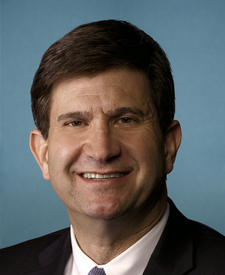
Legislative Progress
In CommitteeMr. Correa (for himself, Mr. Bacon, Mr. Peters, Mr. Moulton, …
Referred to the House Committee on Education and Workforce.
Introduced in House
Stakeholder Effects
cui bono?How this legislation distributes effects. Mention counts reflect frequency, not effect magnitude.
College students, Colleges issuing student ID cards, Colleges without student ID cards
Positive-direction: College students
Negative-direction: Colleges issuing student ID cards, Colleges without student ID cards
Crisis hotline operators, Students in mental health crisis
Bill Structure & Actor Mappings
Who is "The Secretary" in each section?
We use a combination of our own taxonomy and classification in addition to large language models to assess meaning and potential beneficiaries. High confidence means strong textual evidence. Always verify with the original bill text.
Learn more about our methodology