To establish fair labor standards, occupational safety protections, and post-incarceration career opportunities for incarcerated individuals engaged in firefighting and to provide previously incarcerated firefighters an opportunity to expunge records of disposition after successful completion of court-imposed probation, and for other purposes.
Summary
What This Bill Does
The bill amends the Occupational Safety and Health Act of 1970 to extend workplace safety protections to incarcerated firefighters, amends the Fair Labor Standards Act of 1938 to classify incarcerated firefighters as employees, and amends the Omnibus Crime Control and Safe Streets Act of 1968 to condition federal Byrne JAG law enforcement grants on state compliance with incarcerated firefighter workplace safety protections. It relies on compliance mandates, grants, reporting requirements, and definition changes. The main policy areas are Labor, Criminal Justice, and Finance.
Who Benefits and How
Formerly incarcerated firefighters could gain revenue opportunities, Incarcerated firefighters could gain revenue opportunities, and Local workforce development boards could gain revenue opportunities.
Who Bears the Burden and How
Private prison operators could face higher costs, State correctional agencies would take on compliance duties, and State and local governments receiving Byrne JAG grants would take on compliance duties.
Key Provisions
- Amends the Occupational Safety and Health Act of 1970 to extend workplace safety protections to incarcerated firefighters.
- Amends the Fair Labor Standards Act of 1938 to classify incarcerated firefighters as employees.
- Amends the Omnibus Crime Control and Safe Streets Act of 1968 to condition federal Byrne JAG law enforcement grants on state compliance with incarcerated firefighter workplace safety protections.
- Directs the Secretary of Labor to establish a grant program to award grants to states to assist them in amending their occupational safety and health laws to cover incarcerated firefighters and to enforce those laws...
- Amends the Workforce Innovation and Opportunity Act to create a new Section 172 establishing an incarcerated firefighter reentry program grant.
Evidence Chain:
This summary is generated from the full bill text using AI analysis. Expand "Detailed Analysis" below for identified beneficiaries/burden bearers with clause-level evidence links.
At a Glance
What This Bill Does
The bill amends the Occupational Safety and Health Act of 1970 to extend workplace safety protections to incarcerated firefighters, amends the Fair Labor Standards Act of 1938 to classify incarcerated firefighters as employees, and amends the Omnibus Crime Control and Safe Streets Act of 1968 to condition federal Byrne JAG law enforcement grants on state compliance with incarcerated firefighter workplace safety protections.
Key Policy Areas
Labor, Criminal Justice, Finance
Primary Purpose
The bill amends the Occupational Safety and Health Act of 1970 to extend workplace safety protections to incarcerated firefighters, amends the Fair Labor Standards Act of 1938 to classify incarcerated firefighters as employees, and amends the Omnibus Crime Control and Safe Streets Act of 1968 to condition federal Byrne JAG law enforcement grants on state compliance with incarcerated firefighter workplace safety protections.
Policy Domains
Sections 2-3 -- Workplace Safety and Labor Standards
Identified Gains
- Formerly incarcerated firefighters
- Incarcerated firefighters
- Local workforce development boards
- Incarcerated firefighters in state facilities
- State occupational safety and health agencies
Identified Costs
- Private prison operators
- State correctional agencies
- State and local governments receiving Byrne JAG grants
- Public agencies operating correctional facilities
- Bureau of Prisons
Sponsors


Legislative Progress
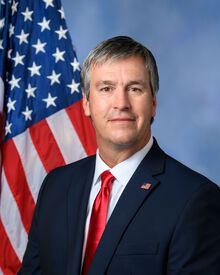
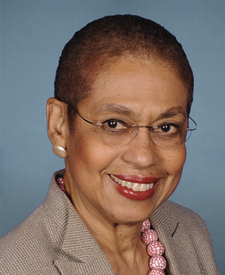
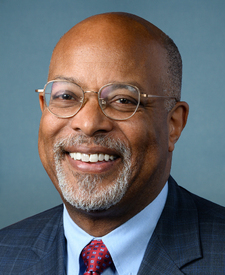
IntroducedMs. Kamlager-Dove (for herself, Mr. Moore of Alabama, Mr. Rutherford, …
Stakeholder Effects
cui bono?How this legislation distributes effects. Mention counts reflect frequency, not effect magnitude.
Attorney General (record management), Bureau of Prisons, Federal and state law enforcement agencies
Positive-direction: Indian and Native American entities, Local workforce development boards, State governments, State occupational safety agencies, State occupational safety and health agencies
Negative-direction: Attorney General (record management), Bureau of Prisons, Federal and state law enforcement agencies, Federal courts, OSHA and state occupational safety agencies, Public agencies operating correctional facilities, State and local court systems, State and local governments receiving Byrne JAG grants, State correctional agencies, U.S. Attorneys' offices
Fire departments and emergency services, Formerly incarcerated firefighters, Incarcerated firefighters
Positive-direction: Fire departments and emergency services, Formerly incarcerated firefighters, Incarcerated firefighters, Incarcerated firefighters in state facilities
Negative-direction: Taxpayers
Nonprofit reentry organizations, Nonprofit reentry organizations (501(c)(3))
Bill Structure & Actor Mappings
Who is "The Secretary" in each section?
- "the_director"
- → Director of the Bureau of Prisons
- "the_attorney_general"
- → Attorney General of the United States
- "the_secretary"
- → Secretary of Labor
- "the_attorney_general"
- → Attorney General of the United States
- "the_assistant_secretary"
- → Assistant Secretary of Labor for Occupational Safety and Health
- "the_secretary"
- → Secretary of Labor
- "the_attorney_general"
- → Attorney General of the United States
Key Definitions
Terms defined in this bill
An individual incarcerated in a correctional facility operated by a public agency or private entity under contract with a public agency who performs firefighting or emergency response services work, including prison work programs, work release, public works, restitution centers, facility operations, or private entity assignments.
An incarcerated firefighter who has fulfilled all sentence requirements: paid or is on a payment plan for fines/restitutions/assessments, completed imprisonment and probation, met supervised release conditions, and if required, remained free from substance dependency for at least 1 year.
A jail, prison, or other detention facility used to house people who have been arrested, detained, held, or convicted by a criminal justice agency or a court.
Any fee imposed by a court as a result of a criminal conviction, including surcharges, administrative fees, attorney fees, clerk fees, DNA database fees, jury fees, crime lab fees, and other court costs. Excludes child support, crime victim compensation, civil judgments, and criminal fines.
The 180-day period beginning on the date an individual is released from incarceration.
We use a combination of our own taxonomy and classification in addition to large language models to assess meaning and potential beneficiaries. High confidence means strong textual evidence. Always verify with the original bill text.
Learn more about our methodology