To amend the Arms Export Control Act to streamline Foreign Military Sales under that Act.
Analysis under review: This bill has generated analysis that may be too generic or incomplete. Clause-level evidence remains available below.
Summary
What This Bill Does
The Streamlining Foreign Military Sales Act of 2025 raises the dollar thresholds that trigger congressional notification requirements when the U.S. government sells weapons to foreign countries. Currently, Congress must be notified when arms sales exceed certain dollar amounts (ranging from $250,000 to $300 million depending on the type of sale). This bill doubles or even quadruples those thresholds, allowing sales worth millions more to proceed without congressional review.
Who Benefits and How
Defense contractors are the primary beneficiaries. Companies like Lockheed Martin, Boeing, Raytheon, and General Dynamics will be able to close weapons deals more quickly because fewer sales will require the 30-day congressional waiting period. This faster approval process means more revenue and reduced administrative costs for the defense industry. Foreign governments purchasing U.S. weapons also benefit through streamlined procurement processes, getting their military equipment faster without congressional scrutiny potentially delaying or blocking sales.
Who Bears the Burden and How
Congressional oversight is significantly weakened. The House Foreign Affairs Committee and Senate Foreign Relations Committee will receive far fewer notifications about pending arms sales, meaning they have less opportunity to review, question, or block controversial weapons transfers. This particularly affects sales to countries with questionable human rights records. Arms control advocates and human rights organizations also lose transparency and leverage, as more sales will happen below the radar. American taxpayers may bear indirect costs if weapons sales to unstable regions later require U.S. military intervention.
Key Provisions
- Raises the smallest notification threshold from $250,000 to $500,000 for certain defense articles and services
- Increases the threshold for major defense equipment sales from $14 million to $30 million across multiple sections
- Doubles the highest tier threshold from $300 million to $615 million for the largest weapons packages
- Adjusts intermediate thresholds proportionally, with most doubling (e.g., $50M to $105M, $100M to $205M, $200M to $410M)
- Applies changes across at least 15 different sections of the Arms Export Control Act, covering various types of sales, transfers, and leases
Evidence Chain:
This summary is generated from the full bill text using AI analysis. Expand "Detailed Analysis" below for identified beneficiaries/burden bearers.
At a Glance
What This Bill Does
Streamlines Foreign Military Sales by raising dollar thresholds that trigger congressional notification requirements under the Arms Export Control Act
Who Benefits
- Defense contractors (increased sales velocity)
- Foreign governments purchasing U.S. weapons (faster approval)
- Executive branch (reduced congressional oversight)
Who Bears Costs
- Congressional oversight (less visibility into smaller sales)
- Arms control advocates (reduced transparency)
- Human rights groups (less scrutiny of sales to questionable regimes)
Key Policy Areas
Defense, Foreign Policy, Military Exports
Primary Purpose
Streamlines Foreign Military Sales by raising dollar thresholds that trigger congressional notification requirements under the Arms Export Control Act
Policy Domains
Legislative Strategy
"Reduce congressional oversight of foreign military sales by raising notification thresholds, allowing more sales to proceed without congressional review"
Identified Gains
- Defense contractors (increased sales velocity)
- Foreign governments purchasing U.S. weapons (faster approval)
- Executive branch (reduced congressional oversight)
Identified Costs
- Congressional oversight (less visibility into smaller sales)
- Arms control advocates (reduced transparency)
- Human rights groups (less scrutiny of sales to questionable regimes)
Sponsors
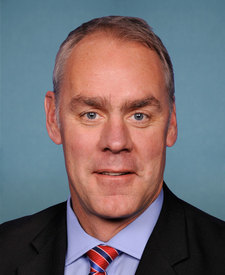

Legislative Progress
IntroducedMr. Zinke (for himself and Mr. Panetta) introduced the following …
Stakeholder Effects
cui bono?How this legislation distributes effects. Mention counts reflect frequency, not effect magnitude.
Defense contractors selling weapons systems to foreign governments
Foreign governments purchasing U.S. military equipment
Congressional oversight committees (Foreign Affairs, Armed Services)
Arms control and human rights advocacy organizations
Bill Structure & Actor Mappings
Who is "The Secretary" in each section?
We use a combination of our own taxonomy and classification in addition to large language models to assess meaning and potential beneficiaries. High confidence means strong textual evidence. Always verify with the original bill text.
Learn more about our methodology