To restrict the authority of the Attorney General to enter into contracts for Federal correctional facilities and community confinement facilities, and for other purposes.
Analysis under review: This bill has generated analysis that may be too generic or incomplete. Clause-level evidence remains available below.
Summary
What This Bill Does
The End For-Profit Prisons Act of 2025 prohibits the federal government from contracting with for-profit companies to operate federal prisons and community confinement facilities (such as halfway houses). Within 6 years of enactment, all core correctional services at Bureau of Prisons and U.S. Marshals Service facilities must be performed by federal government employees. Within 8 years, the Bureau of Prisons may no longer contract with any for-profit entity to provide or manage community confinement facilities. The bill also mandates regular congressional reporting on the federal prison population, requires research on recidivism-reduction programs, establishes annual inspections of Marshals Service detention facilities, and requires that released federal prisoners receive reentry counseling and assistance with government benefits applications.
Who Benefits and How
Federal correctional officers and government employees benefit from expanded employment as privatized positions are converted to federal jobs with civil service protections, pay scales, and benefits. Incarcerated persons and their families benefit from the transition away from profit-driven correctional management, which critics argue creates incentives to cut costs on staffing, healthcare, and programming. Released prisoners benefit from mandatory reentry counseling covering record expungement, employment barrier removal, vocational programs, and assistance applying for nutritional assistance, Medicaid, Social Security, drivers licenses, and voter registration. State and local governments that operate correctional facilities may benefit from continued contracting with the Marshals Service, as the ban applies only to for-profit entities. Communities surrounding federal prisons may benefit from higher-quality facility oversight through mandatory annual inspections.
Who Bears the Burden and How
Private prison corporations -- primarily GEO Group and CoreCivic -- face the elimination of their federal contracts over 6-8 years, a direct threat to a significant revenue stream. These companies currently operate multiple federal facilities and community confinement centers. The federal government bears substantially increased costs: operating prisons directly with government employees is more expensive due to higher wages, benefits, pensions, and civil service protections compared to private contractor staffing. The Bureau of Prisons faces major operational and logistical burdens in transitioning thousands of beds from private to government operation within the statutory timeline, including hiring, training, and potentially building or acquiring new facilities. The Attorney General takes on new compliance obligations including phasing out existing contracts, submitting biennial prison population reports, conducting recidivism research, developing reentry guidelines, and establishing information/counseling rules for released prisoners. The U.S. Marshals Service must conduct annual inspections of every detention facility it uses.
Key Provisions
- Prohibits for-profit contracting for all core correctional services at BOP and Marshals Service facilities within 6 years (Section 2)
- Prohibits for-profit community confinement facility contracts within 8 years (Section 2)
- Exempts Marshals Service contracts with state/local government-operated facilities from the ban (Section 2)
- Requires the Attorney General to phase out existing private prison contracts during transition period (Section 3)
- Mandates biennial congressional reports on federal prison population demographics and custody locations (Section 4)
- Directs research on recidivism reduction programs at community confinement facilities with quadrennial reporting (Section 5)
- Requires annual Marshals Service inspections of all detention facilities for constitutional and statutory compliance (Section 6)
- Mandates reentry counseling for released prisoners covering expungement rights, employment programs, vocational training, and government benefits applications (Section 7)
- Requires Bureau of Prisons to provide released prisoners with information on outstanding fines, restitution, and penalties (Section 8)
Evidence Chain:
This summary is generated from the full bill text using AI analysis. Expand "Detailed Analysis" below for identified beneficiaries/burden bearers.
At a Glance
What This Bill Does
Prohibits the federal government from contracting with for-profit entities to operate federal prisons and community confinement facilities, phases out existing private prison contracts over 6-8 years, and mandates reentry counseling, recidivism research, and facility inspections.
Key Policy Areas
Criminal Justice, Government Operations, Labor
Primary Purpose
Prohibits the federal government from contracting with for-profit entities to operate federal prisons and community confinement facilities, phases out existing private prison contracts over 6-8 years, and mandates reentry counseling, recidivism research, and facility inspections.
Policy Domains
Whole Bill - End For-Profit Prisons Act of 2025
Identified Gains
Contextual inference, no direct clause citation- Federal correctional officers and government employees (expanded employment)
- Incarcerated persons (removal of profit motive from facility management)
- Released prisoners (mandatory reentry counseling and benefits assistance)
- State and local government-operated facilities (exempted from ban, continued Marshals contracts)
Contextual inference, no direct clause citation
Identified Costs
Contextual inference, no direct clause citation- Private prison corporations (GEO Group, CoreCivic -- loss of federal contracts)
- Federal government (higher operating costs for government-run facilities)
- Bureau of Prisons (operational transition of thousands of beds)
- Attorney General (new reporting, research, and rulemaking mandates)
- U.S. Marshals Service (annual inspection requirements)
Contextual inference, no direct clause citation
Sponsors


Legislative Progress
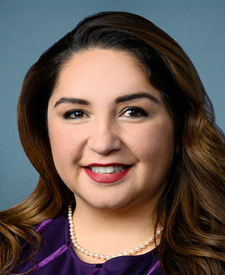
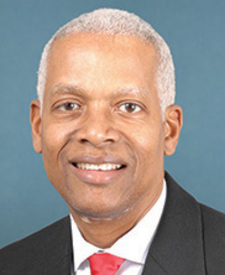
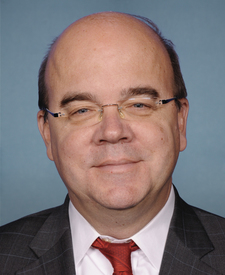
IntroducedMrs. Watson Coleman (for herself, Ms. Lee of Pennsylvania, Mrs. …
Stakeholder Effects
cui bono?How this legislation distributes effects. Mention counts reflect frequency, not effect magnitude.
Attorney General / Department of Justice, Bureau of Prisons, Bureau of Prisons (implementation)
Positive-direction: Federal correctional officers, Federal correctional officers and government employees
Negative-direction: Attorney General / Department of Justice, Bureau of Prisons, Bureau of Prisons (implementation), U.S. Marshals Service
Community confinement facility operators, Correctional facilities housing Marshals Service detainees, Private prison corporations
Incarcerated persons in federal custody, Persons in Marshals Service custody, Released federal prisoners
Bill Structure & Actor Mappings
Who is "The Secretary" in each section?
- "the_director"
- → Director of the Bureau of Prisons
- "the_attorney_general"
- → Attorney General of the United States
Key Definitions
Terms defined in this bill
Has the meaning given in section 115.5 of title 28, CFR, as in effect on the date of enactment. Includes halfway houses and similar transitional facilities.
The housing, safeguarding, protecting, and disciplining of individuals charged with or convicted of an offense.
We use a combination of our own taxonomy and classification in addition to large language models to assess meaning and potential beneficiaries. High confidence means strong textual evidence. Always verify with the original bill text.
Learn more about our methodology