Protecting Circuit Boards and Substrates Act
Summary
What This Bill Does
The Protecting Circuit Boards and Substrates Act combines a buyer-side tax incentive with a large supply-chain grant program. New Internal Revenue Code section 45AA provides a 25 percent business credit for the cost of purchasing or acquiring printed circuit boards and integrated circuit substrates that are fabricated in the United States, with Treasury and Commerce responsible for regulations and guidance. The bill also directs the Commerce Secretary to establish a program providing federal financial assistance to covered entities that invest in U.S. facilities and equipment for printed circuit board and integrated circuit substrate manufacturing or research and development. Applicants must show an executable plan, worker and community investment, training commitments, and the national interest of the project; small businesses are exempt from some workforce documentation. Commerce must consider prior awards and responsiveness to national-security needs of the intelligence community, NNSA, or the Defense Department, and should prefer small, minority-owned, women-owned, or veteran-owned businesses, domestic capacity expansion, relocation from foreign-entity-of-concern jurisdictions, and workforce training partnerships with HBCUs, Hispanic-serving institutions, Tribal colleges, minority-serving institutions, rural-serving institutions, or credentialing programs. Foreign entities of concern are barred. Individual awards are generally capped at $300 million unless Commerce, Defense, DNI, the President, and Congress clear a larger national-security need. Funds may cover covered incentives and reasonable operating costs for specialized workforce, materials, and equipment maintenance. Commerce must set project start and completion dates, recover funds for missed deadlines, recover awards for certain joint research or technology licensing with foreign entities of concern, notify Congress about clawbacks and waivers, coordinate with national-security and economic agencies, and support biennial GAO reviews. The bill authorizes $3 billion for fiscal year 2026, available through fiscal year 2065.
Who Benefits and How
U.S. printed circuit board manufacturers benefit from a 25 percent purchase credit that can increase demand for domestically fabricated boards. Integrated circuit substrate manufacturers benefit from Commerce financial assistance for U.S. facilities, equipment, research, and modernization. Small electronics manufacturers benefit from preference rules and relief from some workforce documentation requirements. HBCU and Tribal college workforce programs benefit because preferred applications can include their training partnerships. Defense electronics buyers benefit if domestic PCB and substrate supply becomes more reliable for national-security needs.
Who Bears the Burden and How
Treasury tax staff must write and administer the new section 45AA credit. Commerce grant staff must review applications, set milestones, coordinate with security agencies, enforce clawbacks, and report to Congress. Grant recipients must meet project deadlines, workforce commitments, national-security restrictions, and records requests. Foreign entities of concern are excluded from assistance and face clawback-triggering restrictions on joint research or technology licensing. Federal taxpayers bear the revenue loss from the credit and the $3 billion assistance authorization.
Key Provisions
- Creates a 25 percent tax credit for U.S.-fabricated printed circuit boards and integrated circuit substrates.
- Establishes a Commerce financial assistance program for domestic PCB and substrate manufacturing and research facilities.
- Prefers small, minority-owned, women-owned, veteran-owned, domestic-capacity, relocation, and workforce-training projects.
- Bars foreign entities of concern and allows recovery for certain foreign joint research or technology licensing.
- Caps most awards at $300 million unless a larger national-security award is justified and Congress is notified.
- Authorizes $3 billion for fiscal year 2026, available through fiscal year 2065.
Evidence Chain:
This summary is generated from the full bill text using AI analysis. Expand "Detailed Analysis" below for identified beneficiaries/burden bearers with clause-level evidence links.
At a Glance
What This Bill Does
Creates a 25 percent tax credit for U.S.-fabricated printed circuit boards and integrated circuit substrates, and authorizes a $3 billion Commerce Department assistance program through fiscal year 2065 for domestic PCB and substrate manufacturing, research, workforce training, national-security supply chains, and facility modernization, with foreign-entity-of-concern exclusions and clawbacks.
Key Policy Areas
Manufacturing, Tax, National Security, Semiconductors
Primary Purpose
Creates a 25 percent tax credit for U.S.-fabricated printed circuit boards and integrated circuit substrates, and authorizes a $3 billion Commerce Department assistance program through fiscal year 2065 for domestic PCB and substrate manufacturing, research, workforce training, national-security supply chains, and facility modernization, with foreign-entity-of-concern exclusions and clawbacks.
Policy Domains
Resolution provisions
Identified Gains
- U.S. printed circuit board manufacturers
- Integrated circuit substrate manufacturers
- Small electronics manufacturers
- HBCU workforce programs
- Defense electronics buyers
Identified Costs
- Treasury tax staff
- Commerce grant staff
- Grant recipients
- Foreign entities of concern
- Federal taxpayers
Sponsors

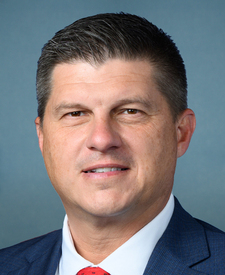



Legislative Progress
In CommitteeMr. Moore of Utah (for himself and Mr. Krishnamoorthi) introduced …
Referred to the Committee on Ways and Means, and in …
Introduced in House
Stakeholder Effects
cui bono?How this legislation distributes effects. Mention counts reflect frequency, not effect magnitude.
Grant recipients, Small electronics manufacturers, U.S. printed circuit board manufacturers
Positive-direction: Small electronics manufacturers, U.S. printed circuit board manufacturers
Negative-direction: Grant recipients
Bill Structure & Actor Mappings
Who is "The Secretary" in each section?
We use a combination of our own taxonomy and classification in addition to large language models to assess meaning and potential beneficiaries. High confidence means strong textual evidence. Always verify with the original bill text.
Learn more about our methodology