HR3548-119

In Committee

Infrastructure Expansion Act of 2025

119th Congress Introduced May 21, 2025

Summary

What This Bill Does

The Infrastructure Expansion Act of 2025 changes liability rules for infrastructure and transportation projects that receive federal financial assistance, benefit from federal tax incentives, or are subject to federal permitting requirements. For those projects, covered workers and affiliated persons may not bring absolute-liability actions against property owners or contract parties for injuries tied to elevation or gravity-related risks.

The bill preempts state laws imposing absolute liability for those risks on covered projects and requires comparative negligence standards instead. Federal courts have exclusive jurisdiction over covered claims, preventing state courts from applying absolute-liability standards. The bill defines absolute liability, covered person, elevation or gravity-related risk, federal financial assistance, project, and state. It does not preempt state workers' compensation laws and applies to claims from projects in which a state or local government accepts federal financial assistance on or after January 1, 2026.

Who Benefits and How

Infrastructure property owners, construction contractors, subcontractors, insurers, and project sponsors benefit from reduced exposure to strict absolute liability for elevation and gravity-related injuries on federally supported projects. State and local infrastructure agencies may benefit if lower liability exposure reduces project costs or litigation risk.

Who Bears the Burden and How

Construction workers and other covered persons injured by falls or gravity-related risks may face a harder path to recovery because comparative negligence can reduce or bar damages based on their own conduct. State courts and state legislatures lose authority to apply absolute-liability standards to covered federally supported projects. Federal district courts may receive more cases because the bill gives them exclusive jurisdiction.

Key Provisions

  • Bars absolute-liability actions for elevation or gravity-related injuries on federally assisted, federally incentivized, or federally permitted infrastructure projects.
  • Requires comparative negligence standards for covered claims when state law would otherwise impose absolute liability.
  • Preempts state laws imposing absolute liability for elevation or gravity-related risks on covered projects.
  • Provides exclusive federal court jurisdiction for claims arising under the bill.
  • Defines covered projects to include highways, bridges, tunnels, airports, railways, bus and railroad stations, depots, piers, harbors, parks, buildings, support facilities, utilities, and associated infrastructure.
  • Protects state workers' compensation laws from preemption.
  • Applies to claims from projects where a state or local government accepts federal financial assistance on or after January 1, 2026.

Evidence Chain:

This summary is generated from the full bill text using AI analysis. Expand "Detailed Analysis" below for identified beneficiaries/burden bearers with clause-level evidence links.

At a Glance

What This Bill Does

Preempts state absolute-liability standards for elevation or gravity-related injury claims on federally assisted, federally incentivized, or federally permitted infrastructure and transportation projects, substitutes comparative negligence, places covered claims in federal court, and preserves state workers' compensation laws.

Key Policy Areas

Infrastructure, Tort Liability, Construction, Federal Preemption

Primary Purpose

Preempts state absolute-liability standards for elevation or gravity-related injury claims on federally assisted, federally incentivized, or federally permitted infrastructure and transportation projects, substitutes comparative negligence, places covered claims in federal court, and preserves state workers' compensation laws.

Policy Domains

Infrastructure Tort Liability Construction Federal Preemption

Section 2 federal preemption of absolute liability for elevation and gravity-related project injuries

Identified Gains
  • Infrastructure construction contractors
  • Infrastructure property owners
  • Construction liability insurers
  • State transportation project sponsors
Model: codex-gpt-5 | Version: bill_summary_v2 | Source: ih
Infrastructure property owners:
Construction liability insurers:
State transportation project sponsors:
Infrastructure construction contractors:
Identified Costs
  • Construction workers injured by elevation risks
  • Federal district courts
  • State courts applying construction liability law
  • Plaintiff attorneys in construction injury cases
Model: codex-gpt-5 | Version: bill_summary_v2 | Source: ih
Federal district courts:
Construction workers injured by elevation risks:
Plaintiff attorneys in construction injury cases:
State courts applying construction liability law:

Legislative Progress

In Committee
Introduced Committee Passed
May 21, 2025

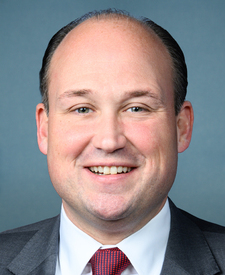
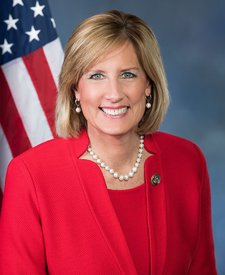
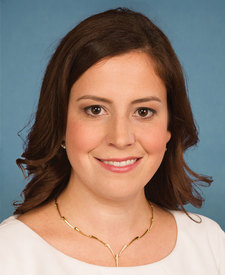
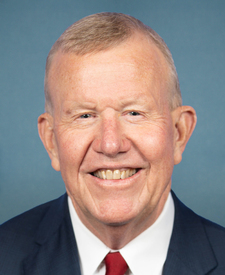
Mr. Langworthy (for himself, Ms. Tenney, and Ms. Stefanik) introduced …

May 21, 2025

Referred to the House Committee on the Judiciary.

May 21, 2025

Introduced in House

Stakeholder Effects

cui bono?

How this legislation distributes effects. Mention counts reflect frequency, not effect magnitude.

Construction
2 mentions across 1 clause
+1 positive -1 negative

Construction workers injured by elevation risks, Infrastructure construction contractors

Positive-direction: Infrastructure construction contractors

Negative-direction: Construction workers injured by elevation risks

Real Estate
1 mention across 1 clause
+1 positive

Infrastructure property owners

Government
1 mention across 1 clause
-1 negative

Federal district courts

Financial Services
1 mention across 1 clause
+1 positive

Construction liability insurers

1/2
sections analyzed
Full impact breakdown

Bill Structure & Actor Mappings

Who is "The Secretary" in each section?

Domains
Infrastructure Tort Liability Construction Federal Preemption
Actor Mappings
"state"
→ State or local government accepting federal financial assistance
"contractor"
→ Contractor or subcontractor on a federally supported project
"federal_court"
→ Federal court with exclusive jurisdiction
"covered_person"
→ Person supervising or performing work on a covered project
"property_owner"
→ Property owner on a federally supported project

Key Definitions

Terms defined in this bill

3 terms
"absolute liability" §2(e)(1)

Liability for personal injury or death imposed without considering the injured person's responsibility, including failure to follow safety instructions, use equipment, avoid impairment, or avoid criminal acts when those actions proximately caused injury.

"elevation or gravity-related risk" §2(e)(3)

A hazard related to gravity because of work at a different elevation level or materials or loads being hoisted or secured at a higher level.

"Federal financial assistance" §2(e)(4)

Direct or indirect federal support, including grants, loans, guarantees, tax credits, Build America Bonds, bonds, or other incentives for infrastructure or transportation development.

We use a combination of our own taxonomy and classification in addition to large language models to assess meaning and potential beneficiaries. High confidence means strong textual evidence. Always verify with the original bill text.

Learn more about our methodology