College for All Act of 2025
Summary
What This Bill Does
The College for All Act of 2025 is a large higher education affordability bill. Title I creates a Higher Education Act federal-state partnership to fully eliminate tuition and required fees for eligible students at community colleges, public four-year institutions, and Tribal Colleges and Universities. Beginning with award year 2026-2027, the Education Secretary awards grants to states and TCUs. The federal share starts at 100 percent for 2026-2027, then 95 percent, 90 percent, 85 percent, and 80 percent for states, while TCUs receive the greater of 100 percent or the formula amount. The formula starts from per-student amounts of at least $5,110 for community college or two-year TCU students and $11,610 for public four-year or four-year TCU students, with later increases capped at CPI or 3 percent. States and TCUs must maintain instruction spending, eliminate community college tuition and fees for all eligible students, phase in four-year tuition elimination by income thresholds, maintain need-based aid and institutional funding, and use remaining funds for non-loan aid, emergency aid, evidence-based student-success reforms, instructional quality, student support, and labor-related improvements. Automatic stabilizer waivers and state-share relief apply during fiscal stress. The bill appropriates such sums as necessary for fiscal 2026 fourth quarter and fiscal 2027 through 2035, plus fiscal 2026 transition grants for high-tuition states. Title II creates grants to eliminate tuition and fees at private nonprofit HBCUs and minority-serving institutions, plus grants to Governors of the Northern Mariana Islands, American Samoa, U.S. Virgin Islands, Guam, and Freely Associated States. Title III improves Pell Grants. Title IV creates inclusive student-success grants for states and TCUs, with $10 billion for fiscal 2026 and such sums thereafter, tied to evidence-based reforms that improve enrollment, retention, transfer, completion, labor-market outcomes, and campus supports. Title V raises TRIO authorization to $3 billion. Title VI increases appropriations for HBCUs, TCUs, and minority-serving institutions. Title VII preserves federal Snyder Act responsibilities.
Who Benefits and How
Community college students benefit because tuition and required fees would be eliminated for eligible students through the federal-state partnership. Public four-year students benefit as states phase in tuition-free eligibility under income thresholds. Tribal Colleges and Universities benefit from a 100 percent or better federal share and direct grant eligibility. Private nonprofit HBCUs and minority-serving institutions benefit from a parallel tuition-and-fee elimination grant program. Low-income and first-generation students benefit from Pell improvements, $10 billion in inclusive student-success grants, and increased TRIO funding. Students in Guam, American Samoa, the Northern Mariana Islands, the U.S. Virgin Islands, and Freely Associated States benefit from dedicated college access grants.
Who Bears the Burden and How
State higher education agencies must apply, provide state shares, maintain instruction spending, eliminate tuition and fees, and report outcomes. Public colleges must comply with tuition elimination, student support, and spending requirements. The Education Department must administer multiple grant programs, formulas, stabilizers, Pell changes, TRIO increases, and reports. Federal taxpayers bear such-sums appropriations through 2035 and $10 billion in fiscal 2026 student-success funding. States with tuition or aid systems outside the federal requirements must adjust policy to participate.
Key Provisions
- Creates a federal-state partnership to eliminate tuition and required fees at community colleges, public four-year institutions, and Tribal Colleges and Universities.
- Sets federal shares from 100 percent to 80 percent for states and provides a stronger direct share for Tribal Colleges and Universities.
- Creates parallel tuition-elimination grants for private nonprofit HBCUs and minority-serving institutions.
- Creates college access grants for outlying areas and Freely Associated States.
- Improves Pell Grants and authorizes $10 billion in fiscal 2026 inclusive student-success grants.
- Raises TRIO funding and increases appropriations for HBCUs, TCUs, and minority-serving institutions.
- Protects Snyder Act responsibilities from being changed by the bill.
Evidence Chain:
This summary is generated from the full bill text using AI analysis. Expand "Detailed Analysis" below for identified beneficiaries/burden bearers with clause-level evidence links.
At a Glance
What This Bill Does
Creates a broad College for All financing framework: federal-state grants to eliminate public community college, Tribal college, and public four-year tuition and required fees beginning in award year 2026-2027; parallel grants for private nonprofit HBCUs and minority-serving institutions; territorial and Freely Associated States college access grants; Pell Grant improvements; $10 billion in fiscal 2026 inclusive student-success grants; larger TRIO and minority-serving institution funding; and Snyder Act protection.
Key Policy Areas
Higher Education, Student Aid, Tribal Colleges, Minority-Serving Institutions
Primary Purpose
Creates a broad College for All financing framework: federal-state grants to eliminate public community college, Tribal college, and public four-year tuition and required fees beginning in award year 2026-2027; parallel grants for private nonprofit HBCUs and minority-serving institutions; territorial and Freely Associated States college access grants; Pell Grant improvements; $10 billion in fiscal 2026 inclusive student-success grants; larger TRIO and minority-serving institution funding; and Snyder Act protection.
Policy Domains
Resolution provisions
Identified Gains
- Community college students
- Public four-year students
- Tribal Colleges and Universities
- Private nonprofit HBCUs
- Minority-serving institutions
- Low-income students
- Territorial students
Identified Costs
- State higher education agencies
- Public colleges
- Education Department staff
- Federal taxpayers
- Participating states
Sponsors

Legislative Progress
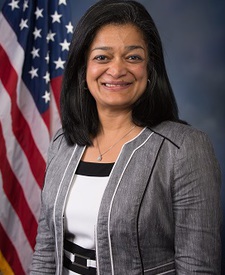
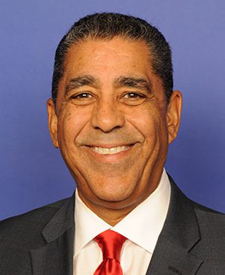
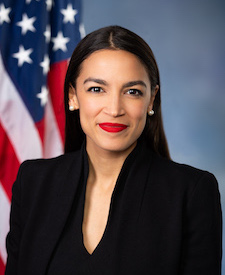
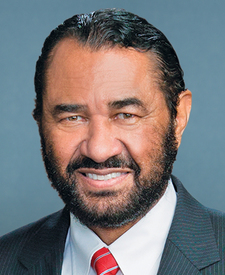
In CommitteeMs. Jayapal (for herself, Ms. Balint, Mr. Casar, Mr. García …
Referred to the Committee on Education and Workforce, and in …
Introduced in House
Stakeholder Effects
cui bono?How this legislation distributes effects. Mention counts reflect frequency, not effect magnitude.
Community college students, Minority-serving institutions, Private nonprofit HBCUs
Bill Structure & Actor Mappings
Who is "The Secretary" in each section?
We use a combination of our own taxonomy and classification in addition to large language models to assess meaning and potential beneficiaries. High confidence means strong textual evidence. Always verify with the original bill text.
Learn more about our methodology