To require the Under Secretary of Commerce for Intellectual Property and Director of the United States Patent and Trademark Office to establish and carry out a pilot program to expedite the examination of applications for certain patents, and for other purposes.
Analysis under review: This bill has generated analysis that may be too generic or incomplete. Clause-level evidence remains available below.
Summary
What This Bill Does
The bill establishes a USPTO pilot program to expedite patent examination for applications covering AI, semiconductors, and quantum computing technologies. It relies on exemptions, procurement rules, compliance mandates, and reporting requirements. The main policy areas are Technology, Trade, Foreign Policy, and Finance.
Who Benefits and How
U.S. semiconductor design companies and EDA tool developers could face lower compliance burdens, U.S. quantum computing companies and research institutions could face lower compliance burdens, and U.S. companies and inventors filing AI patents could face lower compliance burdens.
Who Bears the Burden and How
Foreign entities of concern seeking U.S. patents in critical technologies could face higher barriers, Prolific inventors in critical technologies (5+ applications) could face higher barriers, and USPTO patent examiners would take on compliance duties.
Key Provisions
- Establishes a USPTO pilot program to expedite patent examination for applications covering AI, semiconductors, and quantum computing technologies.
Evidence Chain:
This summary is generated from the full bill text using AI analysis. Expand "Detailed Analysis" below for identified beneficiaries/burden bearers with clause-level evidence links.
At a Glance
What This Bill Does
The bill establishes a USPTO pilot program to expedite patent examination for applications covering AI, semiconductors, and quantum computing technologies.
Key Policy Areas
Technology, Trade, Foreign Policy, Finance
Primary Purpose
The bill establishes a USPTO pilot program to expedite patent examination for applications covering AI, semiconductors, and quantum computing technologies.
Policy Domains
Section 1 - Short Title
Identified Gains
- U.S. semiconductor design companies and EDA tool developers
- U.S. quantum computing companies and research institutions
- U.S. companies and inventors filing AI patents
- Patent law firms specializing in AI, semiconductor, and quantum technologies
Identified Costs
- Foreign entities of concern seeking U.S. patents in critical technologies
- Prolific inventors in critical technologies (5+ applications)
- USPTO patent examiners
Sponsors
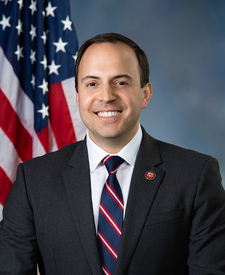
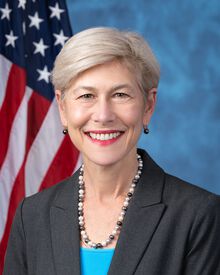
Legislative Progress
IntroducedMr. Gooden (for himself and Ms. Ross) introduced the following …
Stakeholder Effects
cui bono?How this legislation distributes effects. Mention counts reflect frequency, not effect magnitude.
Prolific inventors in critical technologies (5+ applications), U.S. companies and inventors filing AI patents, U.S. quantum computing companies and research institutions
Positive-direction: U.S. companies and inventors filing AI patents, U.S. quantum computing companies and research institutions
Negative-direction: Prolific inventors in critical technologies (5+ applications)
U.S. semiconductor design companies and EDA tool developers
Patent law firms specializing in AI, semiconductor, and quantum technologies
Foreign entities of concern seeking U.S. patents in critical technologies
Bill Structure & Actor Mappings
Who is "The Secretary" in each section?
- "the_office"
- → United States Patent and Trademark Office
- "the_director"
- → Under Secretary of Commerce for Intellectual Property and Director of the United States Patent and Trademark Office
Key Definitions
Terms defined in this bill
An application for patent that contains at least 1 claimed invention directed to an eligible critical or emerging technology
The Under Secretary of Commerce for Intellectual Property and Director of the Office (USPTO)
Technologies in three categories: (A) AI capabilities (machine learning, deep learning, reinforcement learning, sensory perception, AI assurance, foundation models, generative AI, synthetic data, planning/reasoning, AI safety); (B) semiconductor design or electronic design automation tools; (C) quantum information science capabilities (quantum computing, materials for quantum devices, quantum sensing, quantum communications)
To advance a covered application out of turn through the use of a petition to make special
The United States Patent and Trademark Office
The pilot program established under subsection (b) to expedite examination of covered applications
We use a combination of our own taxonomy and classification in addition to large language models to assess meaning and potential beneficiaries. High confidence means strong textual evidence. Always verify with the original bill text.
Learn more about our methodology