Mental Health in Schools Excellence Program Act of 2025
Summary
What This Bill Does
The Mental Health in Schools Excellence Program Act of 2025 directs the Education Secretary to operate a public-private contribution program to expand the school-based mental health workforce. Eligible graduate institutions may enter agreements with the Secretary to cover a portion of participating students' cost of attendance, and the Secretary matches equivalent contributions toward that cost. Agreements must specify the contribution mechanism, such as direct grants or scholarships, the maximum institutional contribution per student per academic year, the maximum number of supported students, priority rules for selected students, and other agreed matters. The Department must publish and update a list of participating graduate institutions and agreement information on its website, and conduct outreach to potential participating students who, as undergraduates, received Pell Grants or attended institutions listed in Higher Education Act section 371(a). Eligible graduate programs include accredited or approved school psychology programs preparing students for state licensing or certification, accredited school counseling programs, accredited school social work programs, other school-based mental health fields preparing students for state licensing or certification if applicable, or combinations of those fields. Participating students are enrolled in graduate degree programs in school-based mental health fields.
Who Benefits and How
Graduate students in school psychology benefit from matched cost-of-attendance support. Graduate students in school counseling benefit from matched institutional and federal contributions. Graduate students in school social work benefit from reduced graduate education costs. Schools benefit if the program increases the supply of school-based mental health service providers. Pell Grant recipients benefit from targeted outreach into the program.
Who Bears the Burden and How
Eligible graduate institutions must contribute their own funds and enter detailed agreements with the Education Department. Department of Education staff must match contributions, publish participation lists, and conduct outreach. Participating students may need to satisfy priority and program requirements to receive support. Federal taxpayers bear the cost of matching institutional contributions.
Key Provisions
- Establishes the Mental Health in Schools Excellence Program.
- Requires eligible graduate institutions and the Education Secretary to make matching cost-of-attendance contributions.
- Covers school psychology, school counseling, school social work, and other school-based mental health graduate programs.
- Requires public posting of participating institutions and agreement information.
- Requires outreach to Pell Grant recipients and students from designated institutions.
Evidence Chain:
This summary is generated from the full bill text using AI analysis. Expand "Detailed Analysis" below for identified beneficiaries/burden bearers with clause-level evidence links.
At a Glance
What This Bill Does
Creates a Mental Health in Schools Excellence Program in which the Department of Education matches eligible graduate institutions' contributions toward cost of attendance for students in school psychology, school counseling, school social work, and other school-based mental health graduate programs, with public participation lists, outreach to Pell and minority-serving institution alumni, and priority for selected students.
Key Policy Areas
Education, Mental Health, Workforce, Student Aid
Primary Purpose
Creates a Mental Health in Schools Excellence Program in which the Department of Education matches eligible graduate institutions' contributions toward cost of attendance for students in school psychology, school counseling, school social work, and other school-based mental health graduate programs, with public participation lists, outreach to Pell and minority-serving institution alumni, and priority for selected students.
Policy Domains
Resolution provisions
Identified Gains
- Graduate students in school psychology
- Graduate students in school counseling
- Graduate students in school social work
- Schools
- Pell Grant recipients
Identified Costs
- Eligible graduate institutions
- Department of Education staff
- Participating students
- Federal taxpayers
Sponsors


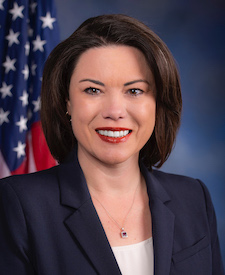


Legislative Progress
In CommitteeMr. Fitzpatrick (for himself and Mr. Golden of Maine) introduced …
Referred to the House Committee on Education and Workforce.
Introduced in House
Stakeholder Effects
cui bono?How this legislation distributes effects. Mention counts reflect frequency, not effect magnitude.
Graduate students in school counseling, Graduate students in school psychology, Graduate students in school social work
Eligible graduate institutions, Schools
Positive-direction: Schools
Negative-direction: Eligible graduate institutions
Bill Structure & Actor Mappings
Who is "The Secretary" in each section?
We use a combination of our own taxonomy and classification in addition to large language models to assess meaning and potential beneficiaries. High confidence means strong textual evidence. Always verify with the original bill text.
Learn more about our methodology