To amend the Internal Revenue Code of 1986 to allow a credit against tax for charitable donations to nonprofit organizations providing education scholarships to qualified elementary and secondary students.
Summary
What This Bill Does
The bill amends the Internal Revenue Code to insert new Section 25F creating an individual tax credit for qualified contributions to scholarship granting organizations, capped at the greater of 10% of AGI or $5,000, with volume, creates full text of new IRC Section 25F providing the individual education scholarship tax credit, detailing credit amount, AGI/K cap, volume cap limitations, state credit offset, and definitions including eligible, and creates new IRC Section 45BB providing a general business credit for corporate contributions to scholarship granting organizations, capped at 5% of taxable income, with no deduction allowed for credited contributions. It relies on tax credits, tax exemption, tax penalty, and reporting requirements. The main policy areas are Education.
Who Benefits and How
Scholarship granting organizations could gain revenue opportunities, Private and religious K-12 schools could face lower compliance burdens, and Private and religious elementary and secondary schools could gain revenue opportunities.
Who Bears the Burden and How
Federal Treasury could lose revenue opportunities, Public school systems could lose revenue opportunities, and Federal government (revenue loss) could face higher costs.
Key Provisions
- Amends the Internal Revenue Code to insert new Section 25F creating an individual tax credit for qualified contributions to scholarship granting organizations, capped at the greater of 10% of AGI or $5,000, with volume...
- Creates full text of new IRC Section 25F providing the individual education scholarship tax credit, detailing credit amount, AGI/K cap, volume cap limitations, state credit offset, and definitions including eligible...
- Creates new IRC Section 45BB providing a general business credit for corporate contributions to scholarship granting organizations, capped at 5% of taxable income, with no deduction allowed for credited contributions.
- Creates new IRC Section 4969 disqualifying contributions to scholarship granting organizations that fail to distribute at least 100% of receipts (less reasonable admin expenses up to 10%) within 3 years, effectively...
- Establishes a $10 billion annual volume cap on scholarship tax credits, allocated to states based on child population (20% weight) and child poverty (80% weight), with a minimum state allocation of 0.5%, reservation...
Evidence Chain:
This summary is generated from the full bill text using AI analysis. Expand "Detailed Analysis" below for identified beneficiaries/burden bearers with clause-level evidence links.
At a Glance
What This Bill Does
The bill amends the Internal Revenue Code to insert new Section 25F creating an individual tax credit for qualified contributions to scholarship granting organizations, capped at the greater of 10% of AGI or $5,000, with volume, creates full text of new IRC Section 25F providing the individual education scholarship tax credit, detailing credit amount, AGI/K cap, volume cap limitations, state credit offset, and definitions including eligible, and creates new IRC Section 45BB providing a general business credit for corporate contributions to scholarship granting organizations, capped at 5% of taxable income, with no deduction allowed for credited contributions.
Key Policy Areas
Education
Primary Purpose
The bill amends the Internal Revenue Code to insert new Section 25F creating an individual tax credit for qualified contributions to scholarship granting organizations, capped at the greater of 10% of AGI or $5,000, with volume, creates full text of new IRC Section 25F providing the individual education scholarship tax credit, detailing credit amount, AGI/K cap, volume cap limitations, state credit offset, and definitions including eligible, and creates new IRC Section 45BB providing a general business credit for corporate contributions to scholarship granting organizations, capped at 5% of taxable income, with no deduction allowed for credited contributions.
Policy Domains
Section 2 — Individual Tax Credit (Section 25F)
Identified Gains
- Scholarship granting organizations
- Private and religious K-12 schools
- Private and religious elementary and secondary schools
- K-12 scholarship recipients
- Individual taxpayers making charitable education contributions
Identified Costs
- Federal Treasury
- Public school systems
- Federal government (revenue loss)
- Scholarship granting organizations
Sponsors
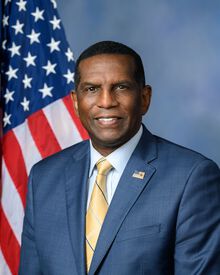

Legislative Progress
IntroducedMr. Owens (for himself and Mr. Donalds) introduced the following …
Stakeholder Effects
cui bono?How this legislation distributes effects. Mention counts reflect frequency, not effect magnitude.
Families choosing private/religious K-12 education, Families receiving K-12 scholarships from SGOs, K-12 scholarship recipients
Scholarship granting organizations faces effects in multiple directions
Positive-direction: Families choosing private/religious K-12 education, Families receiving K-12 scholarships from SGOs, K-12 scholarship recipients, Low-income families seeking private education, Parents choosing private education, Private and religious K-12 schools, Private and religious elementary and secondary schools, Private and religious schools, Scholarship recipients
Negative-direction: Public school systems
Federal Treasury, Federal government (revenue loss), High-poverty states
Positive-direction: High-poverty states, States with large child populations
Negative-direction: Federal Treasury, Federal government (revenue loss)
Corporations making education contributions
Individual taxpayers making charitable education contributions
Bill Structure & Actor Mappings
Who is "The Secretary" in each section?
- "the_secretary"
- → Secretary of the Treasury
- "the_secretary"
- → Secretary of the Treasury
- "the_secretary"
- → Secretary of the Treasury
- "the_secretary"
- → Secretary of the Treasury
Key Definitions
Terms defined in this bill
An individual who is eligible to enroll in a public elementary or secondary school.
A charitable contribution in cash or marketable securities to a scholarship granting organization.
Tuition, fees, tutoring, special needs services, textbooks, supplies, technology, transportation, and other education-related expenses.
A 501(c)(3) organization that provides scholarships for qualified K-12 education expenses, with more than 90% of receipts going to scholarship purposes.
We use a combination of our own taxonomy and classification in addition to large language models to assess meaning and potential beneficiaries. High confidence means strong textual evidence. Always verify with the original bill text.
Learn more about our methodology