Goldie’s Act
Summary
What This Bill Does
Goldie's Act amends the Animal Welfare Act. It defines a violation as any deficiency, deviation, or failure to comply with the Act or its regulations or standards. USDA must determine whether regulated dealers, exhibitors, intermediate handlers, carriers, research facilities, and auction-sale operators have violated the law; access places of business, facilities, animals, and required records; document detailed descriptions of violations; inspect every research facility, dealer, and exhibitor at least once each year; and conduct follow-up inspections until violations are corrected. USDA must issue rules requiring inspectors to promptly confiscate or humanely destroy animals found during inspection to be suffering physical or psychological harm because of noncompliance, including animals held by research facilities that are no longer needed for the relevant research. Regulated parties notified of confiscation may not destroy that animal, or any other animal in their possession, without prior written USDA consent until confiscation is complete. USDA must send records of violations to state, local, and municipal animal-control or law-enforcement officials within 24 hours. Civil penalties can reach $10,000 for each violation, each violation and each day count separately, hearing panels must include a veterinarian and two animal-care specialists or directors, hearings generally must occur within 21 days, penalties are calculated per animal and per violation, and USDA must create penalty guidelines designed to discourage future violations.
Who Benefits and How
Animals held by regulated dealers, exhibitors, carriers, auction operators, and research facilities benefit from mandatory follow-up inspections and confiscation rules for suffering animals. Animal welfare organizations benefit from stronger USDA enforcement records, penalties, and local notification requirements. State and local animal-control officials benefit because USDA must send violation records within 24 hours. USDA inspectors benefit from clearer authority to document violations and act on suffering animals.
Who Bears the Burden and How
Animal dealers must face annual inspections, follow-up inspections, records access, per-animal penalties, and confiscation restrictions. Animal exhibitors must meet the same heightened inspection, correction, and penalty regime. Research facilities must face annual inspections and potential confiscation of suffering animals no longer needed for research. Intermediate handlers, carriers, and auction-sale operators face broader enforcement exposure and civil penalties. USDA APHIS staff must conduct annual and follow-up inspections, document violations, notify local officials, convene specialized hearings, and create penalty guidelines.
Key Provisions
- Defines Animal Welfare Act violations as any deficiency, deviation, or failure to comply.
- Requires USDA to inspect every research facility, dealer, and exhibitor at least annually.
- Requires follow-up inspections until violations are corrected.
- Requires rules for prompt confiscation or humane destruction of suffering animals found during inspections.
- Requires USDA to provide violation records to local animal-control or law-enforcement officials within 24 hours.
- Sets civil penalties up to $10,000 per violation, counted per animal and per day, with cease-and-desist orders and penalty guidelines.
Evidence Chain:
This summary is generated from the full bill text using AI analysis. Expand "Detailed Analysis" below for identified beneficiaries/burden bearers with clause-level evidence links.
At a Glance
What This Bill Does
Strengthens Animal Welfare Act enforcement by defining violations broadly, requiring USDA inspections and investigations to document deficiencies, mandating annual inspections and follow-up until violations are corrected, requiring humane confiscation or destruction of suffering animals, sending violation records to local animal-control or law-enforcement officials within 24 hours, and setting per-animal, per-violation civil penalties up to $10,000 plus cease-and-desist orders.
Key Policy Areas
Animal Welfare, Agriculture Enforcement, Research Oversight
Primary Purpose
Strengthens Animal Welfare Act enforcement by defining violations broadly, requiring USDA inspections and investigations to document deficiencies, mandating annual inspections and follow-up until violations are corrected, requiring humane confiscation or destruction of suffering animals, sending violation records to local animal-control or law-enforcement officials within 24 hours, and setting per-animal, per-violation civil penalties up to $10,000 plus cease-and-desist orders.
Policy Domains
Resolution provisions
Identified Gains
- Animals in regulated facilities
- Animal welfare organizations
- Local animal-control officials
- USDA inspectors
Identified Costs
- Animal dealers
- Animal exhibitors
- Research facilities
- Animal transporters
- USDA APHIS staff
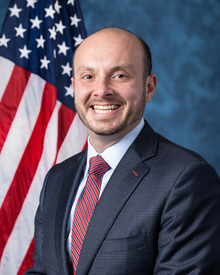
Sponsors




Legislative Progress
In CommitteeReferred to the Subcommittee on Livestock, Dairy, and Poultry.
Ms. Malliotakis (for herself, Mr. Krishnamoorthi, Mr. Fitzpatrick, Mr. Quigley, …
Referred to the House Committee on Agriculture.
Introduced in House
Stakeholder Effects
cui bono?How this legislation distributes effects. Mention counts reflect frequency, not effect magnitude.
Animal welfare organizations, Animals in regulated facilities
Bill Structure & Actor Mappings
Who is "The Secretary" in each section?
We use a combination of our own taxonomy and classification in addition to large language models to assess meaning and potential beneficiaries. High confidence means strong textual evidence. Always verify with the original bill text.
Learn more about our methodology