Business Owners Protection Act of 2025
Summary
What This Bill Does
The Business Owners Protection Act rolls back unused Securities and Exchange Commission authority from Dodd-Frank and related securities-law provisions. It terminates any SEC authority established under Dodd-Frank that gives the Commission discretion to impose a requirement on private entities if the SEC had not issued a notice of proposed rulemaking or guidance document for that authority before January 1, 2025. Within 180 days, the SEC must submit to Congress and publish a public list of each terminated authority. The reported text also repeals section 15(o) of the Securities Exchange Act and the related section 921(a) authority concerning mandatory predispute arbitration. It removes certain fiduciary-duty-related authority in Exchange Act section 15 and Investment Advisers Act section 211(h), and repeals a second Exchange Act subsection (k) relating to standards of conduct.
Who Benefits and How
Broker-dealers benefit because unused SEC authority to restrict mandatory predispute arbitration is repealed. Investment advisers benefit from removal of certain fiduciary-duty-related authority and reduced risk of future SEC conduct rules under unused Dodd-Frank authority. Financial services firms subject to SEC oversight benefit from a cutoff for dormant discretionary requirements that had no proposed rule or guidance before January 1, 2025. Securities industry compliance officers benefit from a public list of terminated authorities. Business owners using financial advisers may benefit from less regulatory uncertainty around future SEC rules.
Who Bears the Burden and How
The Securities and Exchange Commission must identify terminated authorities, report them to Congress, publish the list, and update internal rulemaking plans. Retail investors subject to mandatory arbitration lose a potential future SEC pathway to restrict or condition arbitration clauses. Investor advocacy organizations bear a policy burden because the bill narrows SEC investor-protection authority before future rulemaking. SEC enforcement and policy staff must determine which Dodd-Frank authorities are covered by the termination rule. Congressional oversight committees must review the SEC list and any effects of repealed authorities.
Key Provisions
- Terminates unused Dodd-Frank SEC authorities that could impose private-entity requirements without pre-2025 proposed rules or guidance.
- Requires the SEC to submit to Congress and publish a list of terminated authorities within 180 days.
- Repeals SEC authority related to restricting mandatory predispute arbitration.
- Removes specified fiduciary-duty-related authority in the Exchange Act and Investment Advisers Act.
- Repeals a second Exchange Act subsection related to standards of conduct.
Evidence Chain:
This summary is generated from the full bill text using AI analysis. Expand "Detailed Analysis" below for identified beneficiaries/burden bearers with clause-level evidence links.
At a Glance
What This Bill Does
Terminates certain unused SEC authorities created under Dodd-Frank, repeals unused SEC authority to restrict mandatory predispute arbitration, removes certain fiduciary-duty authority, repeals an unused broker-dealer standard-of-conduct subsection, and requires the SEC to publish a list of terminated authorities.
Key Policy Areas
Securities, Financial Regulation, Business Regulation
Primary Purpose
Terminates certain unused SEC authorities created under Dodd-Frank, repeals unused SEC authority to restrict mandatory predispute arbitration, removes certain fiduciary-duty authority, repeals an unused broker-dealer standard-of-conduct subsection, and requires the SEC to publish a list of terminated authorities.
Policy Domains
House resolution provisions
Identified Gains
- Broker-dealer compliance officers
- Investment adviser compliance officers
- Financial services firms
- Securities industry compliance officers
- Business owners using financial advisers
Identified Costs
- Securities and Exchange Commission
- Retail investors subject to arbitration
- Investor advocacy organizations
- SEC enforcement staff
- Congressional oversight committees
Sponsors
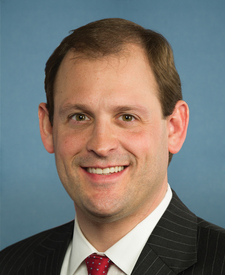
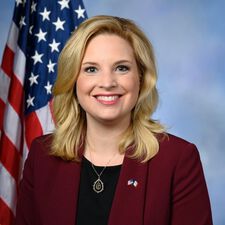
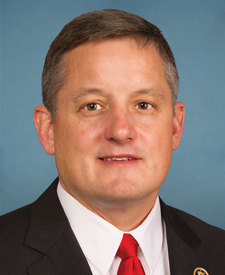

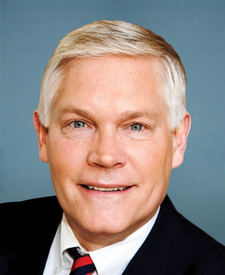
Legislative Progress
ReportedAdditional sponsors: Mr. Hudson, Mr. Baumgartner, Mr. Williams of Texas, …
Reported with an amendment, committed to the Committee of the …
Placed on the Union Calendar, Calendar No. 315.
Reported (Amended) by the Committee on Financial Services. H. Rept. …
Ordered to be Reported (Amended) by the Yeas and Nays: …
Committee Consideration and Mark-up Session Held
Mr. Barr (for himself, Mr. Emmer, Mr. Westerman, and Mrs. …
Referred to the House Committee on Financial Services.
Introduced in House
Stakeholder Effects
cui bono?How this legislation distributes effects. Mention counts reflect frequency, not effect magnitude.
Broker-dealer compliance officers, Financial adviser firms, Financial services firms
Congressional oversight committees, Securities and Exchange Commission
Positive-direction: Congressional oversight committees
Negative-direction: Securities and Exchange Commission
Bill Structure & Actor Mappings
Who is "The Secretary" in each section?
- "sec"
- → Securities and Exchange Commission
We use a combination of our own taxonomy and classification in addition to large language models to assess meaning and potential beneficiaries. High confidence means strong textual evidence. Always verify with the original bill text.
Learn more about our methodology