To improve the licensing and security of submarine and cross-border terrestrial telecommunications cables, and for other purposes.
Analysis under review: This bill has generated analysis that may be too generic or incomplete. Clause-level evidence remains available below.
Summary
What This Bill Does
This bill overhauls how the United States regulates undersea telecommunications cables that carry internet traffic and data between countries. It transfers licensing authority from the President to the FCC, establishes new security standards, and creates a unified permitting process. The bill also bans cables connecting to hostile foreign nations and dramatically increases criminal penalties for damaging cables.
Who Benefits and How
Submarine cable operators benefit from a streamlined 540-day licensing timeline with automatic approval if deadlines are missed, plus exemption from most environmental permits beyond a single Army Corps general permit. The telecommunications industry gains regulatory certainty and protection from state/local environmental regulations. National security agencies gain new incident reporting requirements and consultation rights on security standards.
Who Bears the Burden and How
Cable operators face new compliance requirements including 24-hour cybersecurity incident reporting, mandatory adherence to FCC security standards, and restrictions on connecting to foreign adversary nations or using blacklisted equipment. Companies using Chinese or other banned telecommunications equipment cannot obtain licenses. Anyone who damages cables faces dramatically increased penalties (up to 25 years imprisonment vs. previous 2 years maximum).
Key Provisions
- Transfers submarine cable licensing from President to FCC with 540-day decision deadline
- Bans cables connecting to foreign adversary territories or using blacklisted equipment
- Requires 24-hour cybersecurity incident reporting to FCC and CISA
- Preempts state/local environmental regulations for licensed submarine cables
- Increases criminal penalties for cable damage from 2 years to 25 years imprisonment
Evidence Chain:
This summary is generated from the full bill text using AI analysis. Expand "Detailed Analysis" below for identified beneficiaries/burden bearers with clause-level evidence links.
At a Glance
What This Bill Does
Transfers submarine cable licensing from the President to the FCC, establishes comprehensive security and cybersecurity requirements for undersea and cross-border telecommunications cables, and increases penalties for cable damage.
Key Policy Areas
Telecommunications, National Security, Cybersecurity, International Relations
Primary Purpose
Transfers submarine cable licensing from the President to the FCC, establishes comprehensive security and cybersecurity requirements for undersea and cross-border telecommunications cables, and increases penalties for cable damage.
Policy Domains
SECURE American Telecommunications Act
Identified Gains
- Submarine cable operators
- Telecommunications industry
- National security agencies
- Five Eyes allied nations
Identified Costs
- Foreign adversary telecommunications companies
- Cable operators (compliance costs)
- State and local environmental regulators
- Individuals who damage cables
Legislative Progress
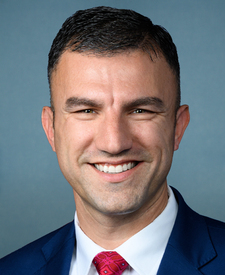
IntroducedMr. Yakym introduced the following bill; which was referred to …
Stakeholder Effects
cui bono?How this legislation distributes effects. Mention counts reflect frequency, not effect magnitude.
Congressional Intelligence Committees, Cybersecurity and Infrastructure Security Agency, Department of State
Positive-direction: Congressional Intelligence Committees, Cybersecurity and Infrastructure Security Agency, Five Eyes allied nations, National Oceanic and Atmospheric Administration, Navy
Negative-direction: Department of State, Federal Communications Commission, Foreign adversaries conducting cyber attacks, Foreign state actors conducting sabotage, State and local environmental regulators, U.S. Army Corps of Engineers
Chinese telecommunications companies (Huawei, ZTE), International submarine cable operators, Regulated entities under this Act
Submarine cable operators faces effects in multiple directions
Positive-direction: Submarine cable operators seeking new licenses, U.S. telecommunications equipment manufacturers
Negative-direction: Chinese telecommunications companies (Huawei, ZTE), Submarine cable license holders, Submarine cable repair companies, Terrestrial telecommunications cable operators
Data centers relying on submarine cables
Individuals who damage submarine cables willfully
Bill Structure & Actor Mappings
Who is "The Secretary" in each section?
- "the_commission"
- → Federal Communications Commission
- "the_administrator"
- → Administrator of the National Oceanic and Atmospheric Administration
- "the_secretary_of_army"
- → Secretary of the Army (acting through Chief of Engineers)
- "the_secretary_of_state"
- → Secretary of State
Key Definitions
Terms defined in this bill
A threat to or vulnerability of information or an information system, including unauthorized access, use, disclosure, degradation, disruption, modification, destruction, or acts of terrorism; excludes violations of consumer terms of service
Any authorization required under Federal law for submarine or terrestrial telecommunications cables, including licenses, permits, special use authorizations, certifications, opinions, or other approvals
A maritime geographic zone in which marine activity may be restricted to protect a submarine cable from accidental or intentional damage
Australia, Canada, New Zealand, and the United Kingdom (Five Eyes allies)
A foreign government or foreign non-government person specified in section 791.4(a) of title 15, Code of Federal Regulations
A license to land or operate a submarine cable required by the Act of May 27, 1921
We use a combination of our own taxonomy and classification in addition to large language models to assess meaning and potential beneficiaries. High confidence means strong textual evidence. Always verify with the original bill text.
Learn more about our methodology