SMART Act
Summary
What This Bill Does
The SMART Act is a broad immigration bill. It repeals INA section 203(c), eliminating the diversity visa program and making conforming amendments. It caps annual refugee admissions at 50,000 and requires the President to enumerate asylees from the prior fiscal year. It narrows immediate relatives by removing parents of U.S. citizens, changing child references to younger than 18, reducing family-sponsored immigration to 88,000 minus certain parolee adjustments, and limiting family-sponsored immigrants to spouses or children of lawful permanent residents. The bill creates a points-based immigrant visa category with a 193,000 base level and demand-based adjustments; the incorporated points system uses criteria such as education, STEM and professional degrees, English proficiency, age, job offers, entrepreneurship, and other merit factors. It bars naturalization if an affidavit sponsor has not reimbursed means-tested public benefits received during the first five years after lawful permanent residence. It blocks SEVP approval for F or M student schools unless students attend in person at least three days per week. It directs DHS to use artificial intelligence to analyze immigration, travel, and other data for visa overstays. It changes H-1B allocation to a dynamic 115,000 to 195,000 range with additional increments and prioritizes compensation rates. Finally, it creates 25,000 annual gold-card visas from fiscal 2026 through 2035 for immigrants investing at least $5,000,000 for at least two years in enterprises expected to create at least 10 full-time jobs.
Who Benefits and How
High-scoring skilled immigrant applicants benefit from a points-based system that rewards education, English proficiency, STEM credentials, job offers, and other merit factors. Gold-card immigrant investors benefit from 25,000 annual visas outside ordinary worldwide numerical limits if they invest at least $5 million and create at least 10 jobs. High-wage H-1B employers benefit because cap-subject H-1B visas are allocated in order of compensation rate. DHS immigration enforcement staff benefit from a statutory mandate to use artificial intelligence and travel data to identify visa overstays.
Who Bears the Burden and How
Diversity visa applicants lose the diversity visa path entirely. Refugee applicants above the 50,000 annual cap face reduced admissions opportunity. Parents of U.S. citizens and other removed family-preference relatives face narrower family-sponsored immigration eligibility. SEVP-approved schools must require F and M students to attend in-person classes at least three days per week. Affidavit sponsors must reimburse means-tested public benefits before the sponsored immigrant can naturalize. Lower-wage H-1B employers face worse odds because H-1B selection is prioritized by compensation rate.
Key Provisions
- Repeals the diversity visa program and makes conforming immigration-law amendments.
- Caps refugee admissions at 50,000 per fiscal year and requires annual reporting of asylees.
- Narrows family immigration by removing parents from immediate-relative treatment and limiting family-sponsored categories.
- Creates a points-based immigrant visa system with a 193,000 base level and demand-based increases.
- Bars naturalization when an affidavit sponsor has not reimbursed means-tested public benefits for the first five years after admission.
- Requires SEVP schools to provide at least three in-person class days per week for F and M students.
- Directs DHS to use artificial intelligence to identify visa overstays.
- Reforms H-1B allocation around a 115,000 to 195,000 range and compensation-rate priority.
- Creates 25,000 annual gold-card immigrant visas for $5 million investors who create at least 10 jobs.
Evidence Chain:
This summary is generated from the full bill text using AI analysis. Expand "Detailed Analysis" below for identified beneficiaries/burden bearers with clause-level evidence links.
At a Glance
What This Bill Does
Rewrites large parts of legal immigration by repealing the diversity visa program, capping refugees at 50,000 a year, narrowing family-based immigration, creating a points-based immigrant visa allocation starting at 193,000 visas, adding a naturalization reimbursement bar, requiring in-person attendance for SEVP schools, directing DHS to use AI to identify visa overstays, reforming H-1B allocation, and creating 25,000 annual gold-card visas for $5 million job-creating investors from fiscal 2026 through 2035.
Key Policy Areas
Immigration, Higher Education, Labor, Border Security, Investment
Primary Purpose
Rewrites large parts of legal immigration by repealing the diversity visa program, capping refugees at 50,000 a year, narrowing family-based immigration, creating a points-based immigrant visa allocation starting at 193,000 visas, adding a naturalization reimbursement bar, requiring in-person attendance for SEVP schools, directing DHS to use AI to identify visa overstays, reforming H-1B allocation, and creating 25,000 annual gold-card visas for $5 million job-creating investors from fiscal 2026 through 2035.
Policy Domains
Resolution provisions
Identified Gains
- Skilled immigrant applicants
- Gold-card immigrant investors
- High-wage H-1B employers
- DHS immigration enforcement staff
Identified Costs
- Diversity visa applicants
- Refugee applicants
- Family-sponsored relatives
- SEVP-approved schools
- Affidavit sponsors
- Lower-wage H-1B employers
Legislative Progress
In CommitteeSponsor introductory remarks on measure. (CR H2408)
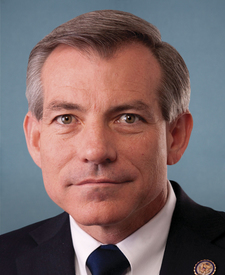
Mr. Schweikert introduced the following bill; which was referred to …
Referred to the House Committee on the Judiciary.
Introduced in House
Stakeholder Effects
cui bono?How this legislation distributes effects. Mention counts reflect frequency, not effect magnitude.
Affidavit sponsors, Diversity visa applicants, Family-sponsored relatives
Positive-direction: Gold-card immigrant investors, Skilled immigrant applicants
Negative-direction: Affidavit sponsors, Diversity visa applicants, Family-sponsored relatives, Refugee applicants
High-wage H-1B employers, Lower-wage H-1B employers
Positive-direction: High-wage H-1B employers
Negative-direction: Lower-wage H-1B employers
Bill Structure & Actor Mappings
Who is "The Secretary" in each section?
We use a combination of our own taxonomy and classification in addition to large language models to assess meaning and potential beneficiaries. High confidence means strong textual evidence. Always verify with the original bill text.
Learn more about our methodology