Bureau of Consumer Financial Protection Commission Act
Summary
What This Bill Does
The Bureau of Consumer Financial Protection Commission Act changes CFPB governance. It removes the Bureau from the Federal Reserve System language, makes it an independent agency, and vests management in a five-member commission appointed by the President with Senate confirmation. At least two commissioners must have private-sector experience in consumer financial products or services, and at least one must have been employed as a state bank supervisor. Initial terms are staggered for one to five years; later terms are five years, including the Chair. The commission exercises the Bureau's regulatory and order authority. References in federal law and records to the CFPB Director are generally deemed references to the commission leading the Bureau, with conforming amendments replacing Director language, renaming several assistant-director roles as heads of offices, replacing some Director references with Chair, and repealing Dodd-Frank section 1066.
Who Benefits and How
Consumer financial product companies benefit from multimember commission governance that can slow or broaden CFPB decisionmaking. State bank supervisors benefit because at least one commissioner must have state bank supervisor experience. Private-sector consumer finance professionals benefit because at least two commissioners must have relevant private-sector experience. Congress benefits from Senate confirmation for all five commissioners and clearer governance accountability.
Who Bears the Burden and How
The CFPB Director loses single-director management authority. CFPB staff must operate under a commission structure and conforming title changes. Consumer advocates may face a less centralized enforcement and rulemaking agency. Presidential appointments staff and Senate banking staff must process five commissioner nominations.
Key Provisions
- Converts CFPB from a Federal Reserve System bureau to an independent agency.
- Creates a five-member presidentially appointed and Senate-confirmed commission to manage the Bureau.
- Requires two commissioners with private-sector consumer-finance experience and one with state bank supervisor experience.
- Deems Director references to refer to the commission and replaces many Director references with Bureau or Chair.
- Repeals Dodd-Frank section 1066 and makes conforming amendments across consumer-finance laws.
Evidence Chain:
This summary is generated from the full bill text using AI analysis. Expand "Detailed Analysis" below for identified beneficiaries/burden bearers with clause-level evidence links.
At a Glance
What This Bill Does
Converts the CFPB from a Federal Reserve System bureau led by a single director into an independent agency governed by a five-member Senate-confirmed commission with required private-sector and state bank supervisor experience and conforming Dodd-Frank amendments.
Key Policy Areas
Financial Regulation, Consumer Finance, Agency Governance
Primary Purpose
Converts the CFPB from a Federal Reserve System bureau led by a single director into an independent agency governed by a five-member Senate-confirmed commission with required private-sector and state bank supervisor experience and conforming Dodd-Frank amendments.
Policy Domains
Resolution provisions
Identified Gains
- Consumer financial product companies
- State bank supervisors
- Private-sector consumer finance professionals
- Congress
Identified Costs
- CFPB Director
- CFPB staff
- Consumer advocates
- Senate banking staff
Sponsors



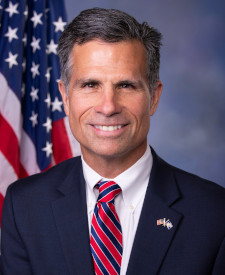
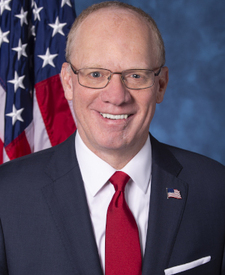
Legislative Progress
In CommitteeMr. Huizenga (for himself, Mr. Barr, Mr. Meuser, Mr. Fitzgerald, …
Referred to the House Committee on Financial Services.
Introduced in House
Stakeholder Effects
cui bono?How this legislation distributes effects. Mention counts reflect frequency, not effect magnitude.
Consumer financial product companies, Private-sector consumer finance professionals, State bank supervisors
Bill Structure & Actor Mappings
Who is "The Secretary" in each section?
We use a combination of our own taxonomy and classification in addition to large language models to assess meaning and potential beneficiaries. High confidence means strong textual evidence. Always verify with the original bill text.
Learn more about our methodology