Nurse Staffing Standards for Hospital Patient Safety and Quality Care Act of 2025
Summary
What This Bill Does
The Nurse Staffing Standards for Hospital Patient Safety and Quality Care Act adds a new Public Health Service Act title requiring hospitals to adopt staffing plans that protect patient safety and meet federal minimums. Direct care registered nurses could be assigned no more than one patient in trauma emergency units and operating rooms, two in critical care, three in emergency, pediatrics, stepdown, telemetry, antepartum, and labor-delivery-postpartum units, four in medical-surgical and specialty care units, five in rehabilitation and skilled nursing units, and six in postpartum or well-baby units, with rural hospitals receiving up to four years for ratio compliance. Hospitals must verify nurse competence, assign each patient to a direct care RN, exclude administrators from ratio counts unless they have active direct care assignments, and use ancillary personnel only within state scope-of-practice rules. Hospitals must post visible shift-by-shift ratios, keep three years of records, make records available to HHS, nurses, unions, and the public, and face periodic audits. HHS must study licensed practical nurse staffing through AHRQ, set LPN requirements within 18 months, adjust Medicare payments for compliance costs, obtain a MedPAC cost-savings report, and enforce nurse whistleblower and refusal rights. Nurses may refuse unsafe assignments, sue for retaliation, recover reinstatement, wages, fees, costs, and damages, and file complaints with HHS. Staffing plans must consider acuity, admissions, discharges, transfers, specialized experience, ancillary staffing, temporary nurse familiarity, and unit layout, and must be developed with direct care nurse input and bargaining where nurses are represented.
Who Benefits and How
Hospital patients benefit from enforceable minimum nurse-to-patient ratios and public information about actual staffing each shift. Registered nurse employees benefit from staffing plans, unsafe-assignment refusal rights, retaliation protections, and private causes of action. Nurse unions benefit because staffing plans must include direct care nurse input and bargaining where nurses are represented. Licensed practical nurse employees benefit because HHS must study and set direct care LPN staffing requirements. Medicare hospitals benefit from payment adjustments for net costs attributable to compliance with staffing requirements.
Who Bears the Burden and How
Hospitals must meet unit-specific RN ratios, develop staffing plans, post notices, keep records for three years, and undergo HHS audits. Hospital administrators must exclude non-direct-care supervisors from ratio calculations unless they have active patient assignments. HHS staffing enforcement staff must write regulations, audit hospitals, investigate complaints, and enforce penalties. MedPAC staff must report on costs, savings, and Medicare payment adjustment recommendations within two years. Temporary nurse agencies must ensure assigned personnel demonstrate competency and receive orientation before hospital unit work.
Key Provisions
- Creates unit-specific direct care registered nurse-to-patient ratio limits for hospitals.
- Requires public posting, three-year records, nurse identity and duty-hour records, meal-break certification, and HHS audits.
- Directs AHRQ and HHS to study and establish licensed practical nurse staffing requirements.
- Requires Medicare payment adjustments and a MedPAC report on staffing compliance costs and savings.
- Protects nurses who refuse unsafe assignments and authorizes lawsuits, complaints, reinstatement, damages, fees, and costs.
- Requires staffing plans to use direct care nurse input, bargaining where applicable, and transparent acuity methodology.
Evidence Chain:
This summary is generated from the full bill text using AI analysis. Expand "Detailed Analysis" below for identified beneficiaries/burden bearers with clause-level evidence links.
At a Glance
What This Bill Does
Creates federal hospital nurse staffing standards with unit-specific registered-nurse patient limits, licensed practical nurse standards, public posting, records, audits, Medicare reimbursement adjustments, whistleblower protections, complaint enforcement, civil monetary penalties, and nurse participation in staffing plans.
Key Policy Areas
Health Care, Labor, Hospital Regulation, Medicare
Primary Purpose
Creates federal hospital nurse staffing standards with unit-specific registered-nurse patient limits, licensed practical nurse standards, public posting, records, audits, Medicare reimbursement adjustments, whistleblower protections, complaint enforcement, civil monetary penalties, and nurse participation in staffing plans.
Policy Domains
Resolution provisions
Identified Gains
- Hospital patients
- Registered nurse employees
- Nurse unions
- Licensed practical nurse employees
- Medicare hospitals
- Collective bargaining representatives
Identified Costs
- Hospitals
- Hospital administrators
- HHS staffing enforcement staff
- MedPAC staff
- Temporary nurse agencies
- Hospital recordkeeping staff
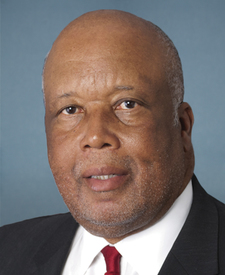
Sponsors




Legislative Progress
In CommitteeMs. Schakowsky (for herself, Mr. Doggett, Mr. Cohen, Ms. Norton, …
Referred to the Committee on Energy and Commerce, and in …
Introduced in House
Stakeholder Effects
cui bono?How this legislation distributes effects. Mention counts reflect frequency, not effect magnitude.
Hospital administrators, Hospital patients, Hospitals
Positive-direction: Hospital patients
Negative-direction: Hospital administrators, Hospitals
Licensed practical nurse employees, Nurse unions, Registered nurse employees
Bill Structure & Actor Mappings
Who is "The Secretary" in each section?
We use a combination of our own taxonomy and classification in addition to large language models to assess meaning and potential beneficiaries. High confidence means strong textual evidence. Always verify with the original bill text.
Learn more about our methodology