LASSO Act
Summary
What This Bill Does
The LASSO Act redirects a slice of federal public-land revenue to Social Security. Each fiscal year, 10 percent of amounts collected by the Department of the Interior and Department of Agriculture from revenue generated by covered public lands during the prior fiscal year must be deposited into the Federal Old-Age and Survivors Trust Fund. Covered lands include lands under Interior jurisdiction, including submerged lands on the Outer Continental Shelf, and Forest Service lands. The bill expressly does not authorize Interior or Agriculture to raise prices for activities generating covered land revenue and does not reduce amounts otherwise made available to states, Indian Tribes, territories, or local governments from covered public-land revenue.
Who Benefits and How
Social Security retirees benefit because the Old-Age and Survivors Trust Fund receives a new annual deposit stream from public-land revenues. Future Social Security beneficiaries benefit if the redirected receipts improve trust-fund resources. Public land users benefit from language saying the bill does not authorize higher prices for revenue-generating activities. States and Tribes benefit because the bill says their existing revenue shares from covered public lands are not reduced.
Who Bears the Burden and How
Interior revenue offices must calculate and deposit 10 percent of covered public-land revenue into the trust fund each fiscal year. Agriculture revenue offices must do the same for Forest Service lands. Federal budget accounts that otherwise would retain the redirected 10 percent lose that share of covered receipts. Treasury trust fund staff must receive and account for the new Social Security deposits.
Key Provisions
- Requires 10 percent of Interior and Agriculture covered public-land revenues to be deposited into the Old-Age and Survivors Trust Fund.
- Includes Interior lands, Outer Continental Shelf submerged lands, and Forest Service lands as covered public lands.
- Bars using the bill as authority to raise prices for covered public-land activities.
- Protects state, Tribal, territorial, and local government revenue shares from reduction.
Evidence Chain:
This summary is generated from the full bill text using AI analysis. Expand "Detailed Analysis" below for identified beneficiaries/burden bearers with clause-level evidence links.
At a Glance
What This Bill Does
Requires 10 percent of annual Interior and Agriculture revenue from covered public lands, including Interior lands, Outer Continental Shelf submerged lands, and Forest Service lands, to be deposited in the Federal Old-Age and Survivors Trust Fund without raising activity prices or reducing state, Tribal, territorial, or local revenue shares.
Key Policy Areas
Public Lands, Social Security, Federal Receipts
Primary Purpose
Requires 10 percent of annual Interior and Agriculture revenue from covered public lands, including Interior lands, Outer Continental Shelf submerged lands, and Forest Service lands, to be deposited in the Federal Old-Age and Survivors Trust Fund without raising activity prices or reducing state, Tribal, territorial, or local revenue shares.
Policy Domains
Resolution provisions
Identified Gains
- Social Security retirees
- Future Social Security beneficiaries
- Public land users
- States
Identified Costs
- Interior revenue offices
- Agriculture revenue offices
- Federal budget accounts
- Treasury trust fund staff
Sponsors

Legislative Progress
In CommitteeSubcommittee Hearings Held
Referred to the Subcommittee on Federal Lands.
Referred to the Subcommittee on Forestry and Horticulture.
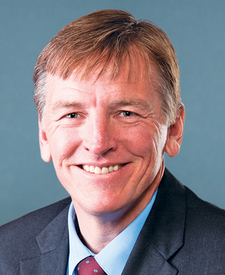
Mr. Gosar introduced the following bill; which was referred to …
Referred to the Committee on Natural Resources, and in addition …
Introduced in House
Stakeholder Effects
cui bono?How this legislation distributes effects. Mention counts reflect frequency, not effect magnitude.
Future Social Security beneficiaries, Social Security retirees
Agriculture revenue offices, Interior revenue offices
Bill Structure & Actor Mappings
Who is "The Secretary" in each section?
We use a combination of our own taxonomy and classification in addition to large language models to assess meaning and potential beneficiaries. High confidence means strong textual evidence. Always verify with the original bill text.
Learn more about our methodology