Care for Military Kids Act of 2025
Summary
What This Bill Does
The Care for Military Kids Act amends Medicaid state plan requirements for active duty relocated individuals. Beginning January 1, 2028, a state must treat a qualifying relocated individual as a resident for Medicaid eligibility unless the individual voluntarily elects otherwise. If the individual was on a home and community-based services waiting list at relocation, the individual remains on that list until the state assesses eligibility when a slot becomes available and any fair hearing opportunity is exhausted, or until the individual elects removal. The bill also requires payment for available medical assistance in the military service relocation state under HHS guidance. An active duty relocated individual includes a Medicaid-enrolled servicemember moved to another state by active-duty service, a recently separated or retired servicemember within 12 months of active duty, or a dependent relocating with such a member, if the person was receiving HCBS at relocation or was on an HCBS waiting list. The bill appropriates $1 million annually for fiscal years 2026 through 2030 to HHS for implementation and includes a state-legislation delay rule for states needing legislative changes.
Who Benefits and How
Military children receiving HCBS benefit because relocation does not automatically erase Medicaid residency treatment or waiting-list position. Active-duty servicemembers benefit because family Medicaid coverage and HCBS access are less disrupted by interstate military moves. Military dependents with disabilities benefit from continued waiting-list protection until assessment, decision, and fair-hearing steps are complete. Military family support organizations benefit from a clearer Medicaid portability rule for service-connected relocations.
Who Bears the Burden and How
State Medicaid agencies must treat qualifying relocated individuals as residents and preserve HCBS waiting-list status under the new rule. HHS Medicaid staff must issue guidance and implement the state plan requirement with $1 million annually from fiscal 2026 through 2030. States with HCBS waiting lists must assess eligibility when slots open and maintain fair-hearing protections before removal. Federal taxpayers bear the implementation appropriation and any Medicaid spending effects of smoother interstate coverage.
Key Provisions
- Requires Medicaid state plans to treat active duty relocated individuals as residents unless they opt out.
- Protects home and community-based services waiting-list status after military relocation.
- Requires payment for available medical assistance in the military service relocation state under HHS guidance.
- Defines covered individuals to include active-duty members, recent servicemembers within 12 months, and relocating dependents receiving HCBS or on waiting lists.
- Appropriates $1 million annually for HHS implementation from fiscal 2026 through fiscal 2030.
Evidence Chain:
This summary is generated from the full bill text using AI analysis. Expand "Detailed Analysis" below for identified beneficiaries/burden bearers with clause-level evidence links.
At a Glance
What This Bill Does
Requires Medicaid state plans, beginning January 1, 2028, to treat qualifying active-duty relocated servicemembers, recent servicemembers, and dependents as residents after military relocation, preserve home and community-based services waiting-list status, pay available medical assistance in the relocation state, and funds HHS implementation at $1 million annually for fiscal years 2026 through 2030.
Key Policy Areas
Medicaid, Military Families, Disability Services
Primary Purpose
Requires Medicaid state plans, beginning January 1, 2028, to treat qualifying active-duty relocated servicemembers, recent servicemembers, and dependents as residents after military relocation, preserve home and community-based services waiting-list status, pay available medical assistance in the relocation state, and funds HHS implementation at $1 million annually for fiscal years 2026 through 2030.
Policy Domains
Resolution provisions
Identified Gains
- Military children receiving HCBS
- Active-duty servicemembers
- Military dependents with disabilities
- Military family support organizations
Identified Costs
- State Medicaid agencies
- HHS Medicaid staff
- States with HCBS waiting lists
- Federal taxpayers
Sponsors

Legislative Progress
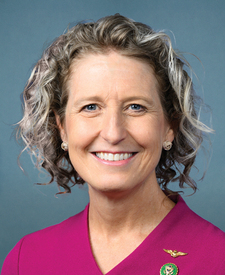
In CommitteeMrs. Kiggans of Virginia (for herself and Ms. Kaptur) introduced …
Referred to the House Committee on Energy and Commerce.
Introduced in House
Stakeholder Effects
cui bono?How this legislation distributes effects. Mention counts reflect frequency, not effect magnitude.
Military children receiving HCBS, State Medicaid agencies
Positive-direction: Military children receiving HCBS
Negative-direction: State Medicaid agencies
Bill Structure & Actor Mappings
Who is "The Secretary" in each section?
We use a combination of our own taxonomy and classification in addition to large language models to assess meaning and potential beneficiaries. High confidence means strong textual evidence. Always verify with the original bill text.
Learn more about our methodology