End Price Gouging for Medications Act
Summary
What This Bill Does
The End Price Gouging for Medications Act directs the HHS Secretary to establish annual reference prices for prescription drugs. When price information exists in at least three reference countries, the reference price is the lowest retail list price among Australia, Austria, Belgium, Canada, France, Germany, Italy, Japan, the Netherlands, Sweden, Switzerland, and the United Kingdom. If sufficient foreign price or dosage-equivalent information is unavailable, HHS sets an appropriate price based on added therapeutic effect, drug value, patient access, research and development costs, and other factors. Retail list prices may not exceed the reference price for drugs covered by Medicare, Medicaid, CHIP, TRICARE, VA care, FEHB, and Indian Health Care Improvement Act programs. Manufacturers also must offer prescription drugs at the reference price to all individuals, including uninsured people and privately insured people, with insured plan payments plus cost-sharing not exceeding the reference price. Noncompliant manufacturers owe a civil penalty for each drug and year equal to five times the difference between actual federal-program receipts and what they would have received at the reference price. Treasury transfers collected penalties to NIH, and NIH must use the money for drug research and development.
Who Benefits and How
Medicare beneficiaries benefit because covered drug retail list prices cannot exceed HHS reference prices. Uninsured patients benefit because manufacturers must offer prescription drugs at the reference price to all individuals. Privately insured patients benefit because plan payments plus cost sharing cannot exceed the reference price. Federal health programs benefit from drug-price caps across Medicare, Medicaid, CHIP, TRICARE, VA care, FEHB, and Indian Health Service-funded care. NIH drug researchers benefit because manufacturer penalties are transferred to NIH for drug research and development.
Who Bears the Burden and How
Drug manufacturers must cap prices at HHS reference prices across federal programs, uninsured individuals, and privately insured individuals. HHS drug pricing staff must calculate annual reference prices using foreign prices or therapeutic-value fallback factors. Treasury penalty staff must collect and transfer civil penalties based on five times excess federal-program receipts. Group health plans and insurers must ensure covered amounts plus cost sharing do not exceed reference prices. Pharmaceutical investors bear revenue risk if U.S. list prices are pulled down to foreign reference levels.
Key Provisions
- Requires HHS to establish annual reference prices for each prescription drug.
- Uses the lowest retail list price among twelve reference countries when sufficient foreign price data exists.
- Caps retail list prices for Medicare, Medicaid, CHIP, TRICARE, VA, FEHB, Indian health programs, uninsured people, and privately insured people.
- Creates manufacturer penalties equal to five times excess federal-program receipts for each drug and year.
- Transfers collected penalties to NIH for drug research and development.
Evidence Chain:
This summary is generated from the full bill text using AI analysis. Expand "Detailed Analysis" below for identified beneficiaries/burden bearers with clause-level evidence links.
At a Glance
What This Bill Does
Requires HHS to set annual prescription-drug reference prices using the lowest available prices in listed peer countries or a fallback therapeutic-value methodology, caps federal-program and private-market retail list prices at those references, penalizes noncompliant manufacturers at five times excess federal-program receipts, and transfers penalties to NIH drug research.
Key Policy Areas
Prescription Drugs, Health Care, Consumer Protection, NIH
Primary Purpose
Requires HHS to set annual prescription-drug reference prices using the lowest available prices in listed peer countries or a fallback therapeutic-value methodology, caps federal-program and private-market retail list prices at those references, penalizes noncompliant manufacturers at five times excess federal-program receipts, and transfers penalties to NIH drug research.
Policy Domains
Resolution provisions
Identified Gains
- Medicare beneficiaries
- Uninsured patients
- Privately insured patients
- Federal health programs
- NIH drug researchers
Identified Costs
- Drug manufacturers
- HHS drug pricing staff
- Treasury penalty staff
- Group health plans
- Pharmaceutical investors
Sponsors
Legislative Progress
In CommitteeReferred to the Subcommittee on Health.
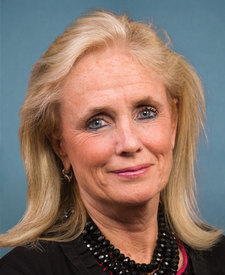
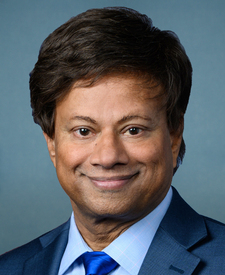
Mrs. Dingell introduced the following bill; which was referred to …
Referred to the Committee on Energy and Commerce, and in …
Introduced in House
Stakeholder Effects
cui bono?How this legislation distributes effects. Mention counts reflect frequency, not effect magnitude.
Group health plans, Privately insured patients
Positive-direction: Privately insured patients
Negative-direction: Group health plans
Bill Structure & Actor Mappings
Who is "The Secretary" in each section?
We use a combination of our own taxonomy and classification in addition to large language models to assess meaning and potential beneficiaries. High confidence means strong textual evidence. Always verify with the original bill text.
Learn more about our methodology