PROTECT Firefighters Act
Summary
What This Bill Does
The PROTECT Firefighters Act requires the U.S. Fire Administrator, within one year, to send Congress a comprehensive strategy on Rapid Intervention Teams, the firefighter teams used to rescue firefighters in distress. The strategy must describe current equipment, training, and staffing standards; ways to improve access to modern equipment, safety gear, training, and staffing levels; and methods for standardization and interoperability among teams. It must identify standards in use in each state and nationwide, barriers to training, barriers to state-of-the-art equipment, staffing levels and response times, interoperability efforts, and special needs for teams that respond to maritime or port facility fires, including ship-fire training and equipment.
Who Benefits and How
Firefighter Rapid Intervention Teams benefit from a federal strategy focused on modern equipment, safety gear, training, staffing, and interoperability. Fire departments with staffing shortages benefit if the strategy identifies barriers to better response times and staffing levels. Port firefighters benefit because maritime-specific training, equipment, staffing, and ship-fire readiness must be assessed. Congressional oversight committees benefit from a one-year report on standards and barriers across states and nationwide.
Who Bears the Burden and How
U.S. Fire Administration staff must collect information and write the comprehensive strategy within one year. State fire training offices may need to provide information on standards, interoperability, equipment, and barriers. Local fire departments may be asked to document training frequency, staffing levels, response times, and equipment gaps. Federal taxpayers bear the cost of producing and supporting the strategy.
Key Provisions
- Requires a one-year U.S. Fire Administrator strategy on Rapid Intervention Team standards.
- Directs review of equipment, safety gear, training, staffing, standardization, interoperability, barriers, and response times.
- Requires a maritime and port facility fire response assessment for relevant teams.
- Requires reporting to House Science, House Homeland Security, Senate Commerce, and Senate Homeland Security committees.
Evidence Chain:
This summary is generated from the full bill text using AI analysis. Expand "Detailed Analysis" below for identified beneficiaries/burden bearers with clause-level evidence links.
At a Glance
What This Bill Does
Requires the U.S. Fire Administrator to submit a one-year strategy on firefighter Rapid Intervention Team equipment, training, staffing, standardization, interoperability, maritime response readiness, and barriers to improving those capabilities.
Key Policy Areas
Fire Safety, Emergency Response, Federal Reports
Primary Purpose
Requires the U.S. Fire Administrator to submit a one-year strategy on firefighter Rapid Intervention Team equipment, training, staffing, standardization, interoperability, maritime response readiness, and barriers to improving those capabilities.
Policy Domains
Resolution provisions
Identified Gains
- Firefighter Rapid Intervention Teams
- Fire departments with staffing shortages
- Port firefighters
- Congressional oversight committees
Identified Costs
- U.S. Fire Administration staff
- State fire training offices
- Local fire departments
- Federal taxpayers
Sponsors
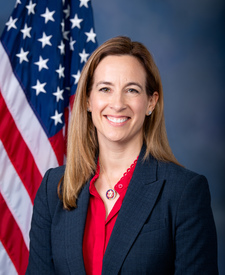


Legislative Progress
In CommitteeASSUMING FIRST SPONSORSHIP - Ms. Houlahan asked unanimous consent that …
Ms. Sherrill (for herself and Mr. Bacon) introduced the following …
Referred to the House Committee on Science, Space, and Technology.
Introduced in House
Stakeholder Effects
cui bono?How this legislation distributes effects. Mention counts reflect frequency, not effect magnitude.
Fire departments with staffing shortages, Firefighter Rapid Intervention Teams, Port firefighters
State fire training offices, U.S. Fire Administration staff
Bill Structure & Actor Mappings
Who is "The Secretary" in each section?
We use a combination of our own taxonomy and classification in addition to large language models to assess meaning and potential beneficiaries. High confidence means strong textual evidence. Always verify with the original bill text.
Learn more about our methodology