HEADWAY Act
Summary
What This Bill Does
The HEADWAY Act amends section 645A(h) of the Head Start Act. Instead of requiring all Early Head Start teachers in center-based programs to have the specified minimum credential or training, it requires at least one teacher per classroom to meet that standard. Additional teachers providing direct services to children and families must be working toward at least a child development associate credential and toward completing training or equivalent coursework in early childhood development. While those additional teachers are in progress, the employing Early Head Start agency must provide a mentor to oversee their progress and guide their work toward the credential and training.
Who Benefits and How
Early Head Start agencies benefit from more hiring flexibility because additional classroom teachers can work while earning credentials. Additional Early Head Start teachers benefit because they can provide direct services while progressing toward a child development associate credential. Early Head Start classrooms benefit because the bill preserves at least one credentialed or trained teacher per classroom. Children in Early Head Start benefit if staffing shortages ease while mentors guide less credentialed additional teachers.
Who Bears the Burden and How
Early Head Start agencies must provide mentors for additional teachers while they work toward credentials and coursework. Mentor teachers must oversee progress and guide the work of additional direct-service teachers. HHS Head Start monitoring staff must update compliance expectations for the revised classroom credential standard. Fully credentialed teacher applicants may face more competition from candidates who are still working toward credentials.
Key Provisions
- Modifies Early Head Start credential rules to require at least one qualified teacher per center-based classroom.
- Allows additional direct-service teachers to work while pursuing a child development associate credential and early-childhood training.
- Requires employing Early Head Start agencies to provide mentors for those additional teachers.
- Updates Head Start Act wording to replace outdated all-teacher deadlines with classroom and mentorship requirements.
Evidence Chain:
This summary is generated from the full bill text using AI analysis. Expand "Detailed Analysis" below for identified beneficiaries/burden bearers.
At a Glance
What This Bill Does
Changes Early Head Start teacher credential rules so at least one teacher per center-based classroom must already meet the credential or training standard, while additional direct-service teachers may work toward a child development associate credential and early-childhood coursework under agency-provided mentoring.
Key Policy Areas
Early Childhood Education, Workforce, Child Care
Primary Purpose
Changes Early Head Start teacher credential rules so at least one teacher per center-based classroom must already meet the credential or training standard, while additional direct-service teachers may work toward a child development associate credential and early-childhood coursework under agency-provided mentoring.
Policy Domains
Resolution provisions
Identified Gains
Contextual inference, no direct clause citation- Early Head Start agencies
- Additional Early Head Start teachers
- Early Head Start classrooms
- Children in Early Head Start
Contextual inference, no direct clause citation
Identified Costs
Contextual inference, no direct clause citation- Early Head Start agencies
- Mentor teachers
- HHS Head Start monitoring staff
- Fully credentialed teacher applicants
Contextual inference, no direct clause citation
Sponsors


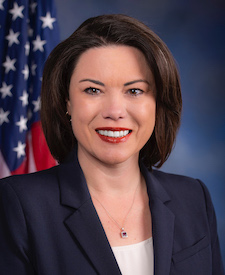


Legislative Progress
In CommitteeMr. Ciscomani (for himself and Ms. Sherrill) introduced the following …
Referred to the House Committee on Education and Workforce.
Introduced in House
Bill Structure & Actor Mappings
Who is "The Secretary" in each section?
We use a combination of our own taxonomy and classification in addition to large language models to assess meaning and potential beneficiaries. High confidence means strong textual evidence. Always verify with the original bill text.
Learn more about our methodology