Ensuring U.S. Authority over U.S. Banking Regulations Act
Summary
What This Bill Does
The Ensuring U.S. Authority over U.S. Banking Regulations Act places congressional notice and reporting conditions on internationally influenced banking regulation. Section 2 applies to the Federal Reserve Board, Office of the Comptroller of the Currency, FDIC, National Credit Union Administration, and Federal Housing Finance Agency. Before proposing or finalizing a major covered rule, each regulator must give the House Financial Services Committee and Senate Banking Committee at least 120 days of notice, testimony, and detailed economic analysis covering projected costs, sectoral effects, credit availability, GDP, and employment. A major covered rule is one the regulator determines would affect the U.S. economy by at least $10 billion over 10 years and is intended to align or conform with a recommendation from a non-governmental international organization, including the Financial Stability Board, Bank for International Settlements, Network of Central Banks and Supervisors for Greening the Financial System, or Basel Committee on Banking Supervision. Section 3 bars a federal banking regulator from meeting or engaging with the Financial Stability Board, NGFS, or Basel Committee on climate-related financial risk during a calendar year unless it has sent Congress a report describing the prior year's activities in that organization and accounting for governmental and non-governmental funding sources.
Who Benefits and How
House Financial Services Committee members benefit from 120-day advance notice, testimony, and economic analysis before covered internationally aligned banking rules. Senate Banking Committee members benefit from the same pre-rule oversight and from annual reports on climate-risk international organization activity. Banks and credit unions benefit from added congressional scrutiny of large rules tied to Basel, BIS, FSB, or NGFS recommendations. Borrowers benefit if the required analysis highlights effects on credit availability before major rules are proposed or finalized.
Who Bears the Burden and How
Federal Reserve Board staff must prepare notices, testimony, and economic analysis before covered rules and report climate-risk international activity. OCC staff, FDIC board staff, NCUA staff, and FHFA staff face parallel procedural requirements for covered rules. International banking standard setters may have less direct influence because U.S. regulators must report and justify covered alignments to Congress. Climate-risk supervision advocates bear a burden because regulator engagement with listed organizations is conditioned on prior reporting.
Key Provisions
- Requires 120-day congressional notice, testimony, and economic analysis before major internationally aligned banking rules.
- Defines major covered rules by a $10 billion 10-year economic-effect threshold and alignment with listed non-governmental international organizations.
- Applies the rulemaking condition to the Federal Reserve, OCC, FDIC, NCUA, and FHFA.
- Bars climate-risk engagement with FSB, NGFS, or Basel unless prior-year activities and funding sources are reported to Congress.
Evidence Chain:
This summary is generated from the full bill text using AI analysis. Expand "Detailed Analysis" below for identified beneficiaries/burden bearers with clause-level evidence links.
At a Glance
What This Bill Does
Requires federal banking regulators to give House Financial Services and Senate Banking 120 days of notice, testimony, and economic analysis before major rules aligned with non-governmental international organizations, and bars climate-risk engagement with listed international organizations unless prior-year activity and funding reports are sent to Congress.
Key Policy Areas
Financial Regulation, Congressional Oversight, Banking
Primary Purpose
Requires federal banking regulators to give House Financial Services and Senate Banking 120 days of notice, testimony, and economic analysis before major rules aligned with non-governmental international organizations, and bars climate-risk engagement with listed international organizations unless prior-year activity and funding reports are sent to Congress.
Policy Domains
Resolution provisions
Identified Gains
- House Financial Services Committee members
- Senate Banking Committee members
- Banks
- Credit unions
Identified Costs
- Federal Reserve Board staff
- OCC staff
- FDIC board staff
- International banking standard setters
Legislative Progress
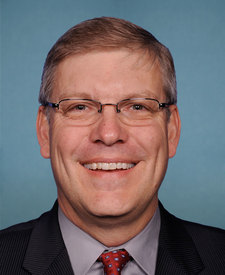
In CommitteeMr. Loudermilk introduced the following bill; which was referred to …
Referred to the House Committee on Financial Services.
Introduced in House
Stakeholder Effects
cui bono?How this legislation distributes effects. Mention counts reflect frequency, not effect magnitude.
Banks, Credit unions, International banking standard setters
FDIC board staff, Federal Reserve Board staff, OCC staff
House Financial Services Committee members, Senate Banking Committee members
Bill Structure & Actor Mappings
Who is "The Secretary" in each section?
We use a combination of our own taxonomy and classification in addition to large language models to assess meaning and potential beneficiaries. High confidence means strong textual evidence. Always verify with the original bill text.
Learn more about our methodology