Improving Access to Small Business Information Act
Summary
What This Bill Does
The bill is intended to let the SEC Advocate for Small Business Capital Formation gather information without the usual Office of Management and Budget (OMB) clearance process. It says the Advocate's actions under the covered subsection are not information collections for most purposes of the Paperwork Reduction Act, but expressly preserves selected internal SEC review and respondent safeguards. It removes submission to OMB, the OMB control-number display and notice requirements, and statements that the collection satisfies OMB clearance rules. This is not a blanket repeal of the Paperwork Reduction Act for all SEC activities.
There is a material drafting issue: the bill still amends Securities Exchange Act section 4(j). Public Law 119-21, enacted July 4, 2025, moved the Small Business Advocate provision from 4(j) to 4(i). The House-passed text did not update that reference. Its express references to the Advocate show the intended office, but the amendment location and the phrase under this subsection are no longer aligned with current law. The intended effects below therefore should not be read as a claim of unambiguous implementation without a conforming correction or authoritative interpretation.
Who Benefits and How
The SEC Office of the Advocate for Small Business Capital Formation would avoid outside clearance steps and could obtain information about financing problems more promptly. The Office of Management and Budget would no longer process these covered collections. Small-business employers seeking capital-formation assistance could benefit from better-informed advocacy and recommendations, but the bill creates no grant, securities exemption for their businesses or guaranteed financing. Internal review remains designed to test a collection's need, plan and estimated burden rather than permitting wholly unchecked surveys.
Who Bears the Burden and How
Small-business employers responding to Advocate collections would lose the usual OMB approval and control-number checkpoint and associated general PRA procedures. That can reduce independent scrutiny of respondent burdens, although the bill does not itself compel a new response or invent a penalty. The Securities and Exchange Commission must still perform the preserved internal review, describe purpose and intended use, estimate burden where practicable and disclose whether responding is voluntary, benefit-conditioned or mandatory. It must also retain efforts to reduce burdens on businesses with fewer than 25 employees and the small-business paperwork liaison. The usual general public-notice/comment provisions are not among the enumerated exceptions preserved here. The bill provides no appropriation or new staffing authorization.
Key Provisions
- Provides an exemption for the Advocate's covered actions from most PRA information-collection procedures, while retaining 44 U.S.C. 3506(c)(1), (c)(4), and (i), and 3507(a)(1)(A).
- Limits clearance duties by eliminating OMB submission, control-number display and related assurances, but preserves specified agency review and respondent information.
- Requires continued special burden-reduction efforts for small-business concerns with fewer than 25 employees; this is not an across-the-board waiver for every SEC filing.
- Uses the outdated section 4(j) amendment location despite the Small Business Advocate's statutory redesignation to 4(i) in July 2025.
- Changes headings and clarifies the title-44 citation between versions without changing the operative exemption-and-safeguards balance.
Evidence Chain:
This summary is generated from the full bill text using AI analysis. Expand "Detailed Analysis" below for identified beneficiaries/burden bearers with clause-level evidence links.
At a Glance
What This Bill Does
Exempt the SEC Small Business Advocate's information gathering from most Paperwork Reduction Act clearance procedures while preserving specified internal burden review and small-business safeguards, subject to an unresolved statutory-subsection reference.
Key Policy Areas
Finance, Government Operations
Primary Purpose
Exempt the SEC Small Business Advocate's information gathering from most Paperwork Reduction Act clearance procedures while preserving specified internal burden review and small-business safeguards, subject to an unresolved statutory-subsection reference.
Policy Domains
Improving Access to Small Business Information Act
Identified Gains
- SEC Office of the Advocate for Small Business Capital Formation
- Office of Management and Budget
- Small-business employers seeking capital-formation assistance
Identified Costs
- Small-business employers responding to Advocate collections
Sponsors


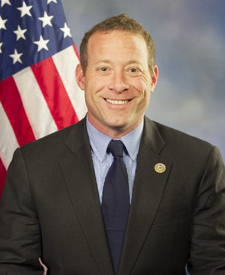

Legislative Progress
Passed HouseReceived; read twice and referred to the Committee on Banking, …
Passed House (inferred from eh version)
Received in the Senate and Read twice and referred to …
Motion to reconsider laid on the table Agreed to without …
On motion to suspend the rules and pass the bill, …
Passed/agreed to in House: On motion to suspend the rules …
Considered as unfinished business. (consideration: CR H3519-3520)
At the conclusion of debate, the Yeas and Nays were …
DEBATE - The House proceeded with forty minutes of debate …
Considered under suspension of the rules. (consideration: CR H3501-3503)
Stakeholder Effects
cui bono?How this legislation distributes effects. Mention counts reflect frequency, not effect magnitude.
Office of Management and Budget, SEC Office of the Advocate for Small Business Capital Formation
Small-business employers responding to Advocate collections
On Motion to Suspend the Rules and Pass, as Amended
Improving Access to Small Business Information Act
Bill Structure & Actor Mappings
Who is "The Secretary" in each section?
- "advocate"
- → SEC Advocate for Small Business Capital Formation
- "commission"
- → Securities and Exchange Commission
- "omb_director"
- → Director of the Office of Management and Budget
- "internal_review_office"
- → SEC office headed by its Chief Information Officer for the preserved section3506(c)(1) process
Note: Public Law119-21 section30003(a) redesignated Exchange Act4(j) as4(i); this standalone bill retains4(j), now the open-data-publication provision. Do not silently correct the enacted-law cross-reference or present the intended PRA relief as free of implementation ambiguity.
Key Definitions
Terms defined in this bill
Actions of the Advocate for Small Business Capital Formation under the referenced Securities Exchange Act subsection, not all SEC surveys, company disclosures or securities-registration filings.
Selected internal collection review and respondent-information duties, special burden reduction for businesses with fewer than25 employees, and the small-business liaison; OMB submission/control-number/clearance-assurance components are expressly excepted.
The bill names section4(j), where the Small Business Advocate was located at introduction. Public Law119-21 section30003(a) moved that office to4(i) before House passage.
We use a combination of our own taxonomy and classification in addition to large language models to assess meaning and potential beneficiaries. High confidence means strong textual evidence. Always verify with the original bill text.
Learn more about our methodology