Sovereign States Emergency Management Act
Summary
What This Bill Does
The Sovereign States Emergency Management Act would end the Federal Emergency Management Agency two years after enactment. On the abolition date, FEMA functions are transferred to the President, and FEMA personnel, property, and records become available for presidential use in carrying out those transferred functions. Unobligated FEMA funds are transferred to the Treasury general fund and made available for the bill's new program. Section 3 directs the Treasury Secretary to provide disaster and emergency relief block grants to states under a formula considering population, disaster frequency and severity over the previous 20 years, geographic risks such as seismic zones, flood plains, and hurricane exposure, and economic need measured by per capita income. States may use grants for disaster preparedness training and equipment, response and recovery operations, and mitigation projects, with administrative costs capped at 5 percent.
Who Benefits and How
State emergency management agencies benefit because disaster funding shifts toward state block grants that they can use for preparedness, response, recovery, and mitigation. State governors benefit from a larger state role in disaster relief decisions after FEMA is abolished. Federalism advocates benefit because the bill moves operational disaster responsibility away from a standing federal agency and toward state-administered grants. Federal taxpayers benefit from the transfer of unobligated FEMA funds to the Treasury general fund before grant use.
Who Bears the Burden and How
FEMA employees face agency abolition and transfer of functions, personnel, property, and records after two years. Disaster survivors may face transition risk as existing FEMA programs are replaced by state block grants. Treasury disaster grant staff must create the allocation formula, administer grants, and police the 5 percent state administrative cap. States must manage grant compliance, choose eligible uses, and absorb more responsibility for disaster policy execution.
Key Provisions
- Abolishes FEMA two years after enactment and transfers its functions to the President.
- Transfers FEMA personnel, property, records, and unobligated funds for use under the new framework.
- Creates Treasury disaster relief block grants for states using population, disaster-history, geographic-risk, and income factors.
- Authorizes state uses for preparedness training, equipment, response, recovery, and mitigation while limiting administrative costs to 5 percent.
Evidence Chain:
This summary is generated from the full bill text using AI analysis. Expand "Detailed Analysis" below for identified beneficiaries/burden bearers with clause-level evidence links.
At a Glance
What This Bill Does
Abolishes FEMA after two years, transfers FEMA functions, personnel, property, and records to the President, moves unobligated FEMA funds to the Treasury, and creates a Treasury-administered disaster relief block grant program for states based on population, disaster history, geographic risk, and economic need.
Key Policy Areas
Emergency Management, Federalism, Appropriations
Primary Purpose
Abolishes FEMA after two years, transfers FEMA functions, personnel, property, and records to the President, moves unobligated FEMA funds to the Treasury, and creates a Treasury-administered disaster relief block grant program for states based on population, disaster history, geographic risk, and economic need.
Policy Domains
Resolution provisions
Identified Gains
- State emergency management agencies
- State governors
- Federalism advocates
- Federal taxpayers
Identified Costs
- FEMA employees
- Disaster survivors
- Treasury disaster grant staff
- States
Sponsors
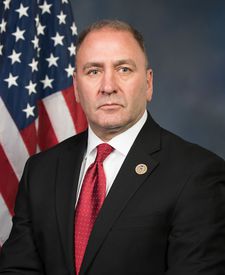
Legislative Progress
In CommitteeReferred to the Subcommittee on Emergency Management and Technology.
Mr. Higgins of Louisiana introduced the following bill; which was …
Referred to the Subcommittee on Economic Development, Public Buildings, and …
Referred to the Committee on Transportation and Infrastructure, and in …
Introduced in House
Stakeholder Effects
cui bono?How this legislation distributes effects. Mention counts reflect frequency, not effect magnitude.
FEMA employees, Federalism advocates, Treasury disaster grant staff
Disaster survivors, State emergency management agencies
Bill Structure & Actor Mappings
Who is "The Secretary" in each section?
We use a combination of our own taxonomy and classification in addition to large language models to assess meaning and potential beneficiaries. High confidence means strong textual evidence. Always verify with the original bill text.
Learn more about our methodology