USCP Empowerment Act of 2025
Summary
What This Bill Does
The USCP Empowerment Act gives the Capitol Police Board counter-UAS authority for covered Capitol Police facilities and assets. When authorized, U.S. Capitol Police personnel protecting people, facilities, or assets may detect, identify, monitor, and track unmanned aircraft systems; warn operators; disrupt control signals; seize or control the aircraft; confiscate it; or use reasonable force to disable, damage, or destroy it. The authority overrides specified aviation and communications statutes but requires coordination with the Department of Transportation and FAA when aviation is affected. The Board may support research, testing, training, and evaluation of counter-UAS equipment, and seized aircraft may be forfeited. The bill requires regulations and guidance, First and Fourth Amendment safeguards, limits on intercepting and retaining communications, restricted disclosure, public notice and law enforcement engagement, and semiannual reports to House Administration and Senate Rules with policy, incident, privacy, airspace, retention, sharing, and technology details.
Who Benefits and How
Capitol Police officers benefit from explicit authority to mitigate credible drone threats around covered Capitol facilities and assets. Members of Congress benefit from additional protection against unmanned aircraft threats near the Capitol complex. Capitol visitors benefit from a security regime aimed at reducing drone-related risks during public access and events. FAA airspace staff benefit from required coordination when counter-UAS actions affect aviation operations.
Who Bears the Burden and How
UAS operators near Capitol facilities face warnings, signal disruption, seizure, confiscation, disabling, destruction, and forfeiture if their aircraft pose covered threats. Capitol Police Board staff must issue rules, authorize activities, oversee safeguards, and report to congressional committees every six months. Capitol Police privacy offices must enforce communications-retention, disclosure, and constitutional safeguards. Technology vendors and testing teams must work within the bill's evaluation, training, and operational limits.
Key Provisions
- Authorizes Capitol Police counter-UAS detection, tracking, warning, disruption, seizure, control, confiscation, and disabling activities.
- Requires DOT and FAA coordination when counter-drone actions affect aviation.
- Requires First Amendment, Fourth Amendment, communications-retention, disclosure, and public notice safeguards.
- Requires semiannual reports to House Administration and Senate Rules on policies, incidents, privacy, airspace, retention, sharing, and technology.
Evidence Chain:
This summary is generated from the full bill text using AI analysis. Expand "Detailed Analysis" below for identified beneficiaries/burden bearers with clause-level evidence links.
At a Glance
What This Bill Does
Authorizes the Capitol Police Board to let U.S. Capitol Police detect, track, disrupt, seize, or disable threatening unmanned aircraft systems near covered Capitol facilities, with FAA coordination, privacy limits, forfeiture rules, and semiannual congressional reporting.
Key Policy Areas
Public Safety, Aviation, Congressional Operations
Primary Purpose
Authorizes the Capitol Police Board to let U.S. Capitol Police detect, track, disrupt, seize, or disable threatening unmanned aircraft systems near covered Capitol facilities, with FAA coordination, privacy limits, forfeiture rules, and semiannual congressional reporting.
Policy Domains
Resolution provisions
Identified Gains
- Capitol Police officers
- Members of Congress
- Capitol visitors
- FAA airspace staff
Identified Costs
- UAS operators near Capitol facilities
- Capitol Police Board staff
- Capitol Police privacy offices
- Technology vendors
Sponsors

Legislative Progress
In CommitteeReferred to the Subcommittee on Aviation.
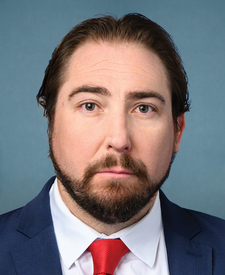
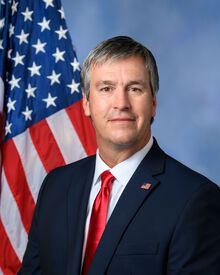
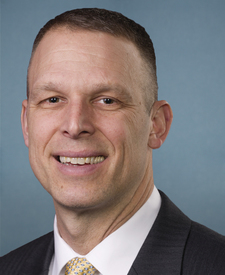
Mr. Crane (for himself, Mr. Perry, and Mr. Moore of …
Referred to the Committee on House Administration, and in addition …
Introduced in House
Stakeholder Effects
cui bono?How this legislation distributes effects. Mention counts reflect frequency, not effect magnitude.
Capitol Police Board staff, Capitol Police privacy offices, Members of Congress
Positive-direction: Members of Congress
Negative-direction: Capitol Police Board staff, Capitol Police privacy offices
Bill Structure & Actor Mappings
Who is "The Secretary" in each section?
We use a combination of our own taxonomy and classification in addition to large language models to assess meaning and potential beneficiaries. High confidence means strong textual evidence. Always verify with the original bill text.
Learn more about our methodology