To amend the Omnibus Crime Control and Safe Streets Act of 1968 to authorize law enforcement agencies to use COPS grants for recruitment activities, and for other purposes.
Analysis under review: This bill has generated analysis that may be too generic or incomplete. Clause-level evidence remains available below.
Summary
What This Bill Does
The Recruit and Retain Act of 2024 expands the existing COPS (Community Oriented Policing Services) grant program to address declining law enforcement recruitment. It adds new eligible grant uses including reducing application fees for recruits, creates a Pipeline Partnership Program pairing law enforcement agencies with schools, simplifies grant applications for understaffed agencies, and commissions a comprehensive GAO study on police recruitment and attrition.
Who Benefits and How
Local law enforcement agencies benefit from expanded federal grant funding to cover recruitment costs, reduced application fees for prospective officers, and streamlined grant applications for understaffed departments. Educational institutions (including HBCUs, Hispanic-serving institutions, and Tribal colleges) benefit from new partnership grant opportunities. Prospective law enforcement recruits benefit from reduced financial barriers to applying.
Who Bears the Burden and How
The Attorney General and DOJ COPS Office bear new administrative responsibilities for establishing the Pipeline Partnership Program, issuing guidance for understaffed agencies, and reducing paperwork requirements. The Comptroller General must conduct and publish a comprehensive recruitment study within 540 days. Federal taxpayers bear the cost of expanded grant programs (up to $3M annually for Pipeline Partnership Program).
Key Provisions
- Adds recruitment fee reduction as eligible COPS grant use (Section 2)
- Creates COPS Pipeline Partnership Program with up to $3M annual funding, pairing law enforcement with educational institutions including HBCUs and Tribal colleges (Section 3)
- Caps administrative costs at 2% for hiring grants (Section 3)
- Requires Attorney General guidance within 180 days for agencies operating below budgeted strength (Section 4)
- Mandates GAO study on recruitment and attrition with report due in 540 days (Section 5)
Evidence Chain:
This summary is generated from the full bill text using AI analysis. Expand "Detailed Analysis" below for identified beneficiaries/burden bearers.
At a Glance
What This Bill Does
Amends the COPS grant program to support law enforcement recruitment, retention, and hiring by expanding eligible grant uses, creating a Pipeline Partnership Program with educational institutions, streamlining applications for understaffed agencies, and mandating a GAO study on police recruitment.
Key Policy Areas
Criminal Justice, Law Enforcement, Education
Primary Purpose
Amends the COPS grant program to support law enforcement recruitment, retention, and hiring by expanding eligible grant uses, creating a Pipeline Partnership Program with educational institutions, streamlining applications for understaffed agencies, and mandating a GAO study on police recruitment.
Policy Domains
Recruit and Retain Act of 2024
Identified Gains
Contextual inference, no direct clause citation- Local law enforcement agencies
- Educational institutions (including HBCUs and Tribal colleges)
- Prospective law enforcement recruits
Contextual inference, no direct clause citation
Identified Costs
Contextual inference, no direct clause citation- Department of Justice / COPS Office
- Comptroller General (GAO)
- Federal taxpayers
Contextual inference, no direct clause citation
Sponsors
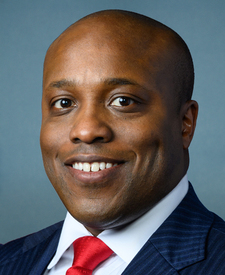

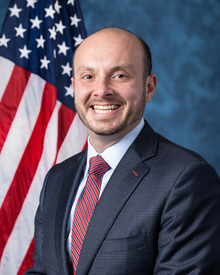

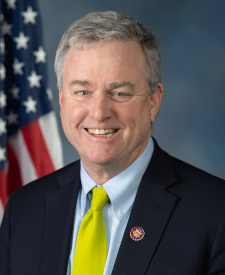
Legislative Progress
ReportedAdditional sponsors: Mr. Nehls, Mr. Smith of New Jersey, Ms. …
Reported with an amendment, committed to the Committee of the …
Mr. Hunt (for himself and Mr. Ivey) introduced the following …
Stakeholder Effects
cui bono?How this legislation distributes effects. Mention counts reflect frequency, not effect magnitude.
Local law enforcement agencies, Local law enforcement agencies (grant recipients), Prospective law enforcement recruits
Positive-direction: Local law enforcement agencies, Prospective law enforcement recruits, Understaffed law enforcement agencies
Negative-direction: Local law enforcement agencies (grant recipients)
Attorney General / DOJ, DOJ COPS Office, Government Accountability Office
Educational institutions (HBCUs, HSIs, Tribal colleges), Students and youth
Bill Structure & Actor Mappings
Who is "The Secretary" in each section?
- "the_attorney_general"
- → Attorney General of the United States
- "the_comptroller_general"
- → Comptroller General of the United States
Key Definitions
Terms defined in this bill
A law enforcement agency in partnership with at least one educational institution, which may include elementary/secondary schools, institutions of higher education, Hispanic-serving institutions, HBCUs, or Tribal colleges.
An applicant for a COPS hiring grant seeking funding for a law enforcement agency operating below the budgeted strength of the agency.
Employment of the maximum number of sworn law enforcement officers the budget of a law enforcement agency allows it to employ.
We use a combination of our own taxonomy and classification in addition to large language models to assess meaning and potential beneficiaries. High confidence means strong textual evidence. Always verify with the original bill text.
Learn more about our methodology