To amend title XIX of the Social Security Act to phase out the enhanced Federal match applicable to medical assistance provided to low-income adults.
Analysis under review: This bill has generated analysis that may be too generic or incomplete. Clause-level evidence remains available below.
Summary
What This Bill Does
This bill, titled the "Ending Medicaid Discrimination Against the Most Vulnerable Act," phases out the enhanced federal funding rate for states that expanded Medicaid under the Affordable Care Act. Currently, the federal government pays 90% of the costs for covering low-income adults who became eligible through the ACA expansion (typically adults earning up to 138% of the federal poverty line). Under this bill, that 90% federal match would gradually decline from 2027 through 2034, dropping by calculated increments each year until it reaches each state's regular federal matching rate (typically between 50% and 75%). By 2035, states would receive no enhanced federal support for covering this population.
Who Benefits and How
The federal government benefits significantly through reduced Medicaid spending, saving tens of billions of dollars over the phase-out period as the federal share of expansion costs drops from 90% to regular matching rates. States that chose not to expand Medicaid under the ACA also benefit through equal treatment, as they are explicitly exempted from any requirements related to the enhanced match and would face no penalty for continuing to decline expansion. Conservative policy advocates opposing the ACA Medicaid expansion gain a major policy victory, as the bill effectively dismantles one of the ACA's core financial incentives for states to cover low-income adults.
Who Bears the Burden and How
State governments in the 40 states that expanded Medicaid face dramatically increased costs, requiring them to either absorb billions of dollars in new annual expenses or reduce Medicaid coverage for their residents. The estimated 20+ million low-income adults who gained coverage through Medicaid expansion face significant risk of losing their health insurance if states cannot afford the increased costs or choose to narrow eligibility to save money. Hospitals, community health centers, and other healthcare providers serving Medicaid expansion populations would see reduced reimbursements and increased uncompensated care costs as patients lose coverage. Health insurance companies participating in Medicaid managed care programs and pharmaceutical manufacturers would lose revenue as enrollment declines.
Key Provisions
- Reduces the enhanced federal matching rate from 90% annually over 8 years (2027-2034), with the reduction calculated separately for each state based on the difference between 90% and their regular federal match rate, divided by 8
- Exempts non-expansion states from any enhanced match requirements, ensuring they receive only their regular federal matching percentage even if they expand Medicaid in the future
- Allows expansion states to limit coverage to only those under 100% of the federal poverty line (rather than the current 138%) to continue receiving the enhanced 90% match for that narrower population
- Repeals subsection (ii) of Section 1905 of the Social Security Act, which appears to eliminate certain maintenance of effort requirements or related provisions
- Takes full effect in 2035, at which point all states receive only their regular federal matching percentage regardless of when they expanded Medicaid or which populations they cover
Evidence Chain:
This summary is generated from the full bill text using AI analysis. Expand "Detailed Analysis" below for identified beneficiaries/burden bearers.
At a Glance
What This Bill Does
Phases out the enhanced federal match (90%) for Medicaid expansion populations, reducing it annually from 2027-2034 until it reaches each state's regular FMAP rate
Who Benefits
- Non-expansion states (receive equal treatment)
- Federal government (reduced spending)
- Conservative policy advocates opposing ACA Medicaid expansion
Who Bears Costs
- Expansion states (face increased costs or must reduce coverage)
- Low-income adults in expansion states (risk losing coverage if states cannot afford increased costs)
- State budgets in expansion states
Key Policy Areas
Healthcare, Federal-State Relations, Medicaid
Primary Purpose
Phases out the enhanced federal match (90%) for Medicaid expansion populations, reducing it annually from 2027-2034 until it reaches each state's regular FMAP rate
Policy Domains
Legislative Strategy
"Reduce federal Medicaid spending by eliminating the enhanced match rate for ACA expansion populations, shifting costs to states that expanded Medicaid"
Identified Gains
- Non-expansion states (receive equal treatment)
- Federal government (reduced spending)
- Conservative policy advocates opposing ACA Medicaid expansion
Identified Costs
- Expansion states (face increased costs or must reduce coverage)
- Low-income adults in expansion states (risk losing coverage if states cannot afford increased costs)
- State budgets in expansion states
- Healthcare providers serving Medicaid expansion populations
Sponsors



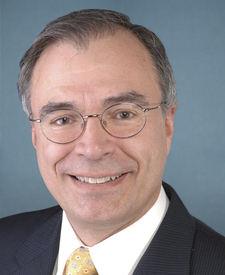

Legislative Progress
IntroducedMr. Roy (for himself, Mr. Fitzgerald, Mr. Gill of Texas, …
Stakeholder Effects
cui bono?How this legislation distributes effects. Mention counts reflect frequency, not effect magnitude.
State governments in Medicaid expansion states, State governments in non-expansion states
Low-income adults in Medicaid expansion states (100-138% FPL)
Federally Qualified Health Centers (FQHCs) serving expansion populations
Health insurance companies (Medicaid managed care organizations)
Bill Structure & Actor Mappings
Who is "The Secretary" in each section?
- "the_secretary"
- → Secretary of Health and Human Services
Key Definitions
Terms defined in this bill
The difference between 90% and the state's regular FMAP rate for fiscal year 2026, divided by 8 (representing the 8-year phase-out period from 2027-2034)
A State that is not a non-expansion State (i.e., a state that has expanded Medicaid to cover individuals described in section 1902(a)(10)(A)(i)(VIII) before enactment)
A State that has not expended amounts for all individuals described in section 1902(a)(10)(A)(i)(VIII) before the date of enactment (i.e., states that did not expand Medicaid under the ACA)
Low-income adults made eligible for Medicaid under the Affordable Care Act expansion (typically adults with incomes up to 138% of the federal poverty line)
We use a combination of our own taxonomy and classification in addition to large language models to assess meaning and potential beneficiaries. High confidence means strong textual evidence. Always verify with the original bill text.
Learn more about our methodology