To require the Director of the Office of Management and Budget to establish a limit for the total amount of additional unfunded regulatory costs that may be imposed in a fiscal year, and for other purposes.
Analysis under review: This bill has generated analysis that may be too generic or incomplete. Clause-level evidence remains available below.
Summary
What This Bill Does
The REG Budgeting Act of 2025 establishes a regulatory budgeting system that puts annual dollar limits on the costs that federal regulations can impose on businesses and individuals. The Director of the Office of Management and Budget must set these limits each year, and agencies cannot increase the total regulatory burden without explicit Congressional approval through a joint resolution.
Who Benefits and How
Regulated industries across all sectors benefit significantly. Manufacturing companies, oil and gas producers, financial services firms, healthcare providers, pharmaceutical companies, telecommunications companies, agriculture businesses, utilities, and transportation companies all face reduced compliance burdens because federal agencies would be constrained in their ability to impose new regulatory costs. These industries gain protection from regulatory expansion without direct Congressional authorization.
Who Bears the Burden and How
Federal regulatory agencies like the EPA, FDA, OSHA, SEC, and FCC face substantial new administrative burdens to track, justify, and report regulatory costs, while their core mission to protect public health, safety, and the environment becomes harder to fulfill. Workers lose protections from OSHA workplace safety rules, consumers face weaker product safety and financial protections, and the environment receives less regulatory protection. The Office of Management and Budget must create and manage an entirely new regulatory budgeting system, including hiring an Associate Administrator for Regulatory Budgeting.
Key Provisions
- Requires OMB Director to set annual caps on "unfunded regulatory costs" for all agencies collectively and for each agency individually by September 30 each year
- Prohibits agencies from finalizing any rule that would cause them to exceed their cost limit unless Congress approves via joint resolution
- Creates exemptions only for emergencies, criminal law enforcement, national security, or international trade agreements when the President issues an executive order
- Establishes multiple reporting requirements where agencies must submit proposed limits 90 days in advance and OMB must report to Congress within 7 days of setting limits
- Provides judicial review allowing any person "aggrieved by agency action" to sue if an agency violates these budgeting requirements
- Creates a new Associate Administrator for Regulatory Budgeting position within OIRA at Executive Schedule Level IV pay
Evidence Chain:
This summary is generated from the full bill text using AI analysis. Expand "Detailed Analysis" below for identified beneficiaries/burden bearers.
At a Glance
What This Bill Does
Establishes a regulatory budgeting system requiring the Director of OMB to set annual limits on unfunded regulatory costs that federal agencies can impose, with Congressional approval required for net increases.
Who Benefits
- Regulated industries (all sectors subject to federal regulations)
- Private sector businesses facing compliance costs
- Industries with high regulatory burden (manufacturing, energy, finance, healthcare)
Who Bears Costs
- Federal regulatory agencies (EPA, FDA, OSHA, SEC, FCC, etc.)
- Office of Management and Budget (OMB)
- Congressional oversight committees
Key Policy Areas
Regulatory Reform, Administrative Procedure, Government Operations, Congressional Oversight
Primary Purpose
Establishes a regulatory budgeting system requiring the Director of OMB to set annual limits on unfunded regulatory costs that federal agencies can impose, with Congressional approval required for net increases.
Policy Domains
Legislative Strategy
"Constrain federal regulatory activity by imposing hard budget caps on the costs that agencies can impose on regulated entities, with Congressional gatekeeping authority over net increases in regulatory costs"
Identified Gains
- Regulated industries (all sectors subject to federal regulations)
- Private sector businesses facing compliance costs
- Industries with high regulatory burden (manufacturing, energy, finance, healthcare)
Identified Costs
- Federal regulatory agencies (EPA, FDA, OSHA, SEC, FCC, etc.)
- Office of Management and Budget (OMB)
- Congressional oversight committees
- Public interest groups seeking stronger regulations
- Consumers and workers who benefit from health/safety/environmental regulations
Sponsors

Legislative Progress
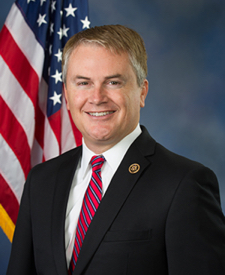
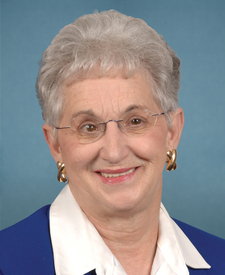
IntroducedMr. Fallon (for himself, Mr. Comer, and Ms. Foxx) introduced …
Stakeholder Effects
cui bono?How this legislation distributes effects. Mention counts reflect frequency, not effect magnitude.
Federal regulatory agencies subject to regulatory budgeting limits (EPA, FDA, OSHA, SEC, FCC, DOL, etc.)
Office of Management and Budget (OMB) and OIRA
Regulated industries across all sectors subject to federal regulations
Manufacturing sector facing environmental and safety regulations
Financial services firms subject to SEC, CFTC, and banking regulations
Healthcare providers and pharmaceutical companies facing FDA regulations
Workers and labor unions who benefit from OSHA workplace safety regulations
Bill Structure & Actor Mappings
Who is "The Secretary" in each section?
- "the_director"
- → Director of the Office of Management and Budget
- "the_president"
- → President of the United States
- "head_of_an_agency"
- → Head of any federal agency as defined in 5 USC 551(1)
- "the_comptroller_general"
- → Comptroller General of the United States
- "the_associate_administrator"
- → Associate Administrator for Regulatory Budgeting within OIRA
Key Definitions
Terms defined in this bill
An unfunded regulatory cost that had not been required to be incurred by any individual or entity as a result of a Federal mandate imposed by rule on an individual or entity during any preceding fiscal year.
Has the meaning given that term in section 551(1) of title 5, United States Code (broadly covers executive agencies, departments, and independent regulatory commissions).
The Committee on Oversight and Government Reform of the House of Representatives and the Committee on Homeland Security and Governmental Affairs of the Senate.
A direct cost or a quantifiable cost that can be estimated using the methods and concepts described in Office of Management and Budget Circular A-4 issued on September 17, 2003.
The aggregate amount of all unfunded regulatory costs imposed during all preceding fiscal years.
The Director of the Office of Management and Budget.
Has the meaning given such term in section 551 of title 5, United States Code (includes agency statements of general or particular applicability and future effect).
A cost required to be incurred by an individual or entity as a result of a Federal mandate imposed by rule on an individual or entity.
We use a combination of our own taxonomy and classification in addition to large language models to assess meaning and potential beneficiaries. High confidence means strong textual evidence. Always verify with the original bill text.
Learn more about our methodology