To enhance the operations and accountability of international financial institutions, strengthen support for low-income countries, and promote human rights and environmental standards in global financial projects.
Analysis under review: This bill has generated analysis that may be too generic or incomplete. Clause-level evidence remains available below.
Summary
What This Bill Does
The bill requires international financial institutions to publicize projects and activities in host countries in plain language to increase citizen understanding of who benefits, requires codifies requirement for IFIs to publicize project information in host countries, and requires IFIs to develop policies for meaningful engagement with civil society organizations including women's rights groups, economic justice organizations, and worker representatives throughout project lifecycles. It relies on compliance mandates, reporting requirements, appropriations, and exemptions. The main policy areas are Finance, Foreign Policy, International Development, and Development Lending.
Who Benefits and How
IMF borrower countries could face lower compliance burdens, African Development Fund could gain revenue opportunities, and African Development Bank could gain revenue opportunities.
Who Bears the Burden and How
International Monetary Fund would take on compliance duties, Multilateral development banks would take on compliance duties, and US taxpayers could face higher costs.
Key Provisions
- Requires international financial institutions to publicize projects and activities in host countries in plain language to increase citizen understanding of who benefits.
- Requires codifies requirement for IFIs to publicize project information in host countries.
- Requires IFIs to develop policies for meaningful engagement with civil society organizations including women's rights groups, economic justice organizations, and worker representatives throughout project lifecycles.
- Requires codifies civil society engagement requirements for IFIs.
- Requires Treasury report on debt restructuring options for developing countries and directs US to advocate for improvements to IMF Debt Sustainability Framework including climate and SDG investment considerations.
Evidence Chain:
This summary is generated from the full bill text using AI analysis. Expand "Detailed Analysis" below for identified beneficiaries/burden bearers with clause-level evidence links.
At a Glance
What This Bill Does
The bill requires international financial institutions to publicize projects and activities in host countries in plain language to increase citizen understanding of who benefits, requires codifies requirement for IFIs to publicize project information in host countries, and requires IFIs to develop policies for meaningful engagement with civil society organizations including women's rights groups, economic justice organizations, and worker representatives throughout project lifecycles.
Key Policy Areas
Finance, Foreign Policy, International Development, Development Lending
Primary Purpose
The bill requires international financial institutions to publicize projects and activities in host countries in plain language to increase citizen understanding of who benefits, requires codifies requirement for IFIs to publicize project information in host countries, and requires IFIs to develop policies for meaningful engagement with civil society organizations including women's rights groups, economic justice organizations, and worker representatives throughout project lifecycles.
Policy Domains
Title I - General Provisions
Identified Gains
- IMF borrower countries
- African Development Fund
- African Development Bank
- International Monetary Fund
- International Development Association
Identified Costs
- International Monetary Fund
- Multilateral development banks
- US taxpayers
- International financial institutions
- International Finance Corporation
Sponsors
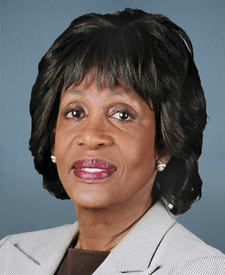
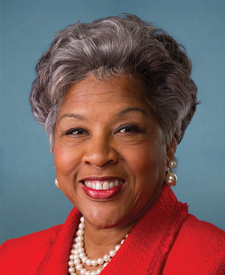
Legislative Progress
IntroducedMs. Waters (for herself and Mrs. Beatty) introduced the following …
Stakeholder Effects
cui bono?How this legislation distributes effects. Mention counts reflect frequency, not effect magnitude.
African Development Bank, African Development Fund, European Bank for Reconstruction and Development
International Development Association, International Monetary Fund, International financial institutions face effects in multiple directions
Positive-direction: African Development Bank, African Development Fund, European Bank for Reconstruction and Development, Investors in IDA securities
Negative-direction: International Finance Corporation, International financial institutions (World Bank, IMF, development banks), Multilateral development banks, World Bank, World Bank and African Development Bank, World Bank and IDA, World Bank and Inter-American Development Bank
Countries with high minimum wages, Countries with higher corporate taxes, Countries with reported human rights abuses
Positive-direction: Countries with high minimum wages, Countries with higher corporate taxes, Developing countries awaiting project financing, Haiti, IMF borrower countries, IMF borrower countries paying surcharges, Low-income developing countries with debt distress
Negative-direction: Countries with reported human rights abuses, IMF borrower governments
Civil society and transparency advocates, Civil society organizations, Civil society organizations (women's rights, economic justice, labor)
Companies benefiting from non-competitive MDB subsidies, Private sector borrowers from MDBs, Private sector entities receiving IDA Private Sector Window funding
Congress, Executive Branch, Executive Branch (President/Treasury)
Positive-direction: Congress
Negative-direction: Executive Branch, Executive Branch (President/Treasury), Secretary of the Treasury
Communities affected by MDB projects, Communities and individuals raising complaints about MDB projects, Survivors of abuse
Developing countries (excluding China), Low- and middle-income countries (excluding China)
Bill Structure & Actor Mappings
Who is "The Secretary" in each section?
- "the_secretary"
- → Secretary of the Treasury
- "united_states_executive_director"
- → U.S. Executive Director at international financial institutions
- "the_bank"
- → International Bank for Reconstruction and Development (World Bank)
- "the_secretary"
- → Secretary of the Treasury
- "the_association"
- → International Development Association (IDA)
- "the_corporation"
- → International Finance Corporation
- "united_states_executive_director"
- → U.S. Executive Director at World Bank/IBRD/IDA
- "the_fund"
- → International Monetary Fund (IMF)
- "the_secretary"
- → Secretary of the Treasury
- "united_states_executive_director"
- → U.S. Executive Director at International Monetary Fund
Note: The Secretary consistently refers to Secretary of the Treasury throughout the bill
Key Definitions
Terms defined in this bill
Securities issued or guaranteed by IDA that are exempt from Securities Act of 1933 and Securities Exchange Act of 1934 registration requirements
As defined in section 1701(c)(2) of the International Financial Institutions Act - includes World Bank, IMF, and regional development banks
As defined in section 1701(c)(4) of the International Financial Institutions Act - World Bank and regional development banks
We use a combination of our own taxonomy and classification in addition to large language models to assess meaning and potential beneficiaries. High confidence means strong textual evidence. Always verify with the original bill text.
Learn more about our methodology